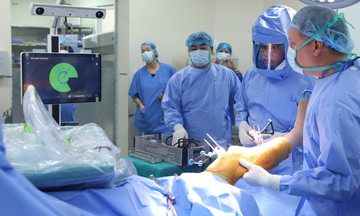
Doctor Nguyen Hoang Duc, Head of Urology Department, Urology - Nephrology - Andrology Center, Tam Anh General Hospital Ho Chi Minh City (TP HCM), stated that the tumor in Ms. Lanh's left kidney had a high probability of being cancerous. The medical team decided on kidney-sparing tumor removal surgery with the assistance of the Da Vinci Xi robot, preserving as much healthy kidney parenchyma as possible. This approach aimed to limit the long-term risk of kidney failure, a common issue in older individuals. Fortunately, the tumor was small and favorably located.
The robotic system enabled surgeons to operate precisely in a confined space, control blood vessels effectively, completely remove the tumor, and manage bleeding risks well. The surgery was successful, and surrounding kidney structures were preserved.
 |
Doctor Duc (front) and Doctor Chau Minh Duy, First Degree Specialist, performed left kidney tumor removal surgery for Ms. Lanh using the Da Vinci Xi robot. Photo: Tam Anh General Hospital. |
Doctor Duc (front) and Doctor Chau Minh Duy, First Degree Specialist, performed left kidney tumor removal surgery for Ms. Lanh using the Da Vinci Xi robot. Photo: Tam Anh General Hospital.
Ms. Lanh recovered quickly, walking and eating normally after two days, and was subsequently discharged. One week later, pathology results confirmed she had renal cell carcinoma (RCC). According to Doctor Duc, the Da Vinci Xi robot-assisted surgery eradicated the cancer. Therefore, Ms. Lanh only requires scheduled periodic follow-ups to assess kidney function, promptly detect complications, and prevent cancer recurrence.
Renal cell carcinoma is a common cancer, accounting for approximately 85% of kidney cancer cases. Globocan reported over 2,200 new kidney cancer cases in Vietnam in 2022. The disease often progresses silently, with no specific symptoms in its early stages. Most patients only experience: fatigue, dull lower back pain, loss of appetite, or slight weight loss, which are easily mistaken for common health issues. When symptoms such as blood in the urine, blood pressure disorders, or prolonged fever appear, the disease has already advanced significantly.
Risk factors for the disease include: age, hypertension, obesity, smoking, abuse of certain painkillers, exposure to toxic chemicals, a family history of kidney cancer, and chronic kidney disease. In early stages, kidney cancer is primarily treated with surgery, including kidney-sparing tumor removal or total nephrectomy to eradicate the disease. As the disease progresses, patients may receive a combination of targeted therapy, immunotherapy, radiation therapy, or chemotherapy, depending on the disease stage and overall health.
To prevent the disease, doctors advise everyone to control blood pressure effectively, maintain a healthy weight, live a healthy lifestyle, quit smoking, and limit alcohol consumption. Do not be complacent about unusual symptoms such as fainting, prolonged fatigue, lower back pain, or even transient blood in the urine. Regular health check-ups are crucial for early detection, enhancing treatment effectiveness, and improving prognosis.
Ha Thanh
*Patient's name has been changed