A 1,975-slice CT scan of Mr. Park at Tam Anh General Hospital TP HCM revealed two gallstones in the infundibulum and neck of his gallbladder, with thickened walls showing strong contrast enhancement. Several segments exhibited discontinuity, accompanied by fat stranding and disrupted blood flow to the surrounding liver parenchyma. Master, Doctor Tran Huu Duy, from the Hepatobiliary and Pancreatic Department, Center for Endoscopy and Endoscopic Digestive Surgery, diagnosed the patient with necrotic cholecystitis accompanied by gallstones. He recommended laparoscopic cholecystectomy, with a potential conversion to open surgery if extensive inflammation and adhesions were present.
During the surgery, Doctor Duy observed the patient's gallbladder was inflamed, thickened, and distended, with areas of necrosis on its wall. The infundibulum was adhered to the common bile duct, and significant inflammatory adhesions were noted with surrounding organs.
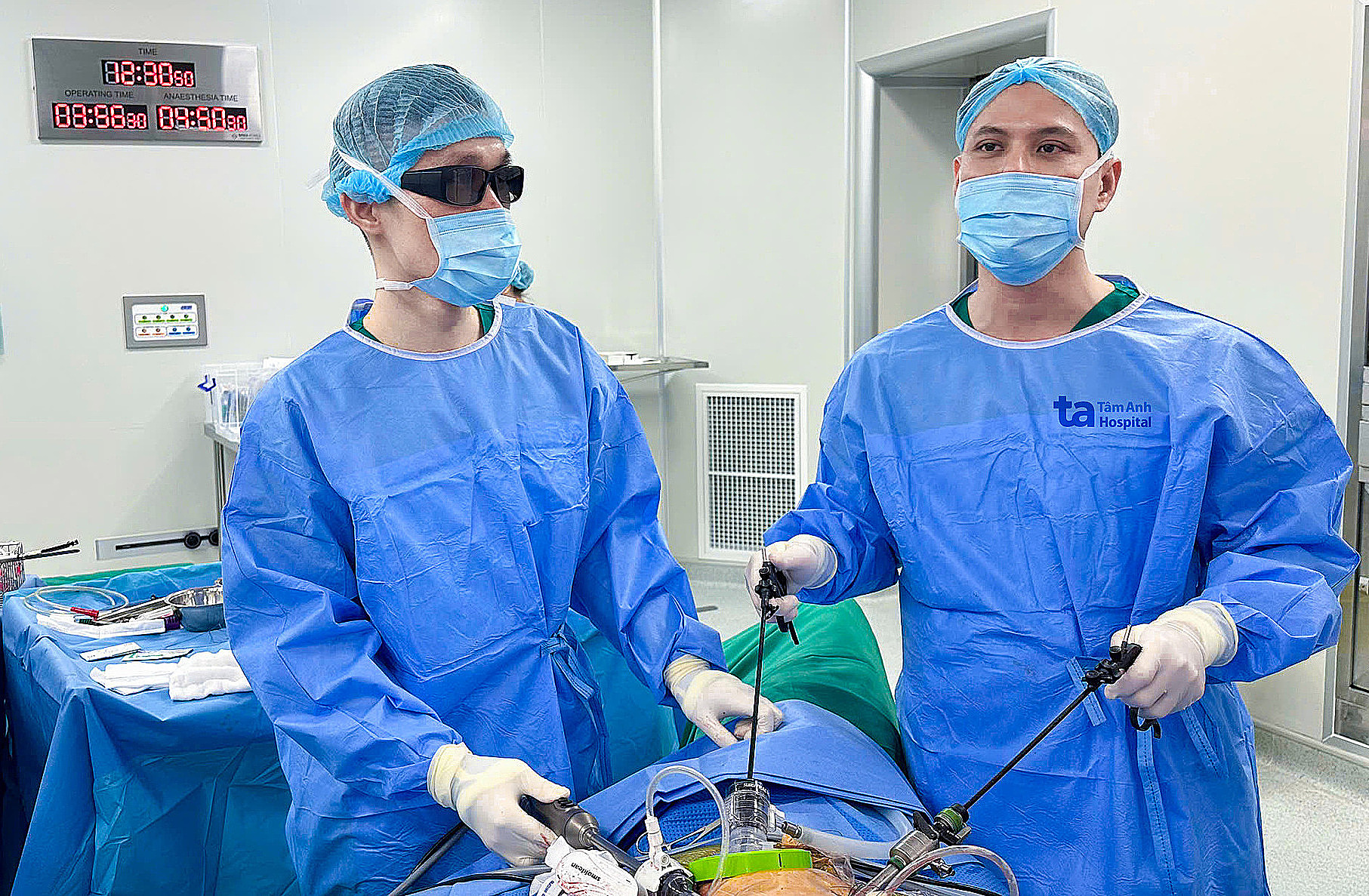 |
Doctor Duy (right) performs surgery to remove Mr. Park's necrotic gallbladder. Photo: Tam Anh General Hospital |
The surgical team opted for a retrograde cholecystectomy, dissecting from the fundus downward, rather than the standard approach of dissecting the cystic duct and artery first. After removing the gallbladder, the team irrigated the abdomen with warm water to clean bacteria and prevent intestinal adhesions post-recovery.
Post-surgery, Mr. Park recovered well. His incision was dry, abdominal pain subsided, and he was able to walk and consume liquid foods after two days.
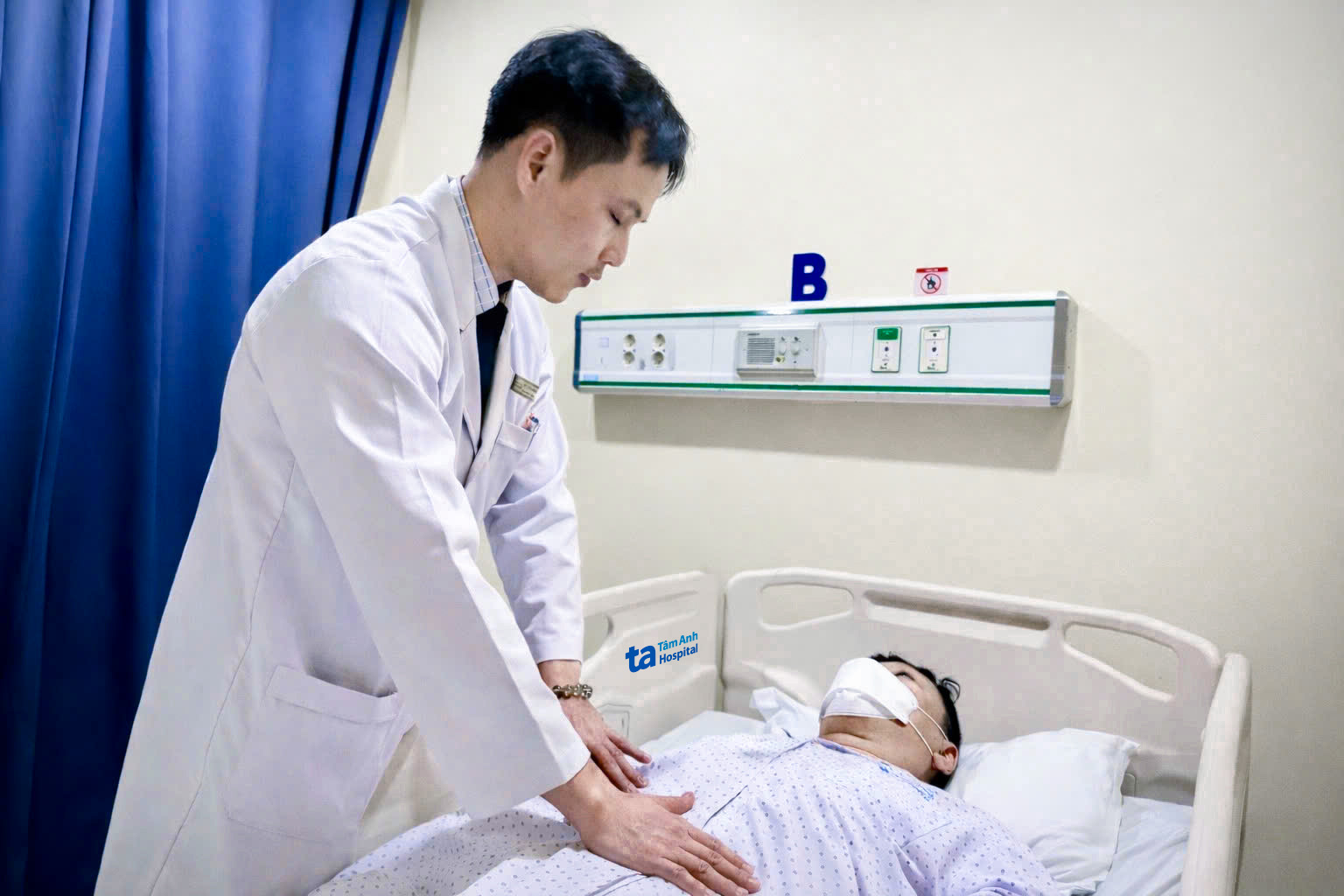 |
Doctor Duy examines Mr. Park's abdomen after surgery. Photo: Tam Anh General Hospital |
Necrotic cholecystitis represents a severe progression of acute cholecystitis, where gallbladder wall tissues die (necrosis) due to insufficient blood supply and prolonged severe infection. This condition often results from long-term obstruction by gallstones in the gallbladder neck.
Necrotic gallbladder progresses rapidly, typically within two to three days. Its symptoms are easily confused with common digestive ailments, leading to delayed diagnosis and life-threatening complications, making treatment challenging.
Patients experiencing symptoms such as right upper quadrant abdominal pain, digestive disorders, or pain after eating should seek medical attention. Early diagnosis and intervention can prevent cholecystitis from advancing to necrotic cholecystitis.
Prevention involves adopting a scientific diet, reducing cholesterol-rich foods, maintaining a healthy weight, avoiding overweight or obesity, and refraining from rapid weight-loss diets. Regular exercise, at least 30 minutes daily, five days a week, is also recommended.
Quyen Phan
*Patient's name has been changed
| Readers can ask questions about digestive diseases here for doctors to answer |