Ms. Nga, 64, has experienced blurred vision in both eyes due to severe myopia for nearly 50 years. She once considered refractive surgery, but her corneas were too thin, under 450 micrometers, making her ineligible for surgery at that time. Now, she can no longer distinguish faces and was diagnosed with stage 5 cataracts.
Ms. Nga's sister, 53, and her niece, 48, both underwent refractive surgery 20 years ago. Both later developed moderate cataracts (stage three) and had cataract surgery at the High-Tech Eye Center, Tam Anh General Hospital, TP HCM. Following their surgeries, both experienced good visual recovery, achieving 8-9/10 vision, enabling them to resume nearly normal daily activities and work.
MSc.Dr Pham Huy Vu Tung, Deputy Head of the Eye Department at the High-Tech Eye Center, noted that severe myopia among multiple family members might be linked to genetic factors combined with lifestyle habits and living environment. Clinical and epidemiological studies indicate that individuals with severe myopia (over 6 diopters) face approximately ba times higher risk of developing cataracts earlier, and their treatment is more complex compared to those with mild myopia. One contributing mechanism is an abnormally long eyeball, which alters the flow of aqueous humor, leading to metabolic disorders in the lens. Chronic oxidative stress also impacts the lens capsule and nucleus, accompanied by reduced blood supply due to choroidal atrophy and retinal degeneration, common in individuals with long-term severe myopia.
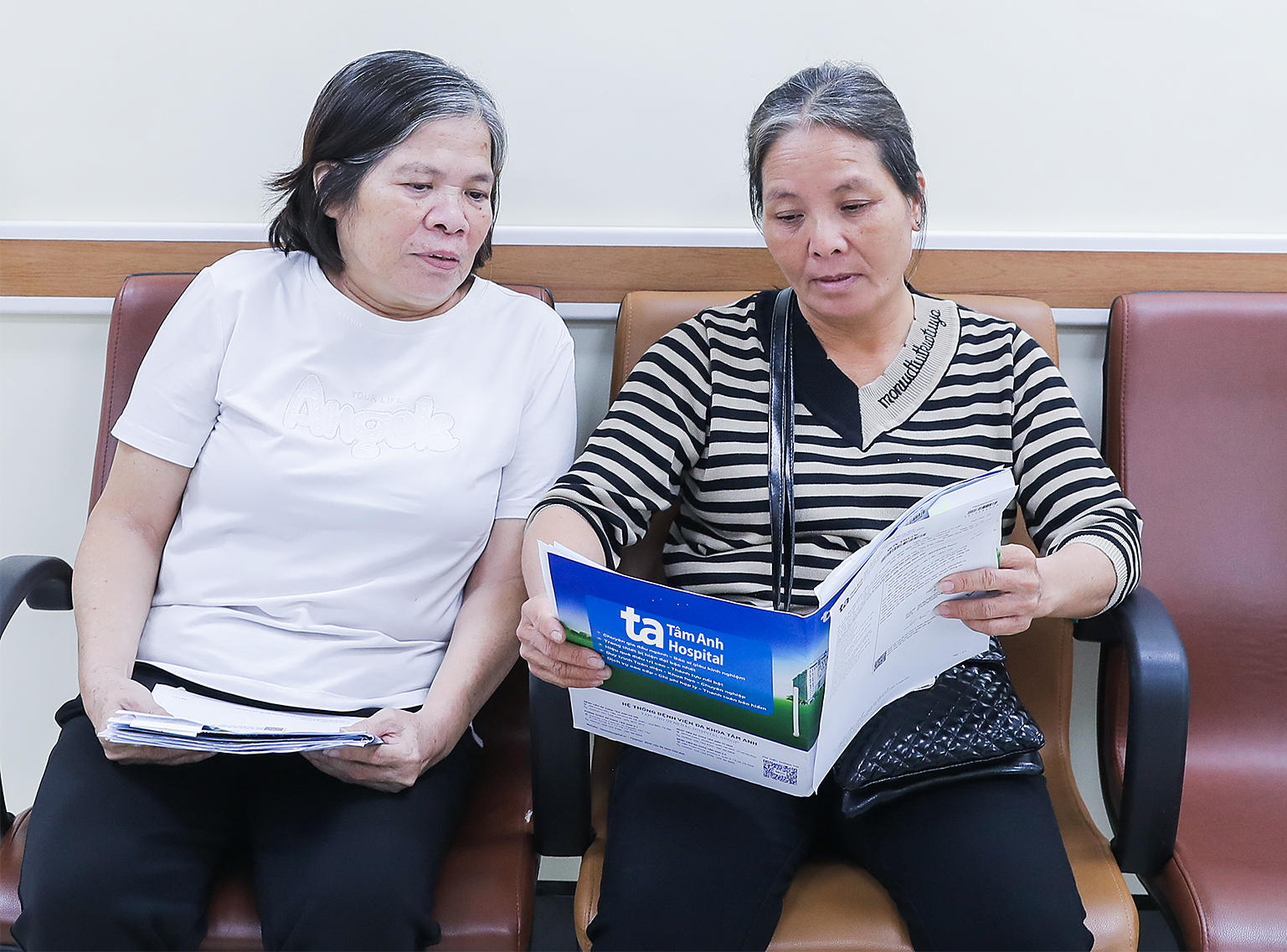 |
Ms. Nga (left) and her sister during a follow-up visit more than one month after cataract surgery. Photo: Tam Anh General Hospital |
Ms. Nga (left) and her sister during a follow-up visit more than one month after cataract surgery. Photo: Tam Anh General Hospital
Ms. Nga suffered from severe bilateral myopia complicated by total retinal degeneration, in addition to the most severe level of cataracts (stage 5). Doctors performed phacoemulsification cataract surgery, using ultrasound waves to emulsify the cloudy lens and replace it with an artificial intraocular lens. Her two eyes were operated on one week apart, starting with the right eye. After surgery, the incision was stable, and her vision improved to approximately 4/10 in both eyes.
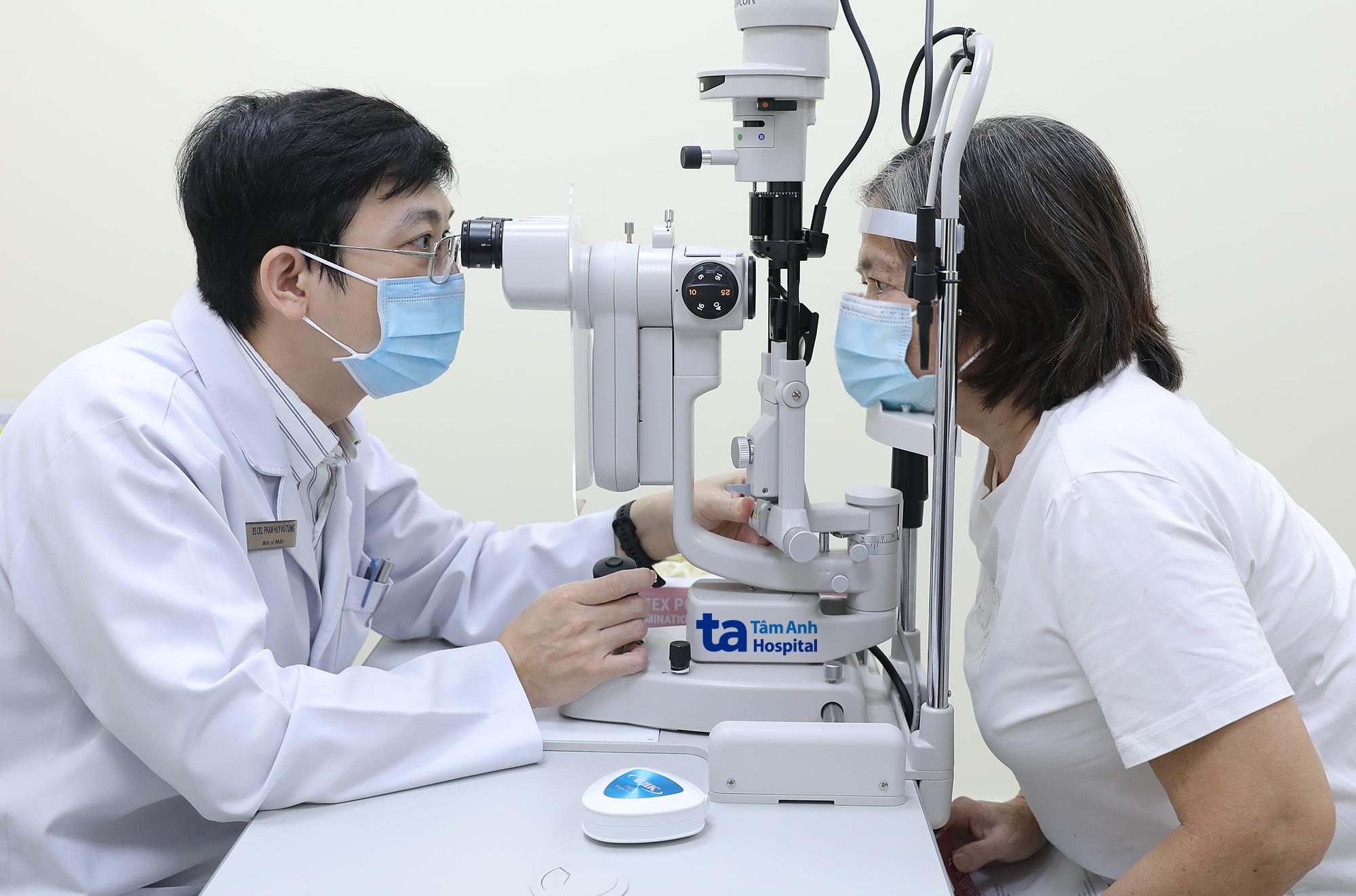 |
Doctor Tung examines Ms. Nga's eyes with a slit lamp. Photo: Tam Anh General Hospital |
Doctor Tung examines Ms. Nga's eyes with a slit lamp. Photo: Tam Anh General Hospital
"Ms. Nga's delayed treatment limited her vision recovery due to multiple factors," Doctor Tung explained. First, the lens was completely opaque and hard, making the surgery more complex. Second, retinal degeneration from prolonged severe myopia reduced the eye's ability to receive images after the operation. Furthermore, her advanced age contributed to the aging of eye structures and a poorer recovery potential.
Doctor Tung advises that individuals with severe myopia who do not consistently wear glasses or attend regular check-ups may miss signs of progressive eye conditions. When vision loss occurs suddenly, the disease is already in an advanced stage, and treatment options become limited. Regular eye examinations are recommended every 6-12 months, even if there are no noticeable changes in vision.
Nhat Minh
| Readers can submit questions about ophthalmological conditions here for doctors to answer. |