On 3/8, a representative from the National Hospital for Tropical Diseases reported that the patient's symptoms began approximately two days before hospital admission. Initial cerebrospinal fluid (CSF) analysis at a provincial hospital showed increased cells and protein, suggesting a diagnosis of purulent meningitis.
Despite intensive treatment, the patient's condition rapidly deteriorated. He developed severe septic shock, hypotension, required intubation, mechanical ventilation, and high-dose vasopressors. After two days, medical staff transferred the patient to the Intensive Care Center at the National Hospital for Tropical Diseases in critical condition.
Doctor Nguyen Duc Hieu from the Intensive Care Center stated that upon admission, doctors re-tapped the cerebrospinal fluid to identify the causative agent. Results confirmed E. coli as the cause of the meningitis. This finding was unusual, as E. coli typically resides in the digestive tract but was present in the patient's CSF.
Further tests revealed the patient was positive for threadworms (Strongyloides). Doctor Hieu explained that threadworms do not directly cause purulent meningitis. However, medical literature indicates that in cases of hyperinfection or disseminated strongyloidiasis, threadworm larvae can penetrate the intestinal wall into the bloodstream. During this process, they can carry Gram-negative intestinal bacteria, such as E. coli, leading to sepsis or even meningitis.
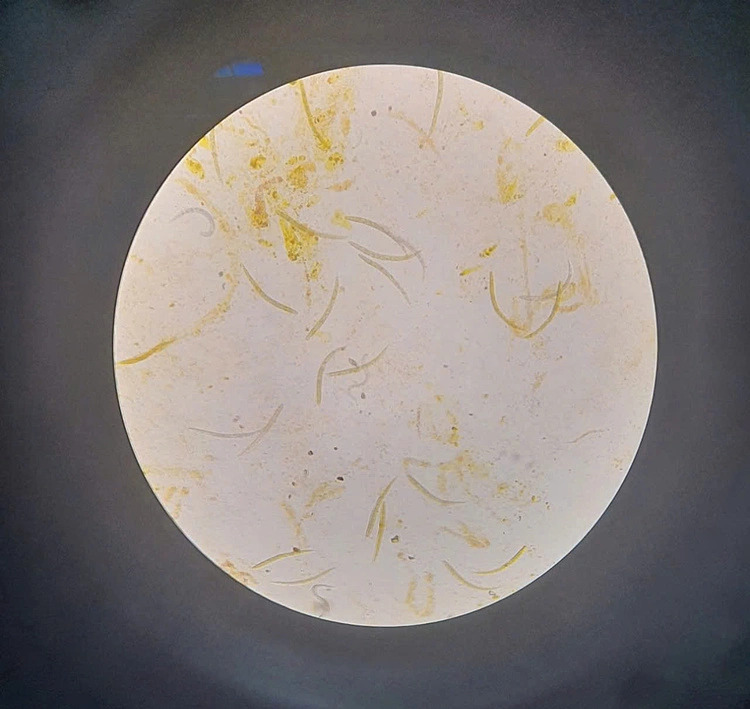 |
An image of threadworms parasitizing a patient's body. Photo: Hospital provided |
Threadworms are parasites capable of self-reinfection, maintaining their life cycle in the human body for many years with few noticeable symptoms. When a person's immune system weakens, especially in elderly individuals or those with underlying conditions like cirrhosis, the parasites can multiply rapidly. This significantly increases the risk of severe infectious complications.
Following antibiotic treatment guided by an antibiogram, combined with specific threadworm therapy and intensive care, the patient's infection and cerebrospinal fluid parameters gradually improved.
Healthy individuals infected with threadworms typically experience mild symptoms, such as digestive upset, rashes, fatigue, or loss of appetite. However, immunocompromised individuals, or those on long-term corticosteroids or immunosuppressants, face a higher risk of hyperinfection or disseminated strongyloidiasis. In such cases, threadworm larvae can invade multiple organs, including the heart, liver, lungs, kidneys, and brain. This leads to severe, life-threatening infections that are difficult and costly to treat.
Doctors advise the public not to be complacent about parasitic diseases. If symptoms like fever, severe headache, vomiting, confusion, or altered consciousness appear, seek immediate medical attention for examination.
Thuy Quynh