Associate Professor Doctor Tang Chi Thuong, Director of the Ho Chi Minh City Department of Health, presented this proposal at a Ministry of Health meeting on out-of-hospital emergency care on 3/8. He emphasized the need to professionalize out-of-hospital emergency services, requiring ambulance personnel to be capable of performing multiple roles.
"In many countries, ambulance drivers are trained to participate in emergency care, unlike Vietnam's system which separates drivers and paramedics", he stated.
According to the head of Ho Chi Minh City's health sector, having drivers only behind the wheel while the medical team manages patients is an inefficient use of resources, particularly during the critical initial minutes that determine patient survival. With proper training, drivers could assist with chest compressions, resuscitation support, safe patient transport, or prepare emergency equipment, significantly improving the effectiveness of on-scene treatment.
To strengthen the legal framework for out-of-hospital emergency care, the city also proposed issuing a circular to regulate these operations. This includes updating standards for various ambulance types, such as: two-wheeled vehicles, specialized paramedic vehicles, and ambulance boats. The proposal also seeks to clearly differentiate emergency ambulances from patient transport vehicles to prevent the misuse of sirens and priority lights.
Mr. Thuong further recommended that all hospitals with accredited emergency departments be mandated to join the out-of-hospital emergency network, rather than merely being encouraged to participate.
Doctor Nguyen Duy Long, Director of the Ho Chi Minh City 115 Emergency Center, reported that the city now operates 73 satellite stations across its area, following network expansion into Binh Duong and Ba Ria - Vung Tau. Ho Chi Minh City is actively developing a professional out-of-hospital emergency system, incorporating diverse transport methods like ambulance boats for Thanh An island commune and air ambulances connected to Military Hospital 175. The center is also creating a specialized training program for ambulance drivers.
"On-scene emergency personnel remain limited, making it crucial for drivers to receive training to assist with first aid and ensure patient safety during transport", Mr. Long emphasized.
Beyond staffing, Ho Chi Minh City also proposed a financial mechanism for health insurance to cover out-of-hospital emergency services. This includes issuing specific standards for each ambulance type and establishing legal protections for citizens who perform first aid, similar to the Good Samaritan Law in many countries, which permits trained individuals to use automated external defibrillators (AEDs) in the community.
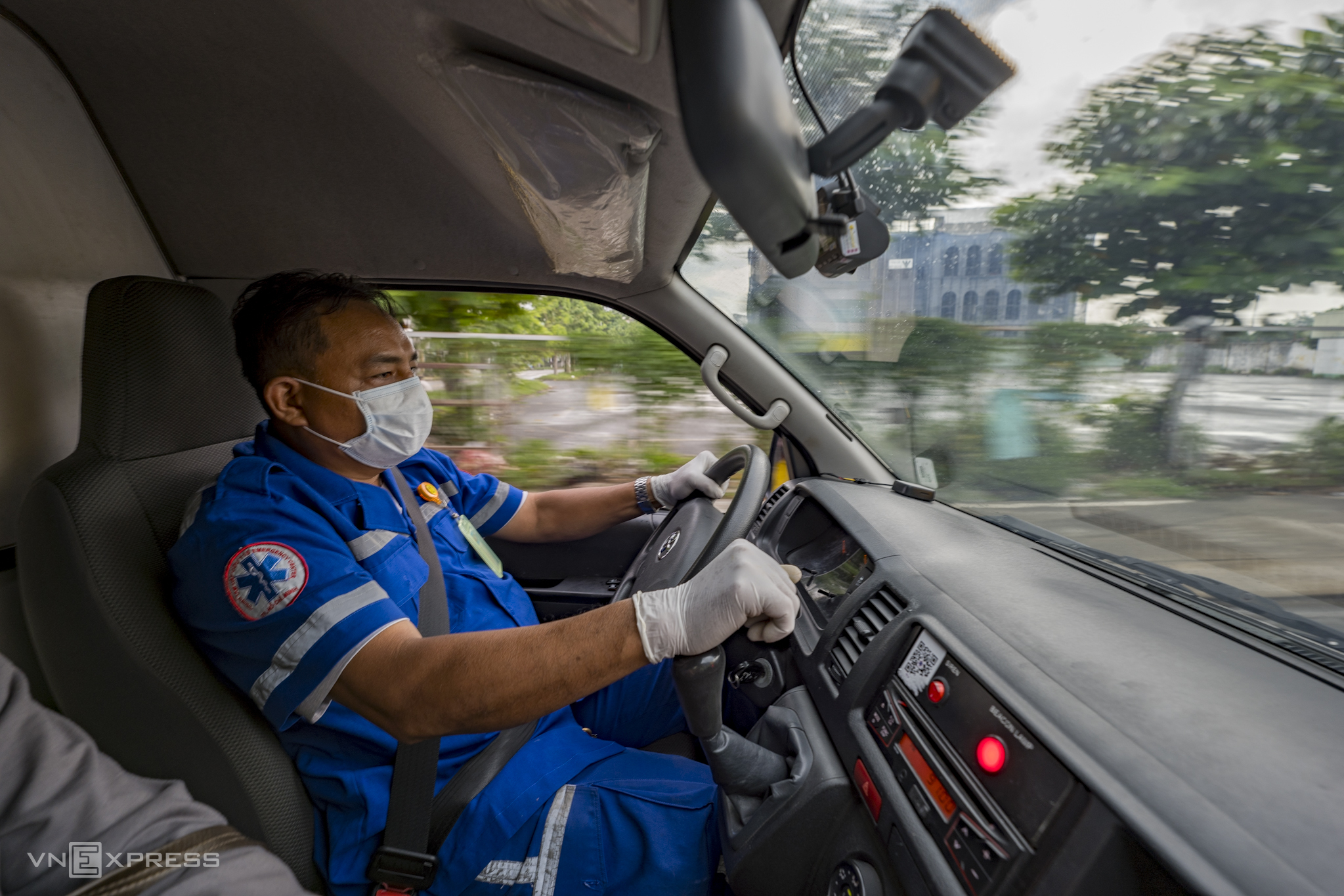 |
A driver from the Ho Chi Minh City 115 Emergency Center. *Photo: Hoang Viet*
Doctor Ha Anh Duc, Director of the Medical Examination and Treatment Administration, commended Ho Chi Minh City for having the nation's most developed out-of-hospital emergency system, featuring many practical and replicable models. The Ministry of Health intends to designate Ho Chi Minh City as the primary training hub for emergency dispatchers in the Southern region, starting in 2027.
The Ministry of Health submitted the national out-of-hospital emergency project to the government in late July. This initiative aims to establish 34 emergency response centers nationwide, create an interconnected network among medical facilities, and provide formal training for paramedics. The plan involves consolidating the call center system into a single point of contact, 113, managed by the Ministry of Public Security, with the Ministry of Health coordinating the medical network upon receiving information from this center.
In his concluding remarks, Deputy Health Minister Tran Van Thuan lauded Ho Chi Minh City's experience in developing its out-of-hospital emergency network, particularly its model of mobilizing hospitals to participate in the 115 system.
"The out-of-hospital emergency project is crucial for reducing mortality and disability, while improving public access to emergency care", the Deputy Minister stated. The Ministry of Health plans to promptly finalize financial mechanisms, vehicle standards, professional regulations, and guiding circulars. This will establish a unified legal framework for localities to implement the out-of-hospital emergency network nationwide.
Le Phuong