On 4/5, Associate Professor, Doctor Pham Van Quang, Head of the Intensive Care and Anti-Poisoning Department at Nhi Dong 1 Hospital, reported that three boys, aged 7 (from Lam Dong), 9 (from Tay Ninh), and 5 (from Hoc Mon, TP HCM), were admitted sequentially during the holiday.
The children, none of whom knew how to swim, encountered accidents while swimming at pools during family trips. They were discovered late, already in cardiac and respiratory arrest. Thanks to proper on-site first aid, their hearts restarted. They were then transferred to local hospitals before being moved to Nhi Dong 1, a tertiary care facility.
Upon admission to Nhi Dong 1, all three suffered severe cerebral anoxia, respiratory failure, aspiration pneumonia, and deep coma. Doctors placed them on ventilators, administered vasopressors, anti-cerebral edema medication, and controlled seizures. The two more severe cases underwent therapeutic hypothermia to protect their brains.
According to Associate Professor Quang, the children's prognosis is favorable due to correct emergency care at the scene and transfer within the "golden hour," which is under 6 hours. Medical staff are striving to minimize severe neurological and motor sequelae for the children after recovery.
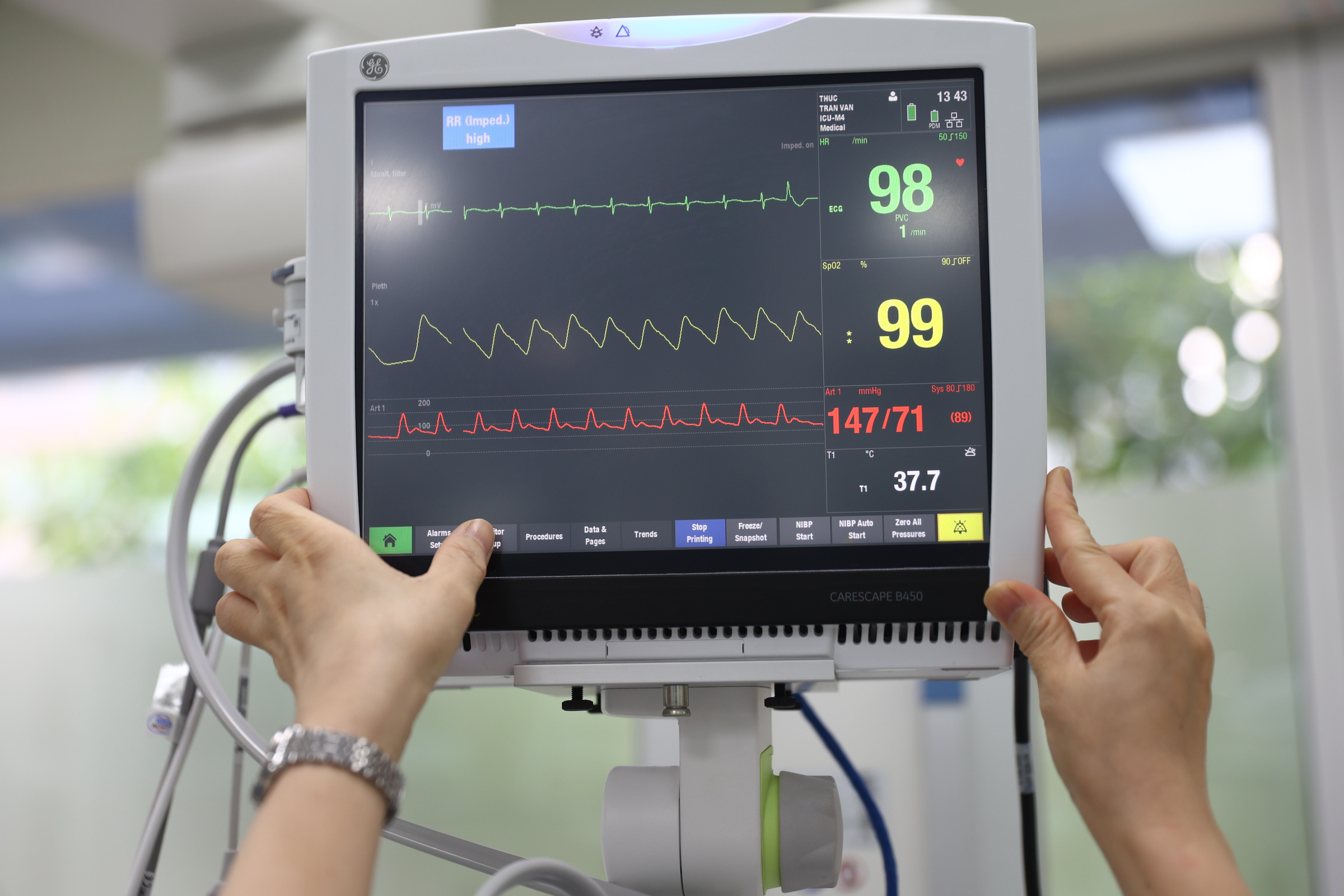 |
Treating patients in the intensive care unit. *Photo: Quynh Tran*
Doctors warn that the number of child near-drowning and drowning cases often rises during holidays and summer. This increase is attributed to hot weather and a surge in family demand for travel, beach trips, and swimming pools. To prevent such accidents, parents should teach children to swim and equip them with water safety skills as early as possible.
Parents must maintain constant supervision of their children, especially when near water. They should avoid using phones, which can distract them from observing children swimming. If an accident occurs, immediate on-site first aid for cardiac and respiratory arrest is a critical factor, determining a child's recovery potential before hospital transfer.
If a child turns blue and stops breathing, immediate on-site first aid is necessary. This involves performing chest compressions on the lower half of the sternum and mouth-to-mouth resuscitation. Absolutely avoid mistaken measures such as shaking water out, carrying the child while running, rolling them on a barrel, or pressing on the abdomen. These methods are ineffective and waste the "golden hour" crucial for saving the child's brain.
Steps for cardiac and respiratory arrest first aid. *Video: Emergency Center 115 TP HCM*
Le Phuong