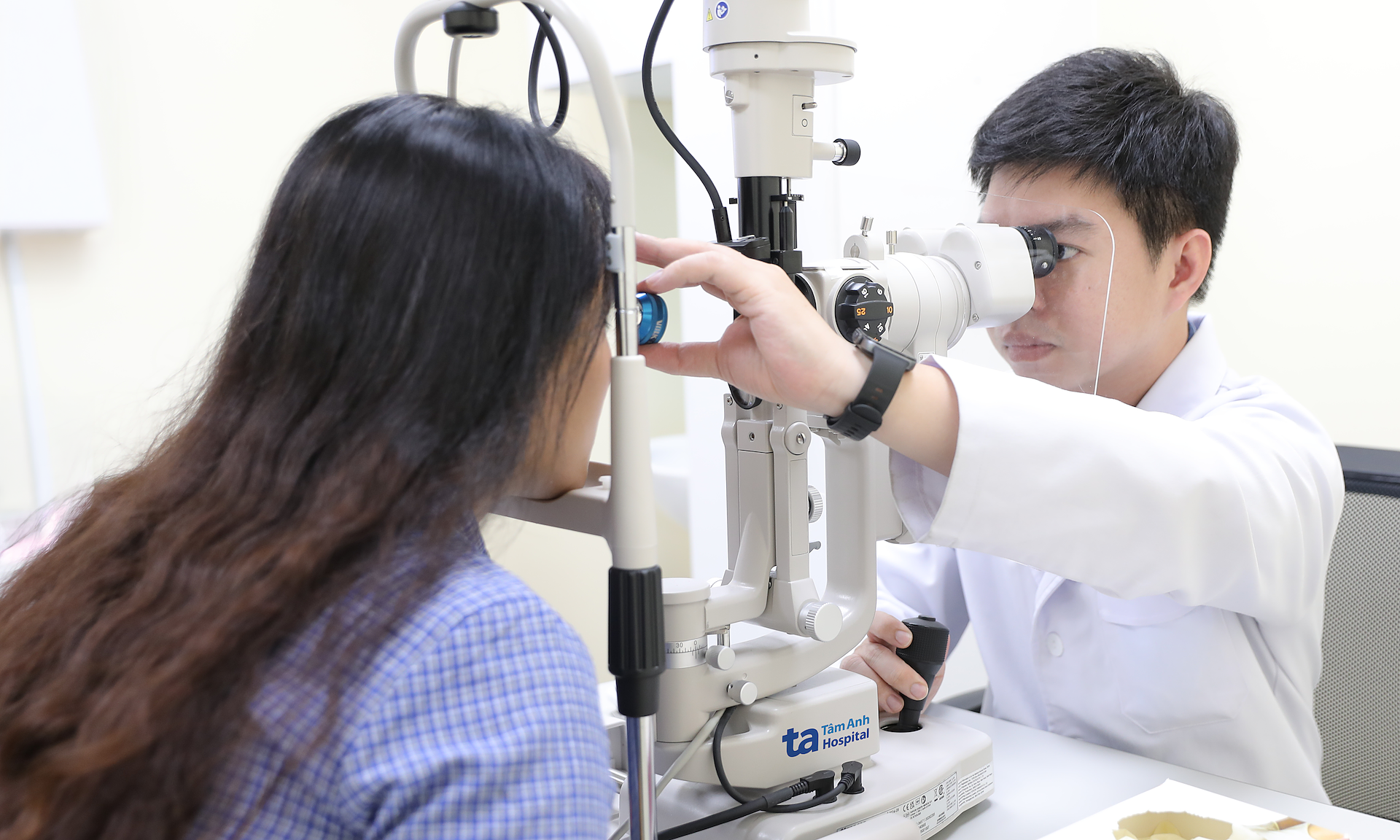
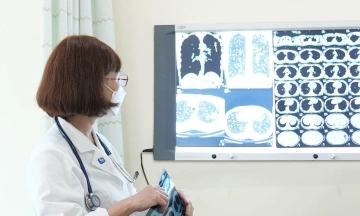
Doctor Nguyen Phuong Trang, from the Neurology Department at the Neuroscience Center, Tam Anh General Hospital, Ho Chi Minh City, reported that Mr. Minh sought treatment one month after his stroke. He presented with weakness on his right side and difficulty maintaining balance when standing up or sitting down. His right hand had reduced grip strength, causing him to frequently drop objects, and he could no longer use chopsticks. The patient spoke slowly, with unclear pronunciation, making communication challenging.
Following a comprehensive assessment of his neurological function and recovery potential, doctors prescribed transcranial magnetic stimulation (TMS) to support motor recovery.
According to doctor Trang, after a stroke, some nerve cells are damaged and cannot regenerate. However, the brain does not completely lose its ability to recover, as the remaining neural networks can reorganize to compensate for lost functions. Through neural plasticity, healthy neurons enhance connections, create new pathways, and recruit previously less active brain regions to take over for the damaged areas.
Transcranial magnetic stimulation is a non-invasive technique that uses high-intensity magnetic pulses to penetrate the skull, precisely targeting brain regions needing rehabilitation after a stroke. These magnetic pulses generate secondary currents in brain tissue, stimulating neuronal activity and increasing the ability to regenerate neural connections. "This technique is like a 'brain massage'; the magnetic field acts on impaired functional areas after a stroke, helping the brain reorganize and recover more effectively," doctor Trang said.
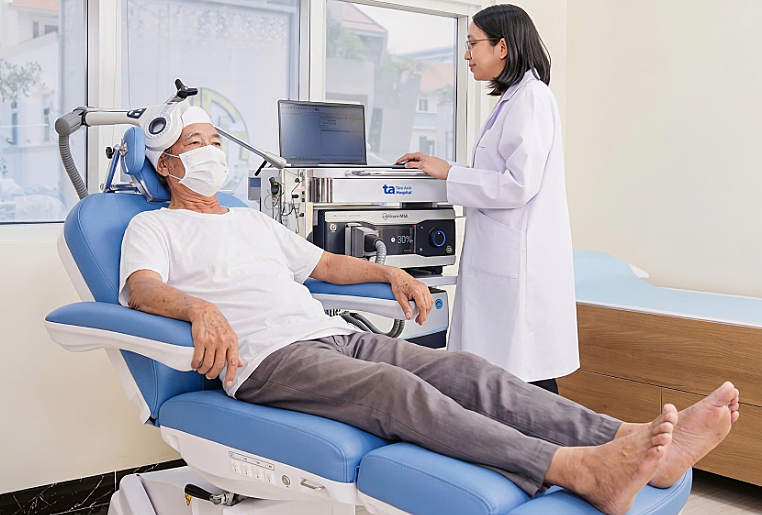 |
Doctors administer transcranial magnetic stimulation to help Mr. Minh recover and enhance neural connections after his stroke. Photo: Tam Anh General Hospital |
Before treatment, doctors assessed the degree of weakness, identified the target brain region, and adjusted the stimulation intensity. During the procedure, the patient sits relaxed, and the device is placed on the head area corresponding to the brain region controlling movement. Each session lasts about 20-30 minutes, is painless, and does not require anesthesia or hospitalization.
Mr. Minh received a treatment regimen of 5 sessions per week, combined with intensive physical therapy and occupational therapy programs. After about one month, his limb muscle strength significantly improved, his balance was better, and he could walk independently.
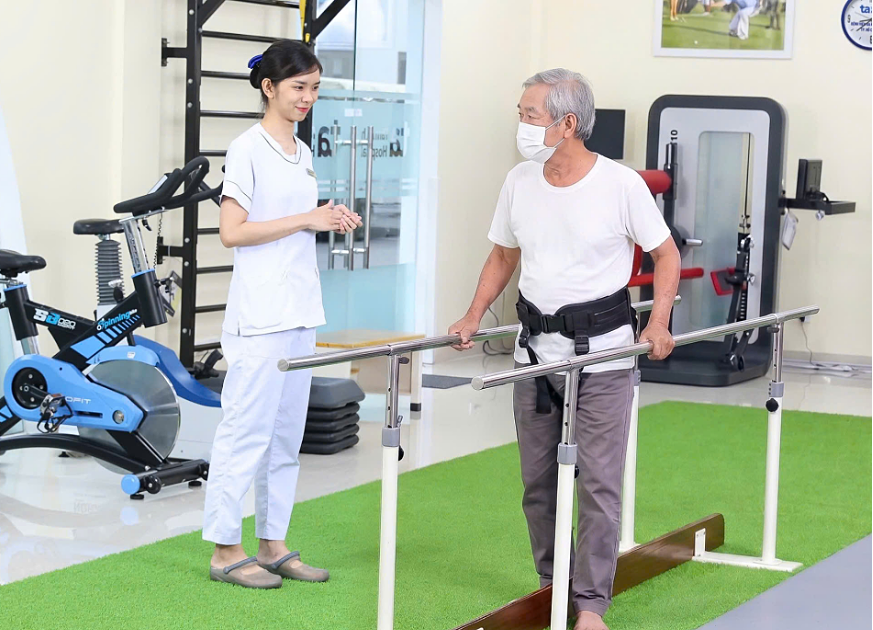 |
A physical therapist guides Mr. Minh through rehabilitation exercises after his stroke. Photo: Tam Anh General Hospital |
Doctor Trang noted that transcranial magnetic stimulation can be applied at various stages after a stroke, but its effectiveness is often best within the first 3-6 months post-stroke. This is when the brain undergoes the most vigorous reorganization. Combining transcranial magnetic stimulation with physical therapy, occupational therapy, and speech therapy during this period helps optimize recovery outcomes. Patients with prolonged sequelae lasting many months or years can still be evaluated for treatment if there is potential for functional improvement.
Doctors recommend that stroke patients begin rehabilitation as early as possible. Treatment should be individualized based on the extent of brain damage and the patient's health status. Transcranial magnetic stimulation is a safe technique. However, some cases require careful consideration or are contraindicated, such as individuals with pacemakers, implanted cardioverter-defibrillators, cochlear implants, or special metallic devices in the skull.
Trong Nghia
| Readers can submit questions about neurological diseases here for doctors to answer. |