On 21/11, Bac Quang Tri Regional General Hospital announced the transfer of two patients to a higher-level facility for severe carbon monoxide (CO) poisoning. Doctors had diagnosed both individuals with critical CO intoxication.
Family members reported that on the evening of 20/11, facing colder weather, the two women burned charcoal for warmth in their sealed bedroom. The following morning, relatives discovered them unconscious and immediately sought emergency medical help. Upon arrival at the hospital, both patients exhibited severe symptoms: a deep coma, rigid limbs, incontinence, and critically low blood oxygen saturation (SpO2). The emergency team promptly intubated them, initiated mechanical ventilation, administered vasopressors, and provided intensive care to stabilize their condition.
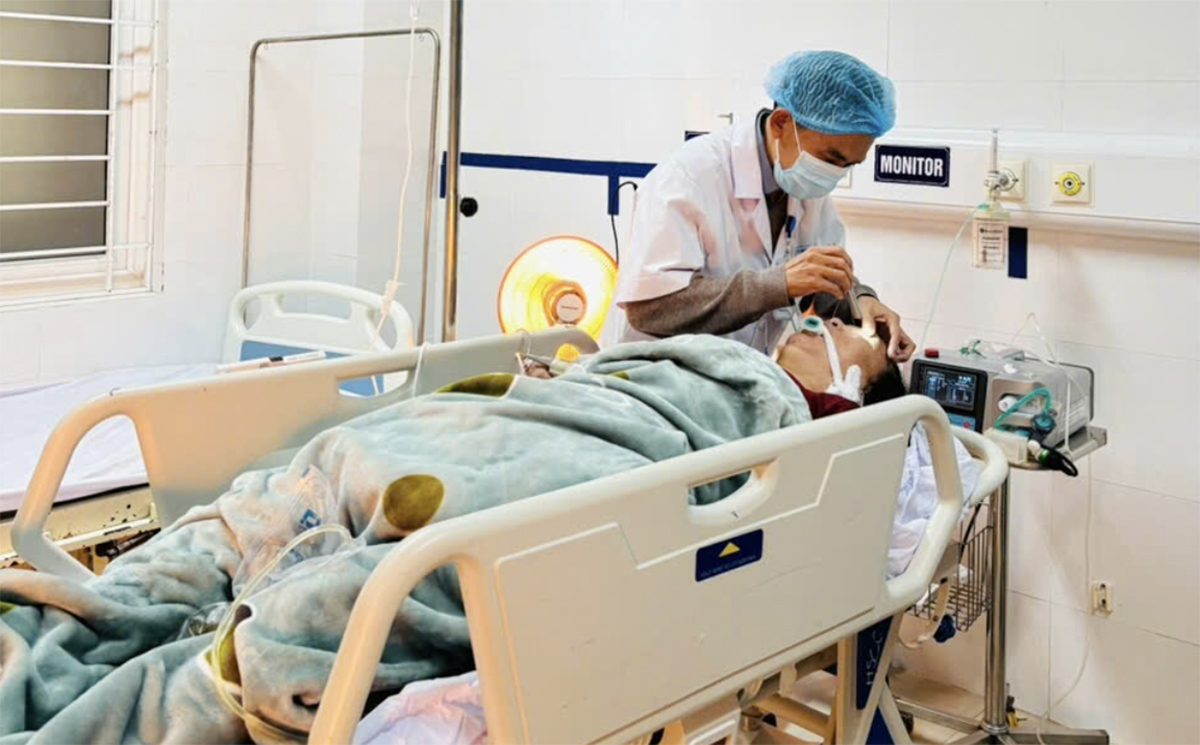 |
Doctors provide emergency care for a patient with gas poisoning. *Photo: Hospital provided* |
Doctor Tran Thanh Tinh, Head of the Intensive Care and Anti-poisoning Department, explained the dangers of carbon monoxide. CO is a colorless, odorless gas that rapidly accumulates in enclosed environments. Once inhaled, it binds to hemoglobin in red blood cells 200 times more effectively than oxygen. This leads to severe oxygen deprivation, causing significant damage to the brain and heart, and can quickly result in death.
Recognizing the symptoms of carbon monoxide poisoning is crucial. Initial signs often include: headaches, dizziness, nausea, chest tightness, and shortness of breath. If the poisoning is severe, victims may become agitated, experience convulsions, and eventually fall into a coma.
Medical experts strongly caution against burning charcoal or honeycomb briquettes in enclosed spaces, particularly when temperatures drop. Should anyone exhibit symptoms of carbon monoxide poisoning, it is imperative to promptly move them to a well-ventilated area to breathe fresh air and then immediately transport them to the nearest medical facility.
Dac Thanh