Ha, 38, experienced right ear pain, discharge, and hearing loss for approximately two years. Despite a diagnosis of middle ear infection, her previous treatments were not fully effective. Recently, after swimming in the sea, her symptoms intensified, causing severe ear pain that prevented sleep. When she suddenly developed profound hearing loss and facial paralysis, Ha sought urgent medical attention at Tam Anh General Hospital, TP HCM.
Examinations at the hospital revealed a large perforation in her right eardrum with discharge. CT scans showed opacity in the right mastoid bone, a part of the temporal bone, indicating damage to the ossicles and the 7th cranial nerve. An audiogram confirmed severe hearing loss in her right ear, while X-rays also noted scattered lesions in both lungs. Professor Tran Phan Chung Thuy, Director of the Ear, Nose, and Throat Center, explained that while middle ear infections are common and rarely lead to severe complications, Ha's case presented a typical severe progression due to ineffective prior treatment compounded by underlying tuberculosis. Ha had a history of pulmonary tuberculosis but had self-discontinued her medication for about six months, citing side effects like palpitations, rapid heartbeat, hand tremors, insomnia, and prolonged anxiety.
Professor Chung Thuy further elaborated on the infection's progression: "Bacteria spread into the air cell system within the mastoid bone, creating an infection focus." This bacterial attack on the ear bones disrupted the sound transmission chain, perforated the eardrum, and eroded the 7th cranial nerve, directly causing the facial paralysis.
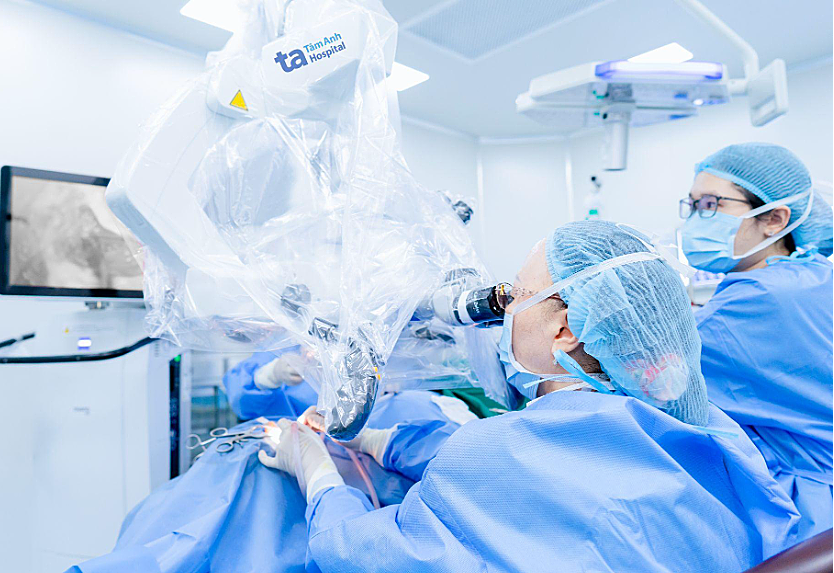 |
Professor Thuy performing surgery on Ha. *Photo: Tam Anh General Hospital* |
Doctors prescribed immediate surgery to thoroughly clear the infection focus in the mastoid bone and repair the eardrum. The primary goals were to restore the sound transmission pathway and prevent permanent facial paralysis, as well as intracranial damage if the bacteria continued their assault on the skull.
During the operation, Professor Chung Thuy discovered that the infection had completely disintegrated the mastoid bone structure. A portion of the malleus handle was eroded, and the damage extended critically close to the facial nerve. The ossicles, essential for transmitting sound vibrations from the eardrum to the inner ear, were compromised. Their erosion had interrupted the sound transmission chain, leading to deafness. Under a microscope, the surgical team meticulously removed all lesions and inflammatory tissue, detached hypertrophic tissues adhering to the ossicles, and performed an endoscopic eardrum repair for Ha. Concurrently, inflammatory tissue near the facial nerve was carefully removed to preserve its function.
Post-surgery, Ha's health gradually stabilized, and her incision healed well. She was discharged after three days. Professor Chung Thuy noted that patients might experience temporary mild facial weakness after surgery as the facial nerve recovers. Follow-up appointments and post-operative treatment are crucial. After more than one month of treatment, Ha's facial paralysis fully resolved, her pain subsided, and her right ear hearing significantly improved.
Middle ear infection is a common ailment with symptoms such as pain and ear discharge. Incomplete treatment can easily lead to eardrum perforation and severe mastoiditis complications. Doctors emphasize the importance of treating middle ear infections thoroughly from the initial stage. Individuals experiencing severe symptoms like intense ear pain, prolonged pus discharge from the ear, swelling and pain behind the ear, facial distortion, or rapid hearing loss should consult an ear, nose, and throat specialist for timely diagnosis and treatment to prevent severe complications.