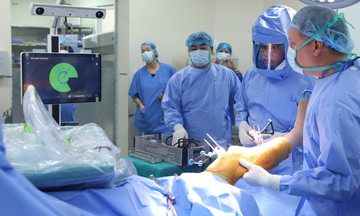
The family reported that after discovering the incident, they attempted to induce vomiting by manually stimulating the child's throat. They then took him to a nearby hospital for first aid and oxygen support, but his condition did not improve.
The child was transferred to National Children's Hospital experiencing difficulty breathing, rapid respiration, bluish discoloration, and severe respiratory failure. Doctors promptly performed intubation and placed the child on mechanical ventilation.
On 15/11, Master of Science, Doctor Tran Thi My Hanh, from the Department of Internal Medicine Intensive Care, stated that inducing vomiting is often the first reaction of many parents when their child accidentally drinks lamp oil. However, this action can cause the child to aspirate the oil into their lungs, worsening the condition.
After bon days of intensive treatment, the boy passed the critical stage. He was extubated and could breathe independently, with stable hemodynamics and vital signs. However, his respiratory function will require close monitoring in the coming period.
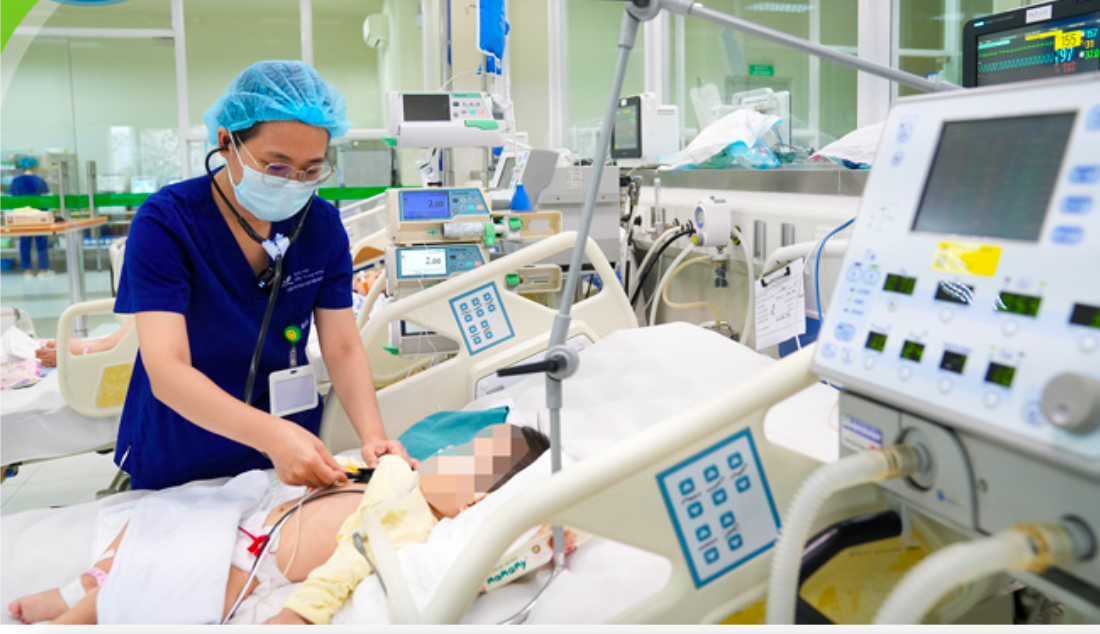 |
The child is undergoing treatment at National Children's Hospital. Photo: Hospital provided |
Accidents involving children accidentally drinking lamp oil often stem from adult carelessness. Lamp oil is now produced in many eye-catching colors, which can easily be mistaken for beverages. Furthermore, the habit of storing oil in familiar containers like water bottles, cups, or bowls, and placing them near common living areas, especially on altars, increases the risk of young children accidentally ingesting it and facing danger.
Lamp oil is a volatile, highly toxic hydrocarbon. When a child drinks lamp oil, the toxic vapor of the chemical can easily enter the lungs, causing respiratory failure, along with cardiovascular and neurological damage. Children may experience moderate to severe respiratory failure, seizures, or even coma.
If a child accidentally drinks lamp oil, parents must not induce vomiting if the airway is not protected. Attempting to induce vomiting increases the risk of aspiration. This allows oil vapor to penetrate deep into the lungs, causing aspiration pneumonia and leading to more severe respiratory system damage.
Accidental ingestion of lamp oil is a dangerous household accident in young children, potentially causing severe respiratory, neurological, and cardiovascular damage. Since early 2025, the Department of Internal Medicine Intensive Care at National Children's Hospital has admitted bon cases of lamp oil poisoning, with ba children suffering severe respiratory failure accompanied by neurological damage.
Doctors specifically emphasize that the common mistake in initial first aid is attempting to induce vomiting. This action can worsen the child's condition, leading to many unfortunate consequences. Therefore, if a child is found to have accidentally drunk lamp oil, remain calm, absolutely do not induce vomiting, and do not give the child additional water or any other liquid. Promptly take the child to the nearest medical facility for proper and timely treatment.
To keep chemicals out of children's reach, always store medications, chemicals, and lamp oil in locked cabinets, placed high up and away from children's reach. Do not store lamp oil or chemicals in familiar containers like empty water bottles, soda bottles, or any brightly colored bottles that could be easily mistaken for drinks. Educate children not to consume anything of unknown origin or without adult permission.
Le Nga