Dr. Phan Le Nhat Long, from the Department of Andrology at Military Central Hospital 108, reported on a patient diagnosed with a large undescended testicular cancer in the abdomen, which had metastasized to the lymph nodes. The patient underwent surgery to remove the entire testicular tumor and regional lymph nodes, followed by a prescribed chemotherapy regimen.
According to Dr. Long, this was a challenging surgery due to the tumor's considerable size and its potential to adhere to adjacent abdominal organs. The technique for dissecting lymph nodes around the abdominal aorta is complex and carries many risks. Consequently, doctors convened to devise an optimal and safe surgical plan for the patient.
The surgery proceeded smoothly, and the tumor was completely removed. The patient is currently continuing chemotherapy as prescribed.
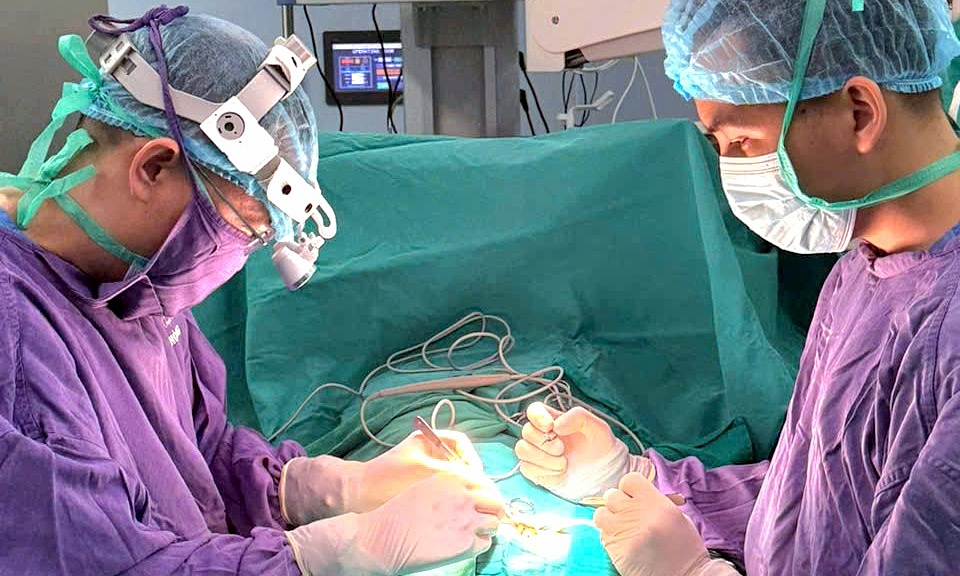 |
Doctors performing surgery on the patient. *Photo: Hospital provided*. |
Doctors explained that an undescended testicle is a congenital anomaly. If not detected and treated early, a testicle located in the abdomen faces an elevated risk of complications, including degeneration, reduced sperm production, and a significantly higher risk of testicular cancer compared to a testicle in its correct scrotal position. When cancer develops, it is often diagnosed late, with large tumors that readily metastasize. Of concern, this condition can go unnoticed in adults for many years until unusual abdominal symptoms emerge.
Therefore, men experiencing symptoms such as persistent abdominal pain, unexplained abdominal enlargement, or a palpable abnormal mass in the abdomen should undergo a comprehensive medical examination. This should always include a scrotal and testicular check to rule out conditions like an undescended testicle.
Le Nga