The Vietnam Institute of Applied Medicine announced new findings on the morning of 27/11 in Hanoi, during a workshop on older adults' nutrition and health. Doctor Truong Hong Son, Director of the Vietnam Institute of Applied Medicine, stated that rapid urbanization directly impacts the health of this demographic in major cities.
Research conducted in 2025 highlights the double burden of disease faced by urban older adults. Beyond the high obesity rate, 87,7% of survey participants suffer from at least one chronic illness. On average, each individual lives with two or more conditions, creating significant physical and mental strain. In addition to metabolic diseases, over 50% of older adults also experience sleep disorders.
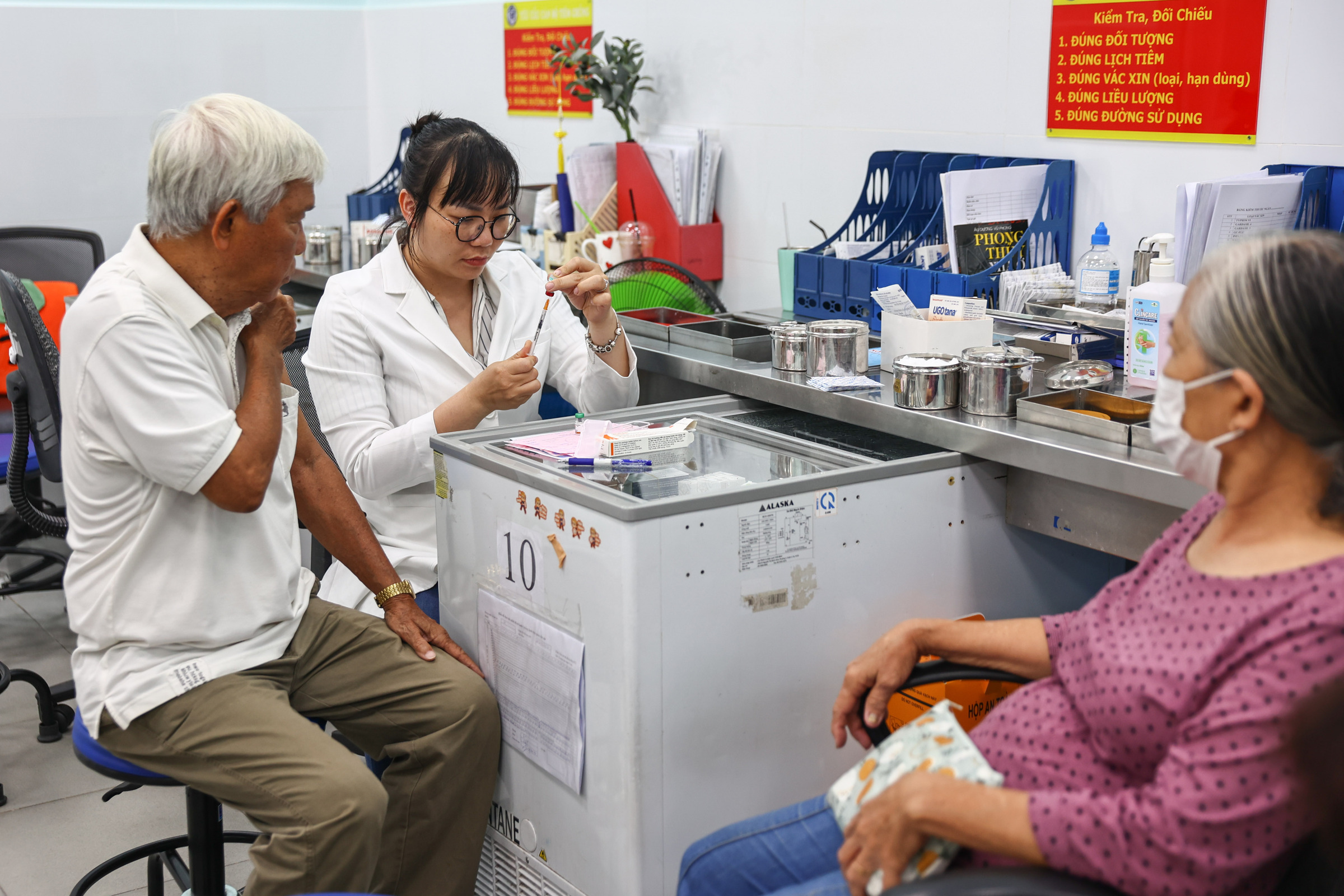 |
Older adults receiving vaccine shots at Pasteur Institute Ho Chi Minh City, 8/2025. Photo: Quynh Tran |
A primary driver of these health issues is imbalanced nutrition. Only 25% of older adults consume the five essential food groups daily. Conversely, the habit of consuming high-risk foods, such as: salt, simple sugars, and fried items, is widespread, accounting for 40-60% of intake. Meanwhile, high-biological-value foods like milk and dairy products are only consumed by about 40% of those surveyed.
This health picture becomes more concerning as Vietnam experiences one of the world's fastest rates of population aging. The Ministry of Health reports that the country currently has 16,1 million older adults, representing 16% of the population. Projections indicate that by 2038, Vietnam will officially enter an aged population phase. While Vietnamese people have a high average life expectancy, the number of healthy years lived is low, with individuals enduring illness for their final 14 years. This reality leads to escalating healthcare costs, burdening family budgets and health insurance funds.
Despite significant care demands, the current healthcare system remains inadequate. Policies lack focus and funding, while grassroots healthcare critically lacks both equipment and specialized geriatric personnel. Current routine health check-ups primarily focus on screening, lacking specific treatment protocols, which forces patients to higher-level facilities and causes overload.
To address the aging population challenge, experts at the workshop recommended that the healthcare sector prioritize personalized care through electronic health records. The State should invest in upgrading commune and ward health stations, enabling them to play a core role in managing older adults' health within their communities. Furthermore, promoting socialization, establishing more geriatric departments in provincial hospitals, and developing a system of nursing homes are urgent steps to adapt to the new situation.
Le Nga