Dr. Hoang Tien Len, from the Obstetrics and Gynecology Center, Tam Anh General Hospital Hanoi, stated that computational CTG (cardiotocography) is a method for monitoring fetal heart rate and uterine contractions via a fetal monitor. Typically, the analysis of results primarily relies on the doctor's clinical assessment and experience. With computational CTG, the system utilizes smart algorithms to automatically analyze fetal heart rate and uterine contraction data in 1/16 minute units (3.75 seconds), thereby standardizing data and eliminating errors that can occur with multiple observers.
According to Dr. Len, computational CTG functions like a "computational radar" that continuously tracks fetal heart rate and uterine contractions, helping to detect abnormalities early, especially in high-risk pregnancies such as those with slow fetal development. This provides doctors with additional grounds to decide on the appropriate time for intervention.
Ms. Bich previously terminated a twin pregnancy at week 19 due to twin-to-twin transfusion syndrome and fetal abnormalities. Following this, she underwent in vitro fertilization and had a twin pregnancy, which she monitored at Tam Anh General Hospital Hanoi. An ultrasound at week 29 revealed her cervical length was only 10 mm, whereas at this gestational age, it is usually over 25 mm. Dr. Len assessed her risk of preterm birth as high and ordered hospitalization.
At this time, the fetuses were estimated to weigh about 1.2 kg and 1.4 kg. If born at this stage, they would be susceptible to respiratory distress due to immature lungs, low birth weight, and difficulty with self-feeding. Ms. Bich received medical treatment with tocolytic medication, hormonal support, and was monitored in the hospital. She responded well to the medication, with her cervical length fluctuating between 6-8 mm. Doctors predicted the pregnancy could be maintained until approximately 38 weeks if the mother's and both fetuses' health remained good.
At 33 weeks of gestation, one fetus showed signs of slow development. The monitoring plan was adjusted; the goal was no longer solely to prolong the pregnancy, but to determine a safe delivery time, avoiding the risk of premature birth or intrauterine growth arrest.
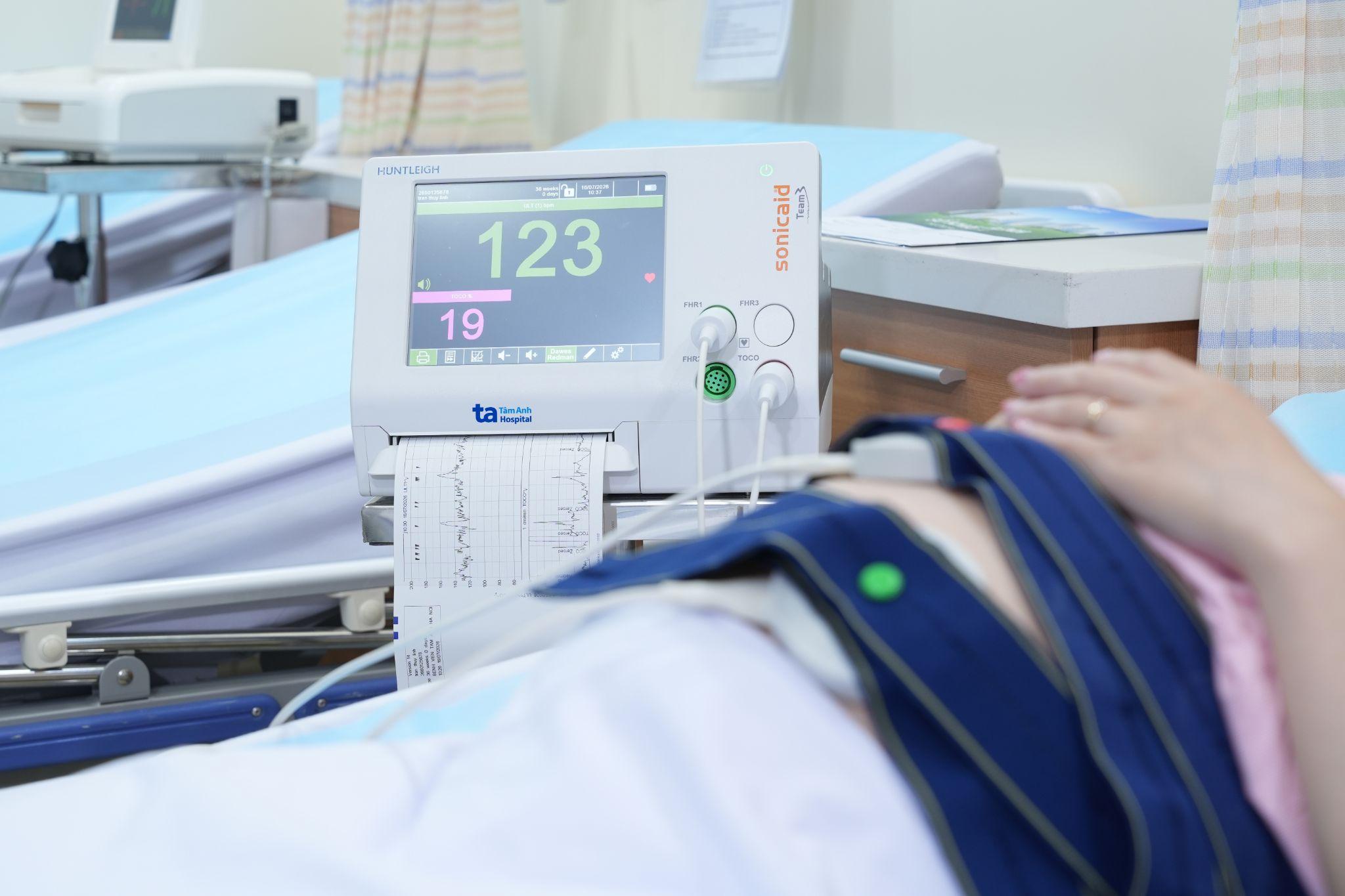 |
The pregnant woman is being monitored for fetal heart rate and uterine contractions using a computational CTG machine. *Photo: Tam Anh General Hospital* |
When the pregnancy reached 36 weeks and two days, the computational CTG recorded adverse signs. Although the short-term variability of the fetal heart rate remained within acceptable limits, the high episode index (a period of strong fetal heart rate fluctuation, reflecting a healthy and responsive fetus in the uterus) was 0. Combined with a fetal weight of only 1.9 kg (2nd percentile), doctors were concerned that the fetus might experience growth arrest if the pregnancy continued to be prolonged, leading to an elective cesarean section.
The two baby girls were born weighing 1.9 kg and 2.3 kg. Thanks to the pregnancy being extended by over seven weeks, the fetuses' lungs had more time to mature, and neither baby required respiratory support. After 4 days, Ms. Bich and her two babies were discharged healthy.
 |
Ms. Bich's two baby girls shortly after birth. *Photo: Provided by subject* |
Dr. Len noted that for high-risk pregnancies, success lies in maintaining the pregnancy longer within safe limits. A stable pregnancy means each day in the womb gives the child more time to mature. When monitoring indicators show adverse signs, timely intervention ensures fetal safety.
Pregnant women carrying twins, with a history of pregnancy loss, preterm birth, or who have been warned of short cervical length or slow fetal development, should attend scheduled appointments at facilities with coordinated obstetrics and neonatology departments. In cases of intermittent abdominal pain, bleeding, vaginal discharge, abnormal fetal movement, or other unusual signs, pregnant women should go to the hospital immediately.
Van Anh
| Readers can submit questions about pregnancy and childbirth here for doctors to answer |