Huong previously wore glasses for distance vision and removed them to read or see objects up close. Associate Professor, Doctor Nguyen Xuan Hiep, from the High-Tech Eye Center at Tam Anh General Hospital Hanoi, diagnosed her with both myopia and presbyopia in both eyes.
Myopia makes it difficult for individuals to see distant objects clearly without glasses, while presbyopia reduces the ability to see close-up. If only myopia were corrected, the patient would still likely need glasses for reading, using a phone, or performing tasks at close range.
Doctors recommended Presbyond surgery for both myopia and presbyopia in both eyes. This procedure aims to reduce her reliance on glasses for both distant and near vision.
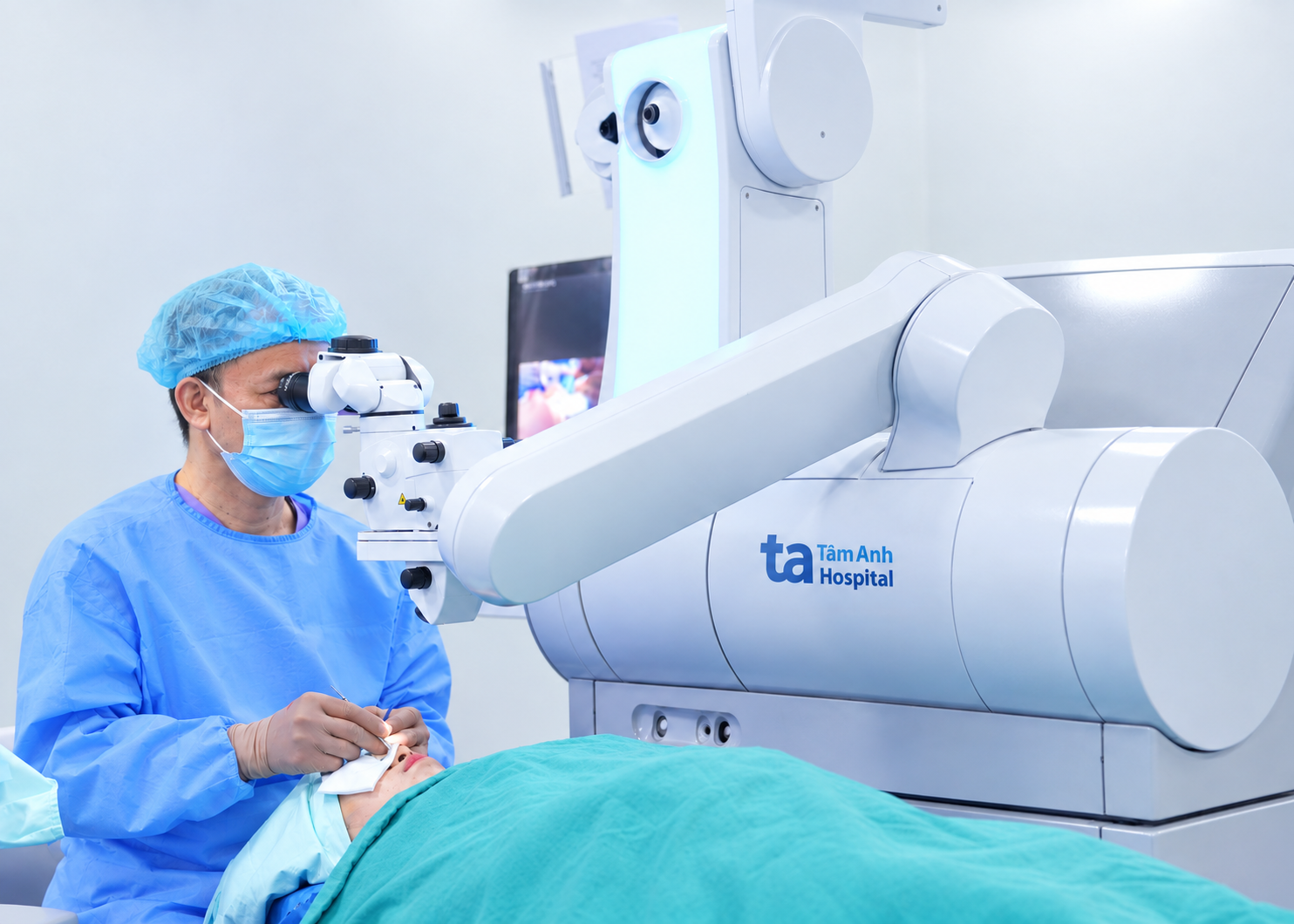 |
Associate Professor Hiep performing eye surgery on Huong. Photo: Tam Anh General Hospital
Associate Professor Hiep explained that Presbyond uses a laser on the cornea, similar to Femtolasik surgery. However, instead of setting both eyes for the same distance vision, doctors intentionally adjust one eye to prioritize distance and intermediate vision, while the other eye supports intermediate and near vision. The small refractive difference between the two eyes is calculated, allowing the brain to coordinate images and enable the patient to see at various distances.
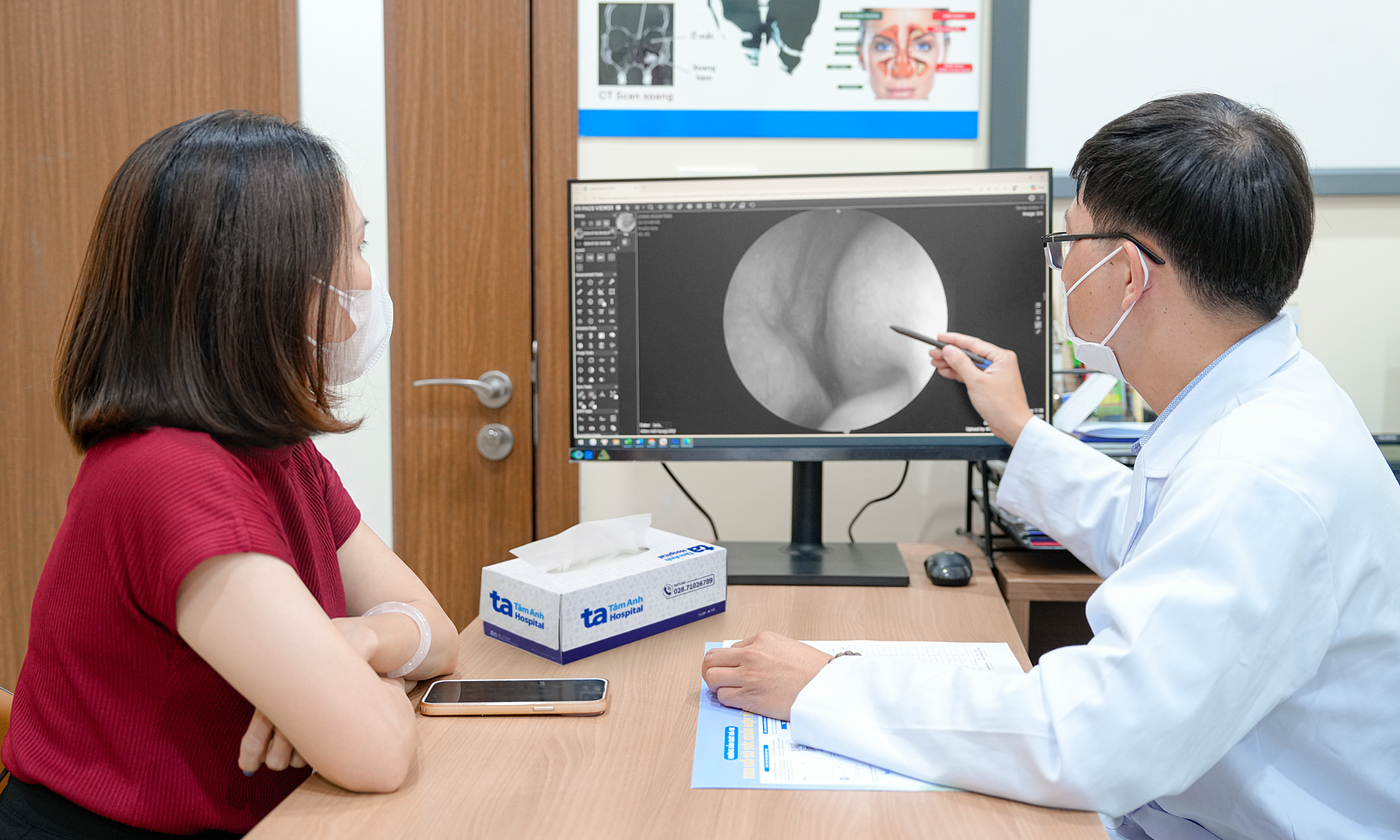
Before the surgery, Huong underwent comprehensive examinations of her cornea, retina, vitreous humor, lens, and other eye structures. The doctor also assessed the refractive difference between her two eyes to create an appropriate laser treatment plan.
After local anesthesia, the surgical team used a femtosecond laser to create a corneal flap. Subsequently, an excimer laser applied the specific Presbyond protocol for each eye. The dominant eye was prioritized for distance and intermediate vision, while the other eye supported intermediate and near vision. Following the procedure, the corneal flap was repositioned without the need for stitches. The patient was monitored and discharged on the same day.
One week later, both corneas were clear, and the surgical wounds healed well. Huong experienced no glare, foreign body sensation, or tearing. Her left eye was free of myopia, achieving 10/10 uncorrected distance vision, while her right eye reached 5/10 (with 1.5 diopters remaining as per the surgical plan). When using both eyes, her distance vision reached 10/10. Huong can now read newspapers and small print at close range; however, her adaptation and visual stability will continue to be monitored.
Presbyopia is a natural change in the eye where the ability to focus gradually decreases with age, typically becoming noticeable around 40 years old. When combined with refractive errors, patients may struggle to transition between distant and near vision, necessitating glasses or other visual aids.
According to Associate Professor Hiep, Presbyond surgery can be considered for individuals with both refractive errors and presbyopia, but it is not suitable for everyone. Patients require a thorough examination to assess their cornea, retina, vitreous humor, lens, and their ability to adapt to the refractive difference between the two eyes. For those without cataracts and seeking treatment, laser surgery offers a minimally invasive option that can restore vision relatively quickly.
Hoang Duong
*Patient's name has been changed
| Readers can submit ophthalmology questions here for doctors to answer |