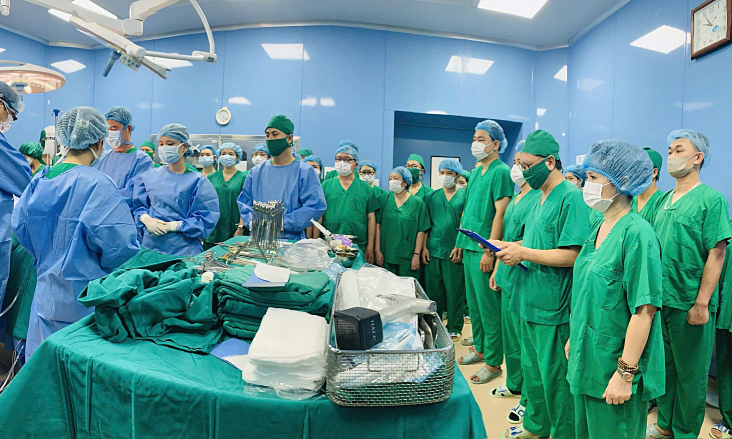
On 26/7, associate professor, doctor Nguyen Manh Khanh, deputy director of Viet Duc Friendship Hospital and head of Orthopedic Trauma Department 1, stated that after just a few days of surgery and treatment at Viet Duc Hospital, the patient was able to practice walking and was preparing to return home.
The woman had suffered from left hip pain for about 10 years. Initially, the pain only appeared during movement but gradually worsened, making walking and daily activities difficult. Although she had been scheduled for hip replacement surgery years ago, she had to wait due to the New Zealand healthcare system's schedule. The waiting period had extended to about four years. Opting for self-funded surgery would cost nearly 40,000 New Zealand dollars.
After researching information about the expertise of doctors and the quality of treatment in Vietnam, the patient decided to come to Viet Duc Friendship Hospital. Upon admission, her left hip joint was completely destroyed. Her weight of nearly 100 kg also increased the difficulty of anesthesia and surgery.
Doctors diagnosed the patient with avascular necrosis of the femoral head and end-stage hip osteoarthritis. According to doctor Khanh, the condition can be linked to various causes such as impaired blood supply to the bone, trauma, autoimmune diseases, prolonged corticosteroid use, or overweight and obesity. Without timely treatment, the hip joint would be completely destroyed, severely impacting mobility.
The team decided to perform a total hip replacement using a minimally invasive technique. Due to the thick soft tissue in the hip region, the surgical approach to the joint was much deeper than usual, requiring high precision. However, doctors made a skin incision of only about 5-6 cm, which helped limit soft tissue damage, reduce post-operative pain, and shorten recovery time.
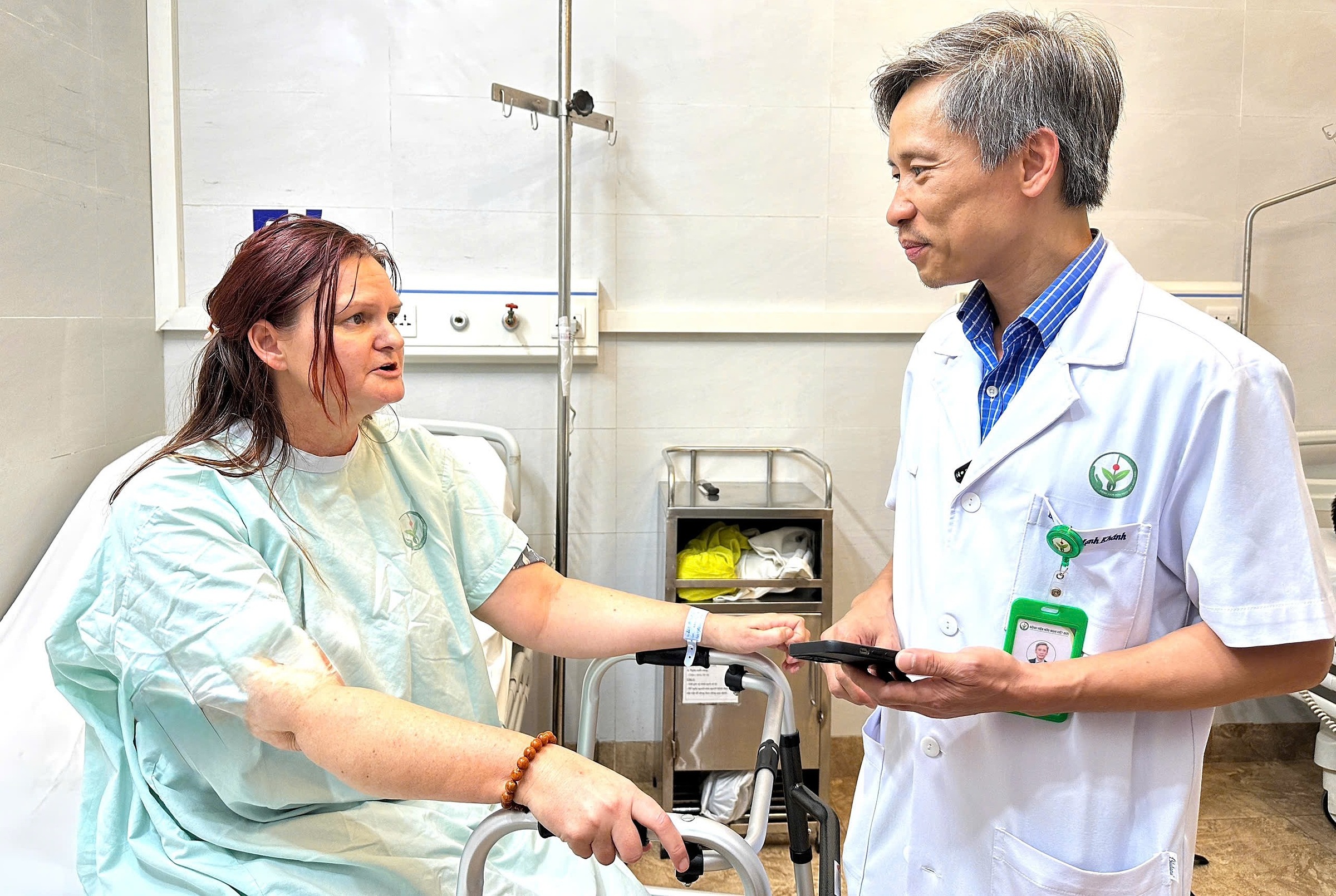 |
Doctor Khanh examines the patient after surgery. *Photo: Thuy Dung* |
On the second day after surgery, the patient stood up and began walking. After nearly one week of treatment, the incision healed well, her legs were balanced, she was no longer in pain, and could walk independently. The woman shared that before the surgery, her life was nearly overturned by persistent pain, with every step relying on a cane or crutches. Despite using many painkillers, she continued to work to maintain her job as a real estate manager and personal assistant.
"After surgery, I feel like I've been given a new lease on life, believing that in just about three months, I'll be able to run again. I never thought that would be possible before," she said.
According to associate professor Khanh, this case reflects a growing trend of international patients choosing Vietnam for high-tech medical treatment. In the field of joint replacement, many domestic medical facilities have mastered modern techniques, providing effective treatment with reasonable costs and faster access to services compared to some other countries.
Le Nga