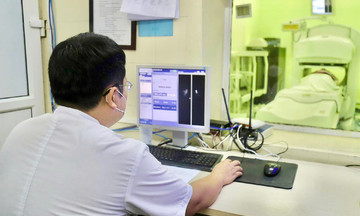
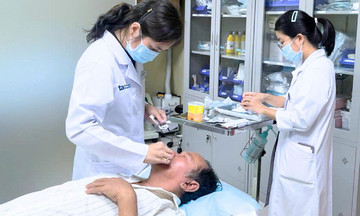
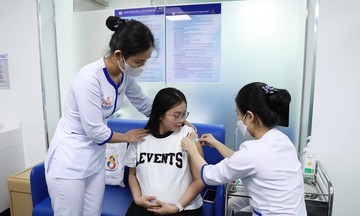
This information comes as the National Assembly recently approved the investment policy for the National Target Program on healthcare, population, and development for the 2026-2035 period, with a total capital of 125 trillion VND. Doctor Mai Xuan Phuong, former Deputy Director of the Communication - Education Department, General Department of Population (now the Population Department, Ministry of Health), noted that this activity helps couples prepare psychologically and gain essential knowledge for married life. Additionally, it prevents the transmission of sexually transmitted diseases, and enables early detection and timely treatment of underlying conditions that could affect reproductive health and marital quality.
 |
A couple undergoing reproductive examination at Hanoi Medical University Hospital. Photo: Le Nga
According to Mr. Phuong, modern medicine allows for early detection and timely intervention for underlying medical conditions, prevents sexually transmitted infections, and screens for genetic diseases such as Thalassemia, hemophilia, and Down syndrome. By understanding the parents' health history, doctors can develop effective prevention protocols for the fetus against risks like syphilis, hepatitis B, or HIV. This forms a crucial foundation for building stable families and raising healthy children.
However, a significant challenge lies in changing people's habits. Current data indicates that the rate of access to this service remains low and varies greatly across regions. For example, in Hanoi, coverage reached nearly 63% in the first half of 2024, while Thai Nguyen recorded only 22,5% in the first six months of 2025. Some pilot models achieved results of 70–90%, but their scale is limited.
The primary reasons stem from the reluctance of young people or a lack of mutual agreement between the two parties. The current Marriage and Family Law does not mandate premarital health check-ups, leading many not to consider this an essential preparatory step in building a family. Furthermore, the lack of coordination between promotional units and healthcare facilities, especially in remote areas, also creates a significant barrier to accessing these services.
Globally, China once enforced mandatory premarital health check-ups but abolished the regulation in 2003 to respect individual freedom. This decision led to a sharp decline in the number of couples undergoing examinations, resulting in an increased rate of newborns with birth defects. Currently, the country's government is striving to reverse the situation by offering entirely free examination and counseling packages in many provinces and cities. For instance, according to Hubei Daily, residents of Jingmen City will receive a range of benefits, including free premarital medical examinations for newlyweds, prenatal health checks for couples planning pregnancy, non-invasive prenatal testing (NIPT) for pregnant women, and congenital metabolic disease screening for newborns.
In Southeast Asia, most countries pursue a policy of voluntary encouragement combined with cost support. Singapore has developed a modern preventive healthcare system, focusing on screening for common genetic diseases like Thalassemia early in adolescence. The island nation's government also actively subsidizes premarital testing packages to reduce the financial burden on couples. Meanwhile, Malaysia applies stricter regulations, requiring mandatory HIV testing for Muslims before marriage registration. This nation also implements a free Thalassemia screening program in high schools to detect disease carriers early. Indonesia recently introduced a digital application, requiring couples to declare their health indicators three months before their wedding ceremony. Jakarta's move aims to detect early risks of maternal malnutrition, thereby preventing stunting in future generations of children.
To achieve the 2035 goal, Mr. Phuong suggests that the health sector needs to standardize examination and counseling procedures at all levels, from provincial hospitals to commune health stations and private clinics. Facilities must be adequately equipped with testing capabilities, genetic screening, and psychological counseling. Local governments should consider policies for financial support, health insurance, or service subsidies to encourage public participation.
Concurrently, the expert emphasized the importance of shaping a "premarital check-up culture" through communication. The population sector needs to integrate this content into school sex education programs, community wedding festivals, and utilize digital transformation to simplify registration procedures for couples.
Le Nga