Preterm birth is one of the primary challenges in obstetrics. Currently, doctors primarily assess risk based on obstetric history, cervical length, and some tests. However, the ability to predict it early in pregnancy remains limited, especially for first-time mothers.
A multi-center study, conducted by scientists from the Institute of Medical Genetics and Gene Solutions in collaboration with several hospitals and universities in Vietnam, was published in AJOG Global Reports, a journal of the American College of Obstetricians and Gynecologists, in early September. The research team further analyzed data from blood samples originally collected for non-invasive prenatal testing (NIPT), seeking markers associated with preterm birth risk.
NIPT is a non-invasive prenatal screening test that analyzes cell-free DNA fragments in the mother's blood, including DNA from the placenta. Instead of merely sequencing DNA, the research team further analyzed how these DNA fragments are cut, particularly the characteristics of their ends. These characteristics are collectively known as fragmentomics.
On 28/9, Doctor Nguyen Thach Cuong, head of the research team, stated that the team wanted to investigate whether NIPT blood samples could provide additional information about pregnancy beyond chromosomal abnormality screening. Simply put, the team sought to "read an additional layer of information" from the way DNA is fragmented.
The study surveyed 286 pregnancies, comprising 82 cases of spontaneous preterm birth and 204 cases of full-term birth. Blood samples were collected when pregnant women underwent NIPT, at an average gestational age of about 12 weeks. Analysis revealed that the characteristics of DNA fragments, especially their ends, differed between the two groups. When tested on 58 separate pregnancies, the model identified 94% of preterm birth cases within this group.
Initial results indicate that blood samples taken around the 12th week of pregnancy may contain markers linked to preterm birth risk, several months before clinical symptoms appear. Notably, the study utilized the same blood samples already collected for NIPT, eliminating the need for additional blood draws from pregnant women.
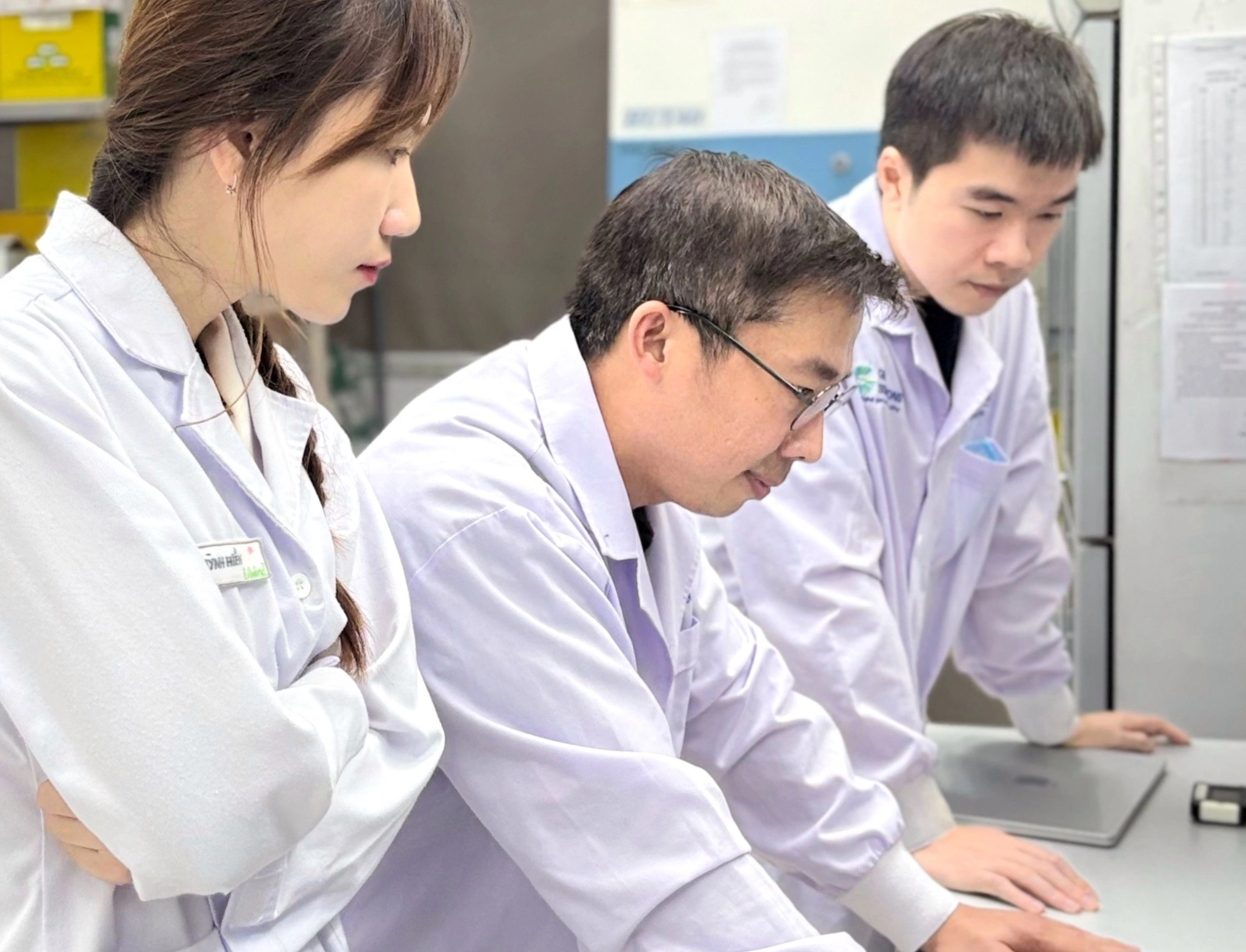 |
Research team members. Photo: Ha To |
Globally, scientists are also exploring cell-free DNA in maternal blood to predict preterm birth. A study published in PLOS Medicine in 2025 analyzed NIPT data from 2,590 pregnancies in China and developed a predictive model based on cell-free DNA markers. When tested on three independent groups of pregnant women, the model demonstrated good discriminatory power between preterm and full-term births.
However, the results of the Vietnamese study do not yet mean that NIPT can currently predict preterm birth. This is an initial study, conducted with a case-control design and a test group comprising only 58 pregnancies. The authors suggest that larger sample sizes, independent populations, and prospective follow-up studies are needed before considering practical application.
If confirmed, this data could become a supplementary information source, helping doctors identify pregnant women who require closer monitoring early, in conjunction with current methods like cervical length measurement and other paraclinical tests.
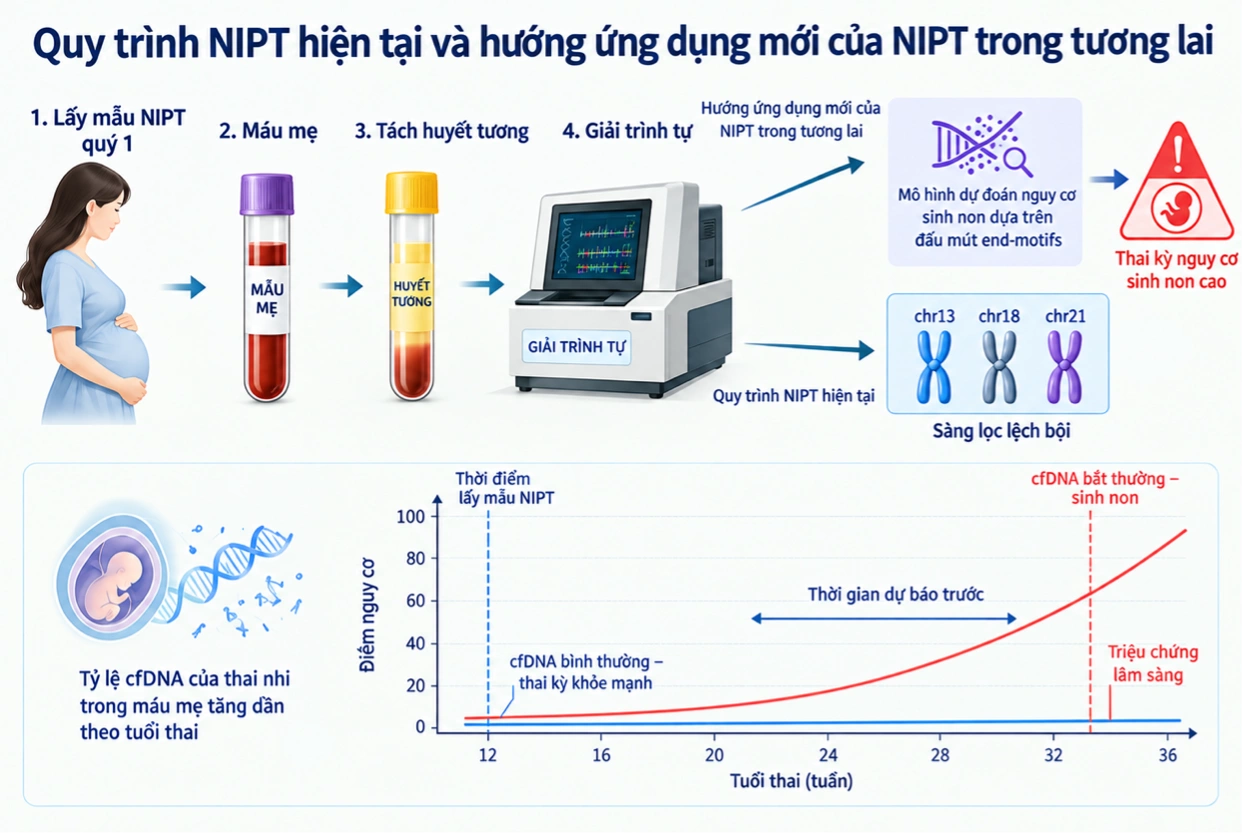 |
NIPT procedure image provided by the research team |
The World Health Organization defines preterm birth as labor occurring before 37 weeks of gestation. It is a leading cause of increased risk for conditions such as intellectual developmental abnormalities, cerebral palsy, epilepsy, blindness, deafness, bronchopulmonary dysplasia, retinopathy of prematurity, and more. Preterm infants have weakened immune systems, increasing their susceptibility to sepsis, pneumonia, thermoregulation disorders, digestive disorders, necrotizing enterocolitis, and other issues. Immature lung function makes infants prone to respiratory distress after birth and increases mortality.
The mechanisms causing preterm birth are not yet fully understood, but may involve placental abruption, overdistension of the uterus, cervical incompetence, or hormonal changes stemming from maternal or fetal stress. Furthermore, infections in the cervix and vagina are also associated with preterm labor.
Le Phuong