The practice of storing cooked white rice overnight in the refrigerator can significantly increase its resistant starch content, thereby slowing down absorption and reducing post-meal blood sugar spikes. This insight comes from family medicine doctor Li Sixian of Taiwan, China. The key to this effect lies in the natural molecular structure of the rice grain, specifically its amylose (straight-chain starch) content.
Doctor Li Sixian explained the biological mechanism: when starch in cooked rice is introduced to the low-temperature environment of a refrigerator, straight-chain amylose molecules rearrange, reassemble, and recrystallize. This process creates a stable molecular structure that digestive enzymes in the body find difficult to access and break down. This is the principle behind the formation of type 3 resistant starch (RS3) through "retrogradation," a key factor that enables cold, stored rice to stabilize blood sugar levels more effectively than freshly cooked hot rice.
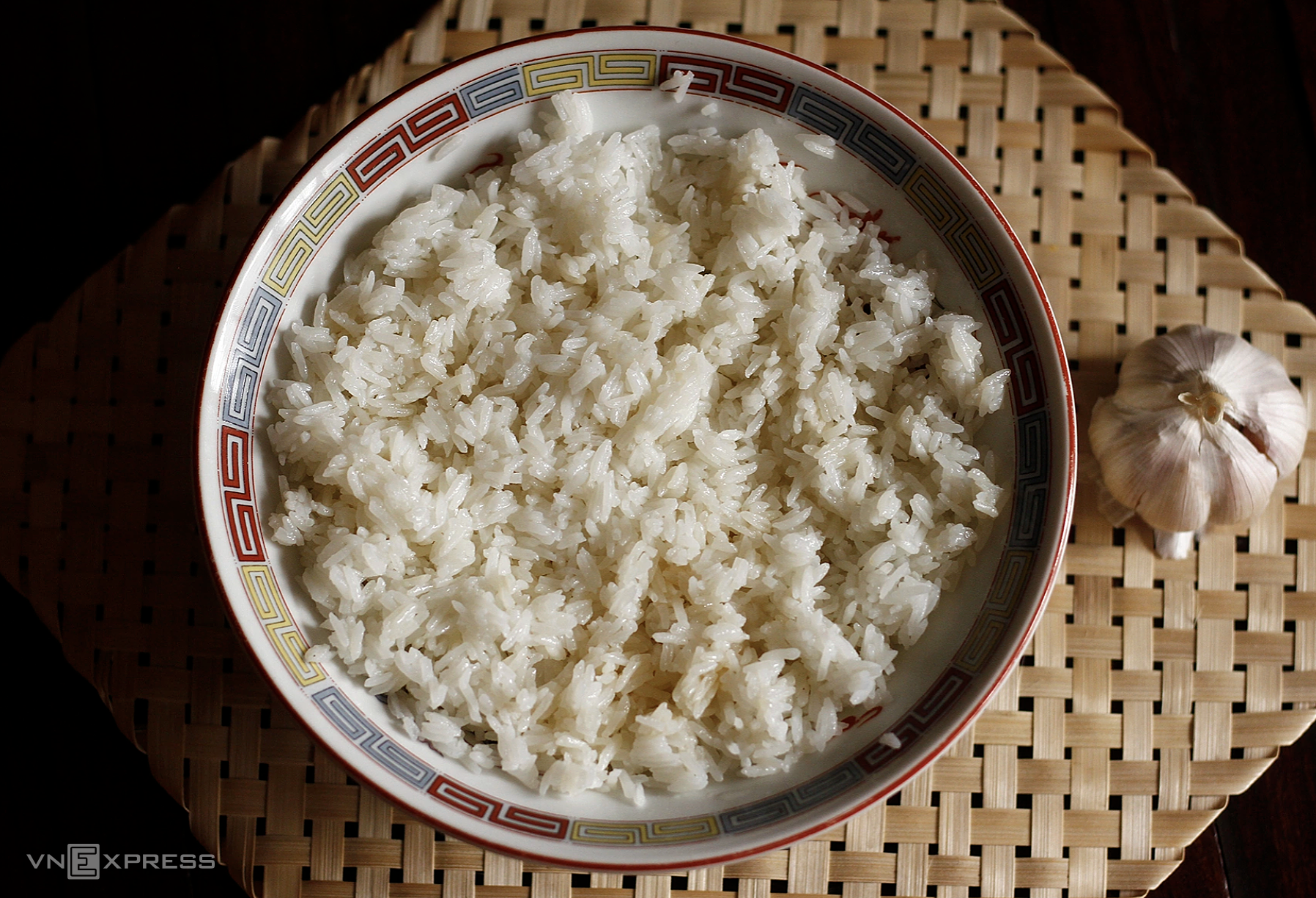 |
Storing white rice overnight has been shown to produce resistant starch, which helps lower blood sugar. Photo: Bui Thuy |
Doctor Li Sixian emphasized that the effectiveness of increasing resistant starch depends significantly on the rice variety:
Long-grain rice: This variety, naturally high in amylose, can increase its resistant starch content by about 2,5 times after cooling, providing the most significant blood sugar control benefits.
Short-grain rice, sushi rice, and sticky rice: Conversely, these types of rice contain nearly 100% amylopectin (branched-chain starch). Due to its complex branched structure, amylopectin molecules cannot recrystallize when exposed to cold. Even if stored in the refrigerator for several days or reheated, they produce almost no biologically significant amount of resistant starch to improve blood sugar.
In addition to the notes on rice varieties, doctor Li Sixian pointed out that the principle of cooling to create resistant starch is effective only for a specific group of foods. He also warned of three other "starch traps" that many mistakenly believe benefit from cold storage, but which are ineffective:
Baked sweet potatoes: Sweet potatoes themselves have a low amylose content. Furthermore, the high baking temperature completely gelatinizes the starch, making retrogradation in the refrigerator almost impossible. If boiled and then stored cold overnight, the improvement is only marginal, far less effective than white rice.
Tapioca pearls, clear dumplings (banh bot loc), and cassava starch jelly: These are predominantly composed of amylopectin, so refrigerating them provides no blood sugar-lowering benefits.
Small red-skinned potatoes: The ability to increase resistant starch after cooling is only about one-half compared to large brown-skinned potato varieties.
Beyond cold long-grain rice, doctor Li Sixian suggested other starch sources that respond very well to the cooling method: Italian pasta stored cold for 3 to 5 days can more than double its resistant starch content; large brown-skinned potatoes, boiled and left overnight, show a very clear effect; or overnight oats, which also contain significantly more resistant starch compared to hot cooked oatmeal.
Doctor Li Sixian emphasized that while the mechanism of starch conversion when cooled is not complex, its application is quite selective. The actual effectiveness is closely dependent on the inherent amylose ratio of the grain or ingredient and the preparation method. Only by correctly understanding the fundamental nature of starch structure can utilizing cold leftover rice stored overnight truly become a scientific and effective solution for blood sugar management in a diet.
My Y (According to HK01)