Minh, despite normal physiological function, had been unable to conceive for 4 years. Tests at the Fertility Support Center, Tam Anh General Hospital Hanoi, revealed no sperm, even after centrifugation. He had no history of surgery, injury, or reproductive system diseases. Furthermore, testosterone and gonadotropin hormone tests indicated no signs of testicular dysfunction.
Dr. Cao Tuan Anh, a specialist level II, suspected Minh had obstructive azoospermia. This condition means sperm is produced but cannot exit the body, and the vas deferens cannot be palpated on either side. Subsequent specialized tests confirmed a CFTR gene variant linked to congenital bilateral absence of the vas deferens.
The vas deferens are responsible for transporting sperm through the ejaculatory duct for ejaculation. In congenital anomalies like Minh's, these two ducts either fail to develop or atrophy during fetal development. This prevents sperm from entering the seminal fluid, even with normal testicular development. The condition typically presents no obvious symptoms, leading men to discover it only when seeking infertility treatment.
Minh's wife was also tested for the CFTR gene, as it is an autosomal recessive genetic disease. If both partners carry the disease-causing variant, their offspring face a 25% risk of developing a CFTR-related condition. Fortunately, Minh's wife did not carry this gene mutation.
Doctors performed epididymal sperm aspiration, successfully collecting enough sperm to confirm Minh's normal spermatogenesis. The healthy sperm were then directly injected into his wife's eggs, effectively bypassing the absent transport pathway. The couple achieved 8 high-quality embryos. His wife successfully underwent embryo transfer on the first attempt and is now 5 months pregnant. The remaining 7 embryos were cryopreserved for future family planning.
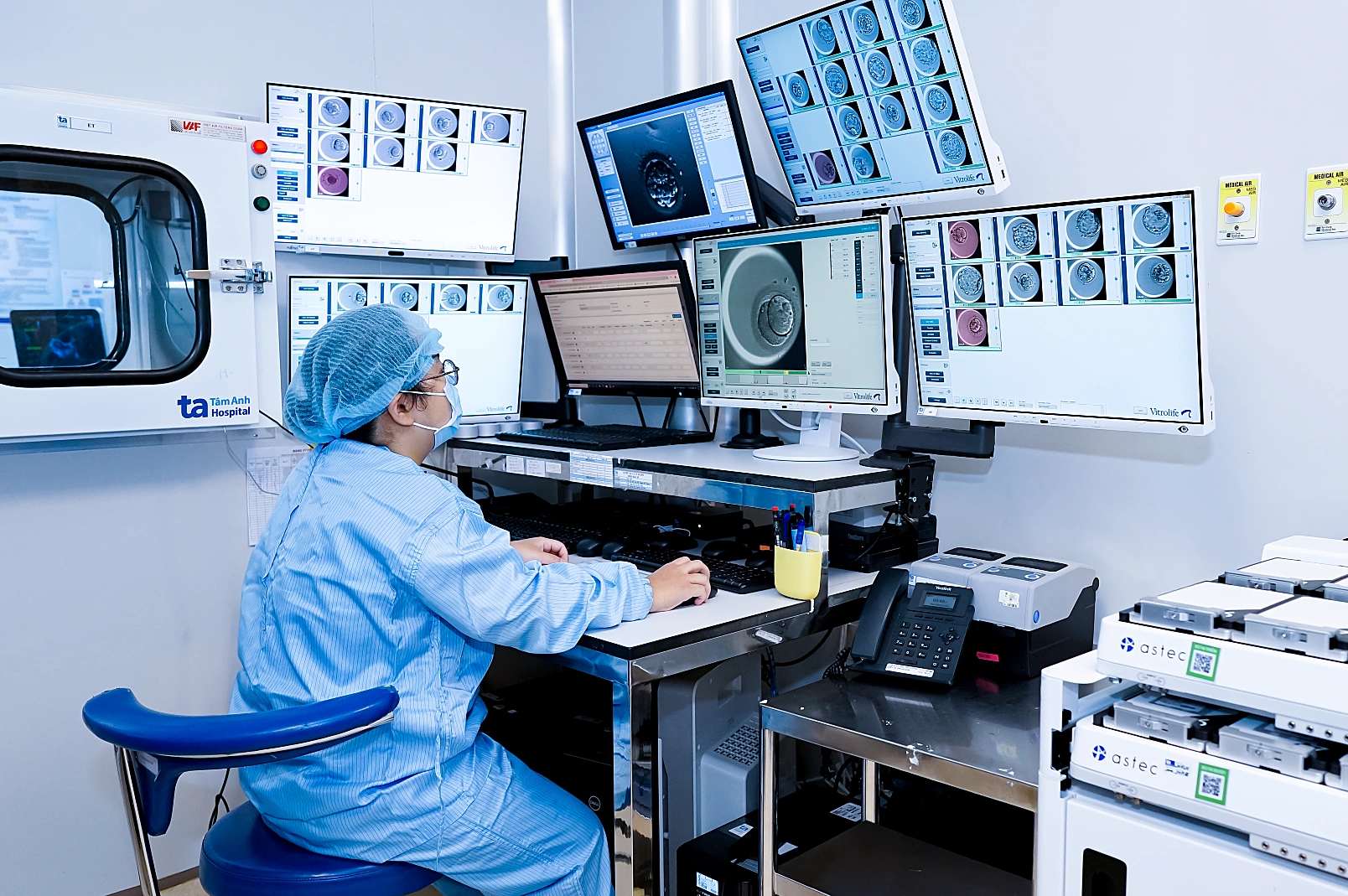 |
Embryologist observing embryo development. Photo: Tam Anh General Hospital |
Dr. Tuan Anh emphasized that not all cases of azoospermia result from the testes' inability to produce sperm. Azoospermia is categorized into several types, including impaired spermatogenesis and obstructive causes. Men with normal testes and sex hormones but no sperm in their semen should seek a thorough specialist examination to identify the underlying cause. The congenital absence of the vas deferens can also be associated with urinary system abnormalities, necessitating evaluation of the patient's kidneys and urinary tract.
Thanh Ba
| Readers can submit questions about infertility here for doctors to answer |