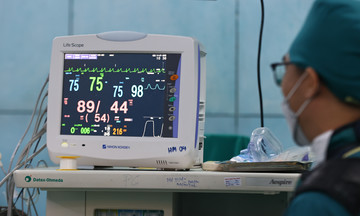
Doctor Nguyen Van Toan, Deputy Head of the Neonatology Department at Tam Anh Hanoi General Hospital, explains that newborns have immature immune systems and underdeveloped organs. Certain unusual signs in infants can indicate serious conditions like infections or neurological abnormalities.
Poor feeding, refusal to feed
Regular feeding and alertness are normal signs of development in newborns. Conversely, parents should pay attention if an infant suddenly feeds less, refuses to feed, or won't wake for feedings. These can be early warning signs of issues such as hypoglycemia or infections.
Lethargy, difficulty waking
Newborns sleep extensively, as sleep is vital for brain, physical, and immune system development. However, parents should not ignore an infant who is excessively lethargic or difficult to wake. These symptoms may relate to infections or hypoglycemia, requiring immediate medical evaluation.
Abnormal breathing
A newborn's respiratory system is not fully developed, so any subtle changes in breathing require careful monitoring. Parents should seek immediate medical attention if their infant shows signs like rapid breathing (over 60 times per minute), unusually slow breathing, chest indrawing, nasal flaring, or signs of oxygen deprivation such as bluish skin, lips, or extremities. These symptoms may indicate pneumonia, respiratory failure, sepsis, or congenital heart disease.
Fever or hypothermia
Newborn body temperature is sensitive to the environment due to immature thermoregulation. A fever above 38 degrees C or hypothermia below 36 degrees C signals an abnormality. High fever can result from infections like pneumonia, meningitis, or other bacterial illnesses. Prolonged hypothermia can lead to metabolic disorders, respiratory failure, and reduced circulation.
Skin color changes
Normally, a newborn's skin is pink, soft, and warm to the touch. In some infants, visible small blood vessels or a pinker appearance on the cheeks and torso are physiological. A few days after birth, an infant's skin may lightly peel or become temporarily dry, which is not typically a sign of illness.
However, parents should be concerned if they observe unusual skin color changes. Jaundice appearing within the first 24 hours and spreading rapidly throughout the body may indicate pathological hyperbilirubinemia. Untreated, this condition can cause brain damage. Additionally, bluish skin, lips, or extremities may be linked to respiratory failure, congenital heart disease, or hypoxemia.
 |
Newborn with jaundice receiving treatment at the Neonatology Department, Tam Anh Hanoi General Hospital. Photo: Bui Viet |
Newborn with jaundice receiving treatment at the Neonatology Department, Tam Anh Hanoi General Hospital. Photo: Bui Viet
Frequent vomiting, bloating
Newborns have an immature digestive system with a small, horizontal stomach and a less effective esophageal sphincter. Therefore, mild spitting up after feeding is normal. However, parents should be wary if an infant vomits frequently, in large amounts, or if the vomit is green, dark yellow, or contains blood – these are signs of intestinal obstruction or congenital gastrointestinal malformations.
Severe abdominal bloating, vomiting or inability to pass stool, poor feeding, and excessive crying in an infant may indicate digestive disorders, paralytic ileus, constipation, or intestinal obstruction.
Eye, navel, and urinary tract issues
Red, swollen eyes with discharge or pus, especially in both eyes, can be due to conjunctivitis or an eye infection. A red, swollen navel with discharge or pus and a foul odor often indicates inflammation. If an infant urinates infrequently, has dark, unusual-smelling urine, or does not urinate for several hours, they may be dehydrated or have a urinary tract infection.
Seizures
Neurological disorders in newborns are often difficult to recognize but are dangerous. Infants exhibiting tremors in limbs, body stiffness, continuous eye rolling, or staring are showing signs of neonatal seizures. Common causes include cerebral hypoxia, birth trauma, hypoglycemia, meningitis, or metabolic disorders. Furthermore, an infant who is floppy with weak reflexes, feeds poorly, or conversely, is stiff all over, also signals central nervous system abnormalities.
Doctor Toan advises parents to closely observe their infant's daily behavior. Keeping the baby warm, maintaining navel and eye hygiene, ensuring exclusive breastfeeding, and following the immunization schedule are important measures to prevent illness and neonatal infections.
Trinh Mai
| Readers can submit questions about children's illnesses here for a doctor's response. |