The American College of Obstetricians and Gynecologists (ACOG) recommends that couples aged 35 and older undergo pre-pregnancy health checks three to six months before conception. This age can affect fertility, increase the risk of genetic abnormalities in the fetus, or lead to pregnancy complications. Health screenings help identify risks, manage existing conditions, and administer necessary vaccinations, thereby reducing pregnancy risks.
During the examination, both partners will have their blood pressure and body mass index (BMI) measured, along with blood and blood sugar tests. A general assessment will also cover family history, medical conditions, surgeries, and influencing factors like current medications, tobacco, and alcohol use. Doctors will screen for infectious diseases, such as: HIV, syphilis, and hepatitis B and C.
For women aged 35 and above, egg quality and quantity begin to decline. Depending on the individual case, women may need ovarian reserve checks, such as measuring AMH and early-cycle FSH levels, and counting antral follicle count (AFC) via ultrasound. The doctor will also assess menstrual cycles, conduct a gynecological exam, perform uterine and ovarian ultrasounds, and screen for breast, cervical, and thyroid cancers.
Men require specialized andrological examinations, as sperm quality also declines with age. Tests such as semen analysis, sperm DNA fragmentation, and screening for abnormalities like varicocele or genital infections may be recommended in specific cases.
Doctors will also review both partners' family histories for common genetic conditions, such as: thalassemia, cystic fibrosis, spinal muscular atrophy, and hemophilia.
Genetic testing helps determine the risk of transmitting diseases to offspring. If both partners carry a recessive gene, the risk of having a child with the condition is approximately 25%. Doctors will provide specific genetic counseling, guiding couples through early prenatal diagnoses like chorionic villus sampling or amniocentesis to determine if the fetus is affected. Alternatively, in vitro fertilization combined with preimplantation genetic screening can help couples choose the most suitable solution.
 |
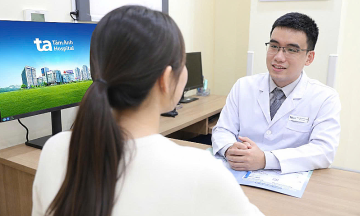
Doctor of First Degree Specialization Le Quang Hung advises a couple on pre-pregnancy reproductive health checks. Illustration: Tam Anh General Hospital |
One to three months before conception, the wife should receive vaccinations for rubella, chickenpox, influenza, and hepatitis B, and supplement with essential nutrients, such as: folic acid, iron, and calcium as advised by her doctor. Both partners should treat any existing medical conditions, adopt lifestyle changes, maintain a healthy weight, and avoid alcohol, tobacco, or stimulants.
Even if you are over 35, in normal health, and exercise regularly, potential risks remain. Some chronic conditions or genetic abnormalities often lack clear symptoms in their early stages. Therefore, both partners should undergo pre-pregnancy reproductive health checks at a hospital with multidisciplinary coordination, including: genetics, fetal medicine, andrology, and obstetrics and gynecology. This comprehensive assessment will allow doctors to develop a personalized care plan, prevent risks, and optimize the chance of welcoming a healthy baby.
Doctor of First Degree Specialization Le Quang Hung
Fetal Medicine Center
Tam Anh General Hospital, Ho Chi Minh City
| Readers can submit questions about obstetrics and gynecology here for doctors to answer. |