Ms. Tinh, an overseas Vietnamese from the United States, sought treatment at Tam Anh General Hospital TP HCM for severe back pain radiating down her legs, accompanied by numbness, muscle atrophy, and progressive leg weakness. Diagnostic X-rays revealed a herniated disc at the L4-L5 lumbar vertebrae. This herniation caused spinal canal narrowing and nerve compression, resulting in intermittent claudication, a condition that made walking more than 30-50 meters unbearable.
Master, Doctor, Specialist Level I Vu Duc Thang, from the Spine Surgery Department at Tam Anh General Hospital TP HCM, emphasized the critical need for surgery. Without intervention, Ms. Tinh faced significant risks, including losing the ability to walk, urinary and bowel incontinence, and severe complications from prolonged medication use, such as impaired liver and kidney function and adrenal insufficiency.
 |
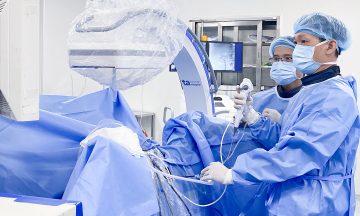
Doctor Thang (left) and his team performed spinal fusion surgery for Ms. Tinh. *Photo: Tam Anh General Hospital* |
Ms. Tinh underwent spinal fusion and nerve root decompression. During the procedure, doctors utilized a microsurgical microscope, capable of magnifying the surgical field many times, to precisely visualize and safely remove the herniated disc and damaged components. Following decompression, her nerve roots were freed, alleviating pain and numbness. To prevent spinal instability and promote rapid bone healing, doctors stabilized the vertebrae with screws and metal rods. These steps were continuously monitored by a C-arm navigation system, ensuring accurate and safe placement. An intraoperative neuromonitoring (IONM) system also provided real-time feedback on electrophysiological signals from the brain, spinal cord, and peripheral nerves, alerting the surgical team to any potential risks to sensitive nerve tissues.
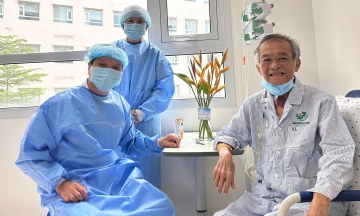
The surgery yielded immediate positive results. On the second day after the operation, Ms. Tinh was free from pain and numbness and could walk independently. She was discharged after three days. Doctors anticipate a full return to normal activities within three months.
 |
After surgery, Ms. Tinh could walk without assistive devices. *Photo: Tam Anh General Hospital* |
Patients experiencing unusual symptoms such as back pain, especially if it radiates down the legs and is accompanied by numbness or weakness, should seek prompt medical evaluation. Early detection is crucial for effective management, whether through conservative treatments or highly successful surgical interventions, thereby preventing complications.
Doctor Thang highlighted a growing trend of international patients seeking musculoskeletal treatment in Vietnam. This is attributed to medical technology and techniques comparable to those in developed countries, coupled with streamlined treatment processes and significantly lower costs. For instance, Ms. Tinh's treatment in the US could have involved a 3-6 month wait for an appointment and costs potentially reaching 80,000 USD. At Tam Anh General Hospital, her total treatment and hospitalization lasted approximately one week, at only one-tenth of the cost she would have incurred in the US.
By Phi Hong
| Readers can submit questions about musculoskeletal conditions here for doctors to answer. |