Eng English
China 中国人

Eng English
China 中国人
  • News
  • World
  • Business
  • Entertainment
  • Sports
  • Law
  • Education
  • Health
  • Lifestyle
  • Travel
  • Science
  • Digital
  • Automobiles
  • Trở lại Thể thao
  • Health
Sunday, 19/4/2026 | 10:01 GMT+7

When do children's nosebleeds require medical attention?

My 8-year-old child frequently experiences nosebleeds during hot weather or when they have rhinitis. Is this condition serious, and when should we seek medical care? (Hanh, Dong Nai)

For your 8-year-old child who experiences occasional nosebleeds, it is advisable to have them examined by a doctor to determine the underlying cause and receive appropriate treatment. Seek immediate medical attention if your child's nosebleeds are accompanied by a fever, dizziness, pale skin, fatigue, skin petechiae or ecchymoses, or bleeding gums.

Nosebleeds, medically known as epistaxis, occur when blood flows from the nasal lining, either out through the front of the nose or down the back of the throat. This condition is common in children aged 2-10 years. There are two main types: anterior nosebleeds, where blood originates from the front part of the nasal septum and flows out through the nostrils, accounting for 90% of cases and often manageable at home; and posterior nosebleeds, which involve bleeding from deeper within the back of the nose, flowing down the throat rather than out. Posterior nosebleeds are less common, harder to stop, and typically require hospitalization for treatment.

Symptoms of nosebleeds in children usually appear suddenly, with blood flowing as drops or a stream from one or both nostrils. Some children may vomit blood due to swallowing it.

Nosebleeds stem from various causes. Common factors include thin nasal lining, forceful nose blowing, or nose picking. Dry, hot weather can also dry out and crack the nasal lining, making it prone to bleeding. Rhinosinusitis or congested nasal mucosa can also easily trigger nosebleeds. Children inserting foreign objects into their nose, such as small beads or toys, or experiencing nasal trauma from falls, may also develop nosebleeds. Less common causes include dengue fever, clotting disorders, or vitamin C deficiency.
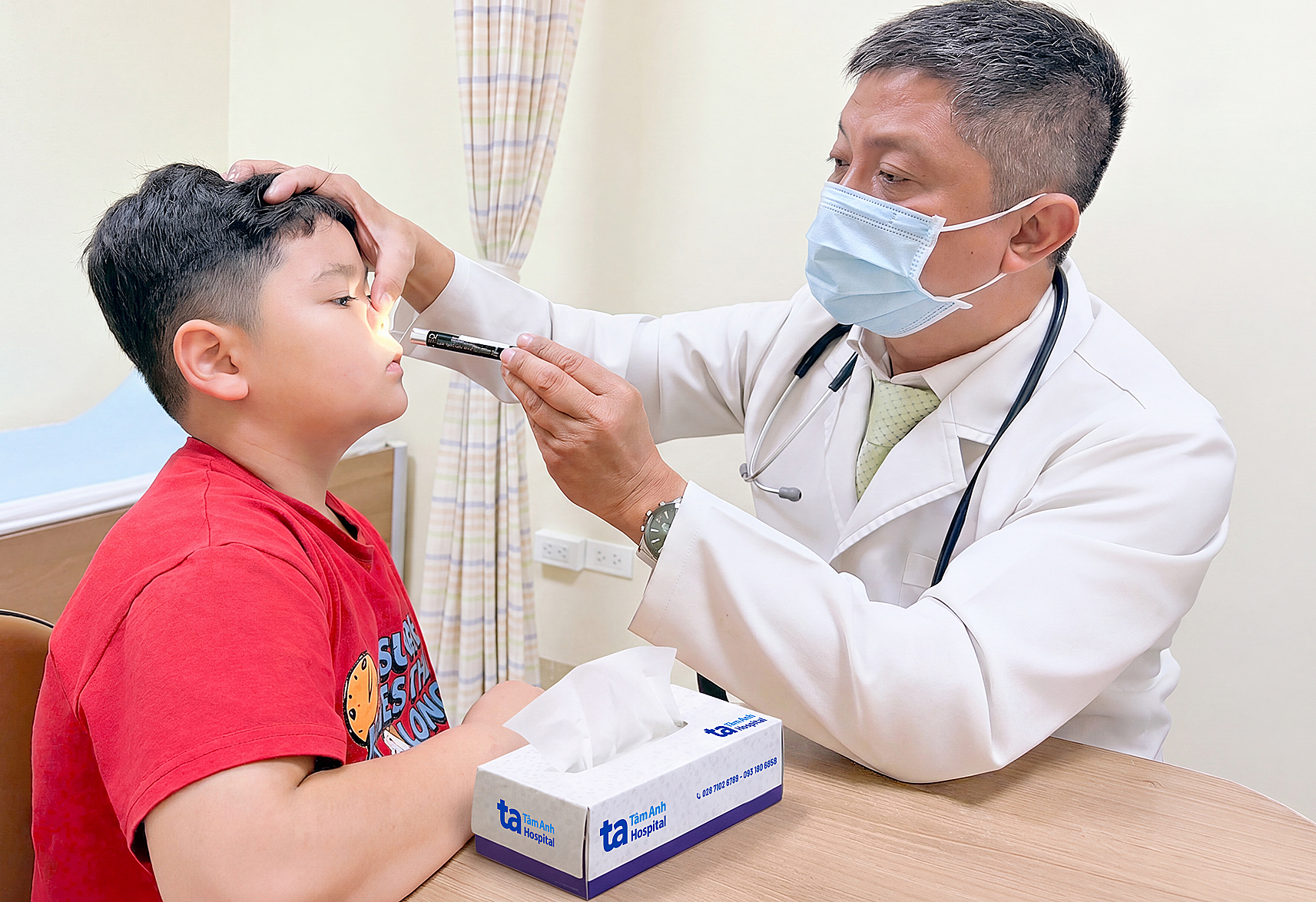
Dr. Nguyen Dinh Huan examines a child patient. Photo: Minh Tam

When a child experiences a nosebleed, parents should have them sit upright with their head tilted slightly forward, avoiding tilting it backward to prevent blood swallowing. Use a finger to firmly press the bleeding nostril for approximately 10 minutes to stop the flow. Applying a cold compress to the skin over the bleeding side of the nose can also help reduce bleeding. Once the bleeding stops, advise the child to avoid nose picking or forceful nose blowing to prevent recurrence.

To prevent nosebleeds, parents should keep children's fingernails short and remind them not to pick their nose or blow it forcefully. Maintain a cool, well-ventilated room temperature, and avoid prolonged exposure to dry, hot environments. Additionally, ensure children receive adequate nutrition, including plenty of green vegetables, fruits, and vitamin C in their daily meals. If a child has rhinosinusitis due to infection or allergies, it should be treated promptly. Parents should not use corticosteroid nasal sprays without a doctor's prescription. When nasal sprays are necessary, ensure correct application technique as instructed.

Parents can clean children's noses one to two times a week using physiological saline solution or isotonic deep sea water to help prevent rhinosinusitis.

Dr. Nguyen Dinh Huan

Department of Pediatrics, Tam Anh General Hospital, Ho Chi Minh City

Readers can submit questions about neonatal and pediatric health here for doctors to answer.
By VnExpress: https://vnexpress.net/khi-nao-tre-chay-mau-cam-can-di-kham-5064168.html
Tags: ear nose throat nosebleed

News in the same category

Habits increasing prostate cancer risk

Habits increasing prostate cancer risk

Consuming excessive red meat, fatty foods, leading a sedentary lifestyle, and abusing stimulants are factors that elevate prostate cancer risk.

Why does skin tend to break out during menstruation?

Why does skin tend to break out during menstruation?

Fluctuations in the hormonal trio of estrogen, progesterone, and testosterone during the menstrual cycle can increase oil secretion, alter skin moisture, clog pores, and cause acne.

How robot-assisted lung tumor surgery differs from traditional laparoscopy

How robot-assisted lung tumor surgery differs from traditional laparoscopy

While laparoscopic surgery is common, complex or hard-to-reach lung tumors may require robotic assistance for increased precision.

Many Vietnamese children experience early puberty, stop growing taller prematurely

Many Vietnamese children experience early puberty, stop growing taller prematurely

Many overweight and obese children appear tall in early stages but experience early puberty, leading to premature growth plate closure and ultimately, a modest adult height.

7 foods men should eat regularly after age 30

7 foods men should eat regularly after age 30

Foods such as beans, green vegetables, coffee, and yogurt provide essential nutrients, which can reduce inflammation and boost overall health for men after age 30.

7 ways to support rapid visceral fat reduction

7 ways to support rapid visceral fat reduction

Increasing dietary fiber and opting for high-intensity workouts over daily walks can more effectively help eliminate visceral fat.

Is frequent back pain a sign of pancreatic cancer?

Is frequent back pain a sign of pancreatic cancer?

I often experience abdominal pain accompanied by frequent back pain, unrelated to my menstrual cycle. Could this be a symptom of pancreatic cancer? (Ngoc Chau, 33)

Postpartum care in hot weather: tips for new mothers' well-being

Postpartum care in hot weather: tips for new mothers' well-being

New mothers need to maintain hygiene, ensure a cool room, stay hydrated, get sufficient sleep, and follow a proper diet to recover quickly and ensure adequate milk supply for their babies.

5 foods good for eyes to eat daily

5 foods good for eyes to eat daily

Eggs, dairy products, nuts, and green vegetables are familiar foods that should be added to your daily diet to maintain healthy eyes.

Five summer air conditioning mistakes that cause respiratory illness

Five summer air conditioning mistakes that cause respiratory illness

Setting the air conditioner below 20 degrees Celsius, neglecting maintenance, and entering a cold room directly after sun exposure can lead to dry skin, fatigue, and an increased risk of developing bronchitis or pneumonia.

Eng English
China 中国人
  • News
  • World
  • Business
  • Entertainment
  • Sports
  • Law
  • Education
  • Health
  • Lifestyle
  • Travel
  • Science
  • Digital
  • Automobiles
FPT Tower, 10 Pham Van Bach Street, Dich Vong Ward,
Cau Giay District, Hanoi, Vietnam
Email: contacts@vnportal.net
Tel: 028 7300 9999 - Ext 8556
Advertise with us: 090 293 9644
Register
© Copyright 2026 vnnow.net. All rights reserved.
Terms of use Privacy policy Cookies