Doctor Nguyen Thi Minh Duc, Head of the Neurology Department at the Neuroscience Center, Tam Anh General Hospital, TP HCM, states that individuals under 45 are considered a young demographic concerning stroke. Many people mistakenly believe stroke only affects older adults, leading to complacency and infrequent health checks. However, strokes can occur in those under 45 and have shown an increasing trend in recent years.
Doctor Duc highlights several instances where individuals under 45 should undergo stroke screening:
Young individuals with hypertension, diabetes, dyslipidemia, obesity, or cardiovascular disease should undergo health check-ups and stroke screening as advised by a doctor. These conditions can damage blood vessel walls, accelerate atherosclerosis, lead to blood clot formation, or increase the risk of brain hemorrhage.
Hypertension often progresses silently with few noticeable symptoms. Individuals under 45 with high blood pressure might maintain normal daily activities and work. However, without timely control and treatment, prolonged high blood pressure significantly increases the risk of damage to cerebral blood vessels.
Individuals who smoke, consume excessive alcohol, lead sedentary lifestyles, frequently stay up late, experience high stress, or have diets high in salt and fat should proactively check for risk factors. These habits can contribute to increased blood pressure, dyslipidemia, elevated blood sugar, and accelerate the development of vascular diseases.
If you are under 45 and have a family history of stroke (parents or siblings), you should inform your doctor during your examination. This allows for a proper risk assessment and stroke screening if necessary, as some cerebral vascular conditions can be linked to genetic factors or structural abnormalities in blood vessels.
Furthermore, if sudden and unusual neurological symptoms appear, such as numbness or weakness in limbs, facial drooping, difficulty speaking, blurred vision, or a brief loss of balance, individuals under 45 should seek medical attention. A doctor might recommend stroke risk screening, as these symptoms can indicate a transient ischemic attack.
Some stroke cases are linked to less common causes, including cerebral vascular abnormalities, carotid artery disease, arterial dissection, heart conditions leading to blood clot formation, or blood clotting disorders. Therefore, individuals with a history of stroke, transient ischemic attack, or unexplained neurological symptoms should consult a neurologist to identify the underlying cause.
According to Doctor Duc, stroke screening is individualized based on age, underlying medical conditions, symptoms, family history, and other risk factors. Healthy young individuals who are asymptomatic and not in a high-risk group typically do not require self-initiated routine CT or brain MRI scans.
Depending on the patient's specific condition and risk factors, doctors may check blood pressure, blood sugar, blood lipids, and weight, as well as assess lifestyle. In some instances, an electrocardiogram, echocardiogram, vascular ultrasound, or advanced imaging techniques like 3 tesla MRI, MRA, and CTA may be necessary to identify abnormalities in the brain and vascular system.
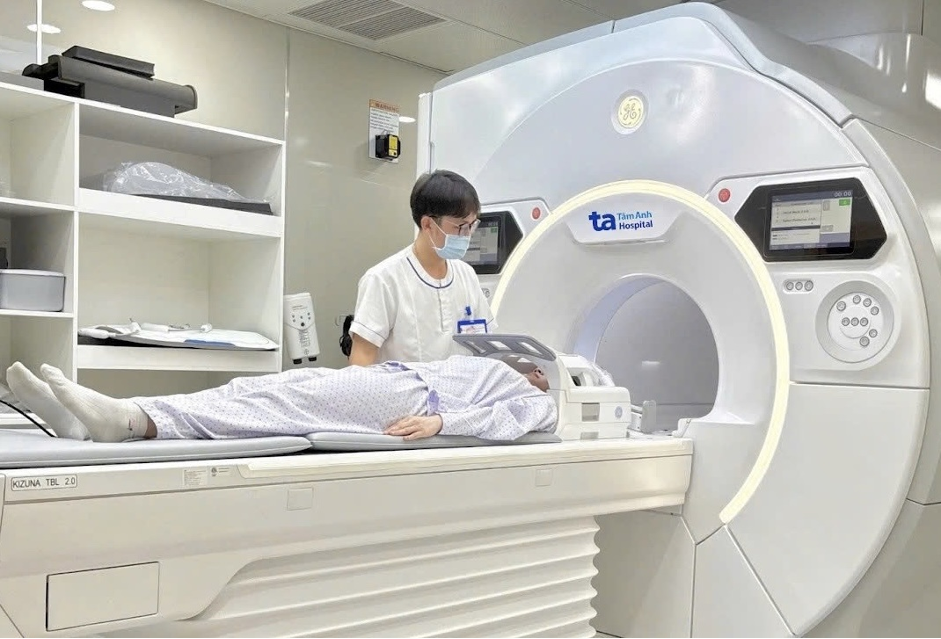 |
3 tesla MRI helps screen for and detect stroke risks early. *Photo: Tam Anh General Hospital* |
Doctor Duc advises that upon detecting any abnormalities, patients should not wait for self-recovery, self-medicate, or monitor their condition at home. For ischemic stroke, certain treatment methods are effective only within a specific timeframe. Arriving at the hospital early allows doctors to determine the type of stroke, the location of the lesion, and its cause, enabling the selection of the most appropriate treatment.
To help reduce the risk of stroke, everyone should maintain regular physical activity, adopt a balanced diet, avoid smoking, ensure adequate sleep, lose weight (if obese), undergo regular health check-ups, and effectively manage any existing underlying medical conditions.
By Trong Nghia
| Readers can submit questions about neurological diseases here for doctors to answer. |