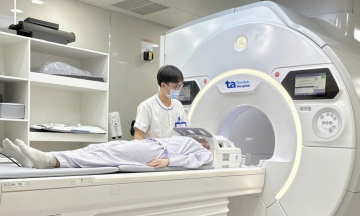
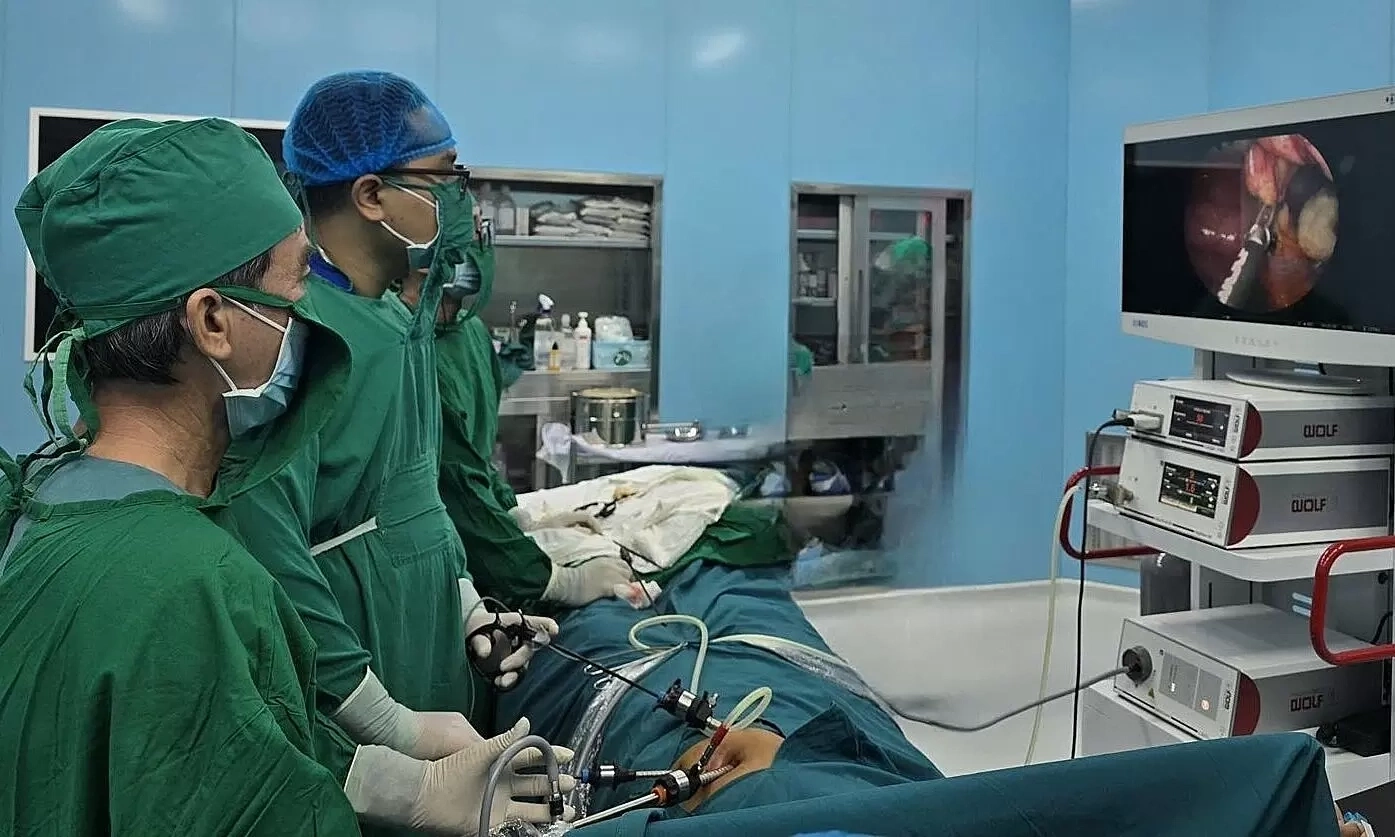
Jiho initially attributed his symptoms to a sore throat, but medication provided no relief as the front of his neck became tense and swelled rapidly. Doctor Nguyen Dang An, from the interventional ultrasound unit at the Diagnostic Imaging and Interventional Radiology Center, Tam Anh General Hospital TP HCM, noted that the swelling was located in the midline of the neck, progressed quickly, and was not consistent with a common sore throat.
Ultrasound results revealed a fluid-filled cystic mass in the typical position for a thyroglossal duct cyst. The cyst wall was thick, containing heterogeneous fluid and multiple signs of inflammation, consistent with a superinfection. The ultrasound confirmed that the thyroid gland was in its correct position and completely separate from the cyst, ruling out any conditions originating from the thyroid. Doctors diagnosed the patient with a superinfected thyroglossal duct cyst, measuring over 7 cm, significantly larger than typical thyroglossal duct cysts.
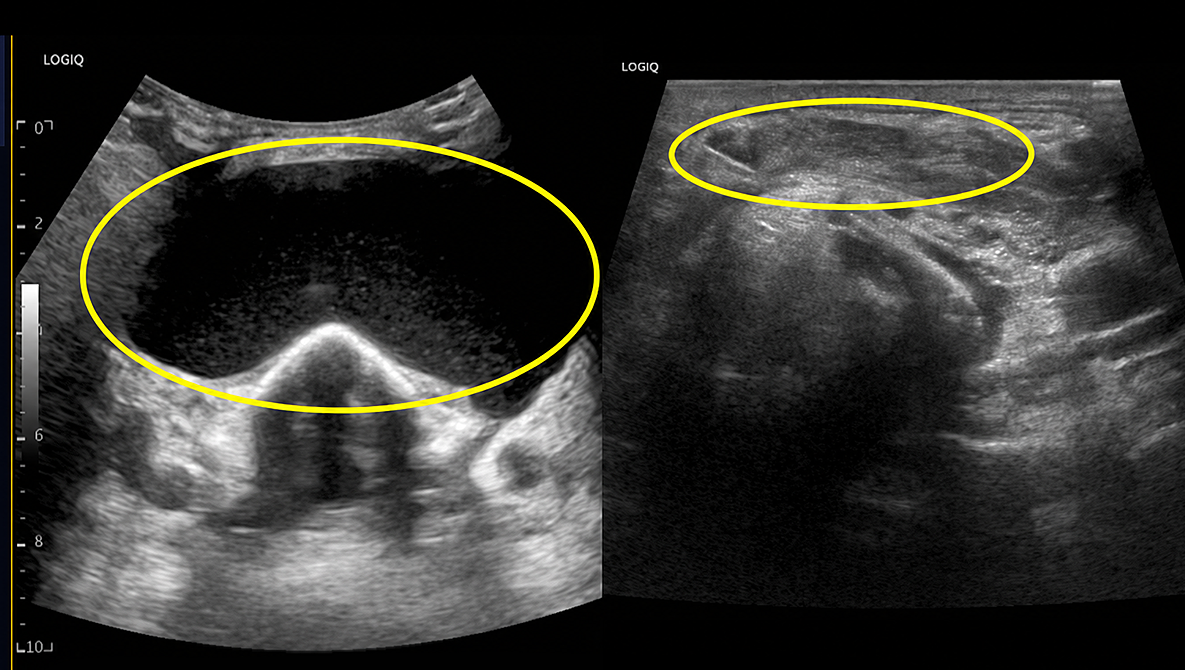 |
Ultrasound images of the thyroglossal duct cyst before and after fluid aspiration for the patient. *Photo: Tam Anh General Hospital* |
Thyroglossal duct cysts form along the path of the thyroglossal duct, extending from the base of the tongue down to the front of the neck, commonly found in the midline. This is a congenital anomaly resulting from remnants of the thyroglossal duct during fetal development. Most cysts are quite small and can remain asymptomatic for decades. "The patient may have had the cyst since birth but was unaware because it was too small," Doctor An stated. Cysts are typically only aggravated by upper respiratory tract infections or ear, nose, and throat infections, leading to rapid swelling, pus formation, difficulty swallowing, and can be easily mistaken for a sore throat or other neck masses.
Following a consultation, the medical team opted for ultrasound-guided aspiration to relieve pressure and manage the infection before proceeding with definitive treatment. Ultrasound enabled doctors to precisely identify the lesion's location, size, and nature, while also guiding the needle's path to avoid damaging blood vessels, nerves, and other vital structures in the neck.
After administering anesthesia to the patient, the team aspirated 114 ml of brown fluid from the cyst. Following the procedure, the swelling almost completely subsided, and the patient reported a significant reduction in tension, an end to difficulty swallowing, and improved breathing. After approximately one hour of monitoring, the patient was discharged and scheduled for a follow-up appointment.
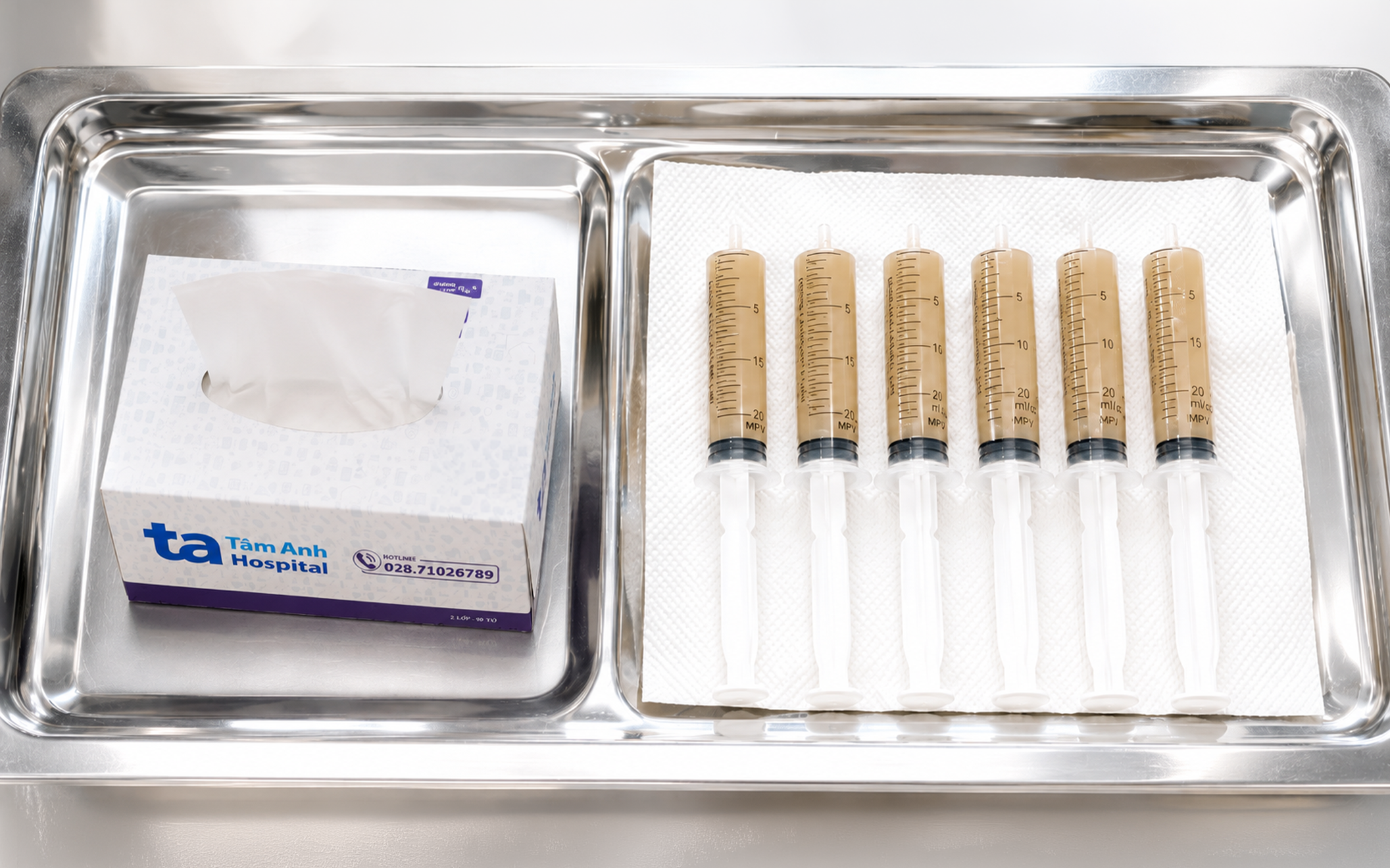 |
114 ml of fluid aspirated from the patient's neck. *Photo: Hospital provided* |
Doctor Vo Mai Khanh, head of the interventional ultrasound unit, explained that a sore throat, fever, and difficulty swallowing are symptoms of a thyroglossal duct cyst, but these are also common signs of respiratory tract infections, often leading to misdiagnosis. However, if a rapidly growing swelling appears in the neck and does not respond to treatment, patients should seek medical examination. Doctors can combine a physical examination with ultrasound to determine if the lesion originates from the throat, thyroid gland, or soft tissues of the neck, thereby allowing for the selection of an appropriate treatment method, minimizing complications, and preventing missed diagnoses.
Nhu Ngoc
*The patient's name has been changed
| Readers can submit questions about ear, nose, and throat conditions here for doctors to answer |