


Meningococcal bacteria enter through the respiratory tract and colonize the nasopharyngeal mucous membrane. Thanks to specific enzymes and polysaccharide capsules, they evade the immune system, adhering to the mucous membrane for extended periods, even in healthy individuals. About 10-20% of people carry the bacteria asymptomatically; in epidemic areas, this can reach 50%. The average carriage duration is 9 months, with many cases exceeding 16 months. These carriers are a silent source of transmission within the community.
When immunity is compromised, the bacteria can easily invade, causing meningitis and sepsis. The fatality rate reaches 50% if untreated, and remains 8-15% even with early detection and intensive treatment. About 20% of survivors experience severe sequelae such as limb amputation, paralysis, deafness, seizures, and mental disorders. Meningococcus can also cause arthritis, pneumonia, conjunctivitis, and urethritis, with prolonged symptoms that are easily mistaken for other conditions.
People can prevent the disease by wearing masks, maintaining hygiene, frequent handwashing, ensuring balanced diet and sleep, avoiding stress, and especially through vaccination for active protection.
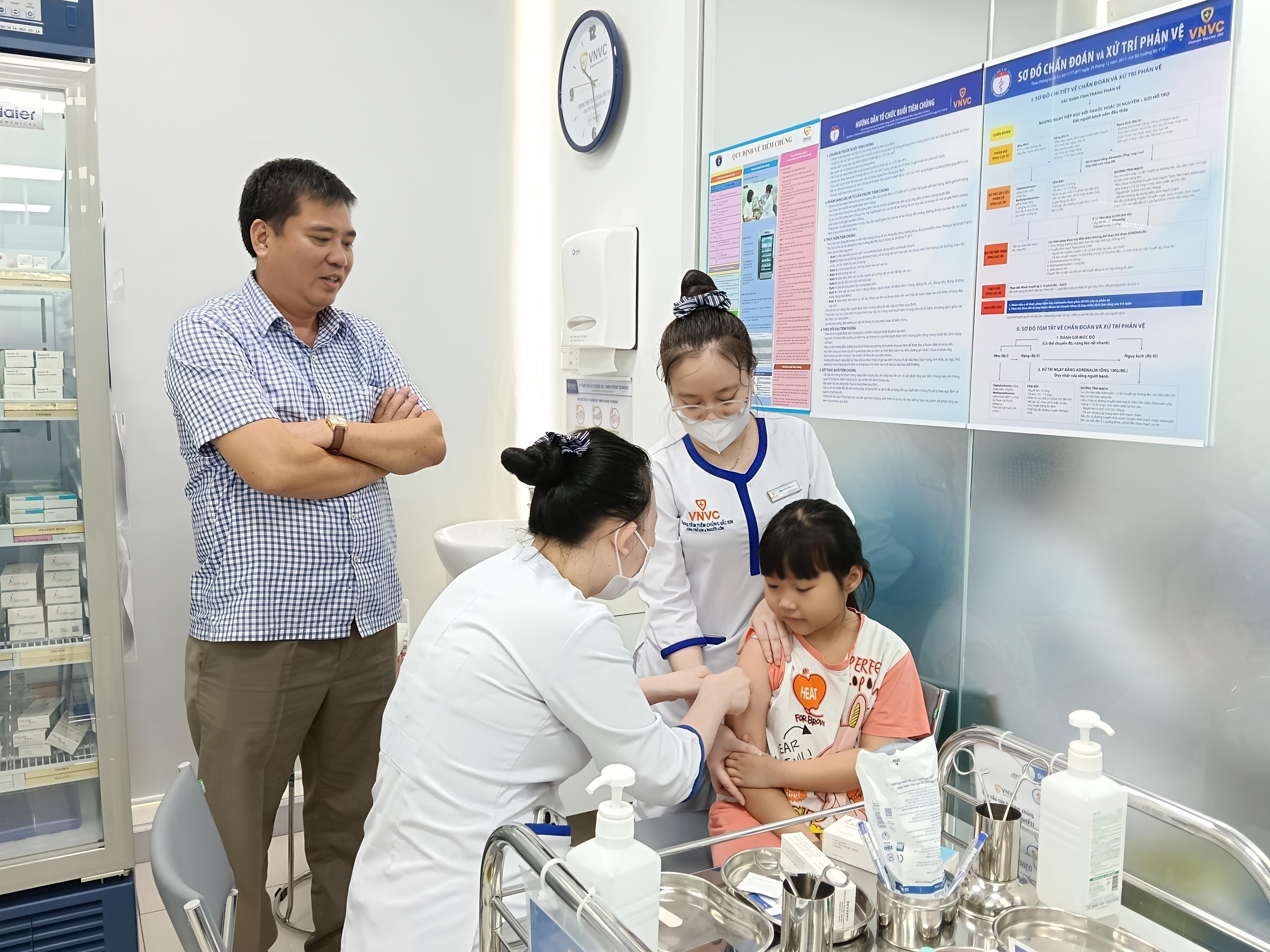 |
Children are brought by parents for meningococcal and Japanese encephalitis vaccinations to prevent disease at VNVC. *Photo: Hoang Duong* |
Currently, Vietnam offers several types of meningococcal vaccines, including:
Three new-generation quadrivalent vaccines protect against meningococcal serogroups A, C, Y, and W, such as two types from Sanofi manufactured in the United States and one type from Pfizer manufactured in Belgium. The earliest vaccination can begin for infants from 6 weeks of age.
A vaccine protecting against meningococcal serogroup B from GSK, manufactured in Italy, is administered to infants from 2 months of age; a vaccine protecting against serogroups B and C from Cuba is administered to infants from 6 months of age.
Note that these vaccines do not offer cross-protection between serogroups. Each individual needs to combine vaccines to fully protect against all 5 pathogenic meningococcal serogroups: A, B, C, Y, and W. Additionally, people should also get vaccinated against other diseases to avoid the risk of co-infection or superinfection, which can worsen disease outcomes.
Doctor Pham Hong Thuyet
Medical Manager, VNVC Vaccination System


