Half a month after an ischemic stroke, Mr. Minh, 62, could not return to his previous life despite diligently performing daily rehabilitation. His weak right hand made it difficult to hold a glass of water, and he struggled with eating due to occasional choking. Once an active person who frequently conversed with his children and grandchildren, he became quiet, fearing slurred speech, easily saddened, experienced insomnia, and gradually lost interest in exercise.
"My father takes all his medication and exercises as instructed, but why hasn't he recovered as before?" his daughter asked the doctor during a follow-up appointment at Military Hospital 175.
Master of Science, Doctor Ly Minh Dang, from the Department of Neurology at Military Hospital 175, stated that this concern is shared by many families with stroke survivors. Numerous patients overcome the critical phase but require many months to gradually regain the ability to grasp, walk, speak, or eat normally.
According to Doctor Dang, stroke recovery is not simply "exercising to get well again". Brain damage can affect movement, language, swallowing, and emotions, leading to slow progress even with great effort.
During his follow-up, in addition to his ongoing exercise program, Mr. Minh was advised on repetitive transcranial magnetic stimulation (rTMS). This method uses magnetic pulses to target specific brain regions, supporting the neurological recovery process after injury.
"Many patients hope for a method that offers rapid recovery after a stroke, but it is important to understand that rTMS does not replace exercise," Doctor Dang stated, adding that this method is considered a supportive tool to help the brain respond better to rehabilitation programs.
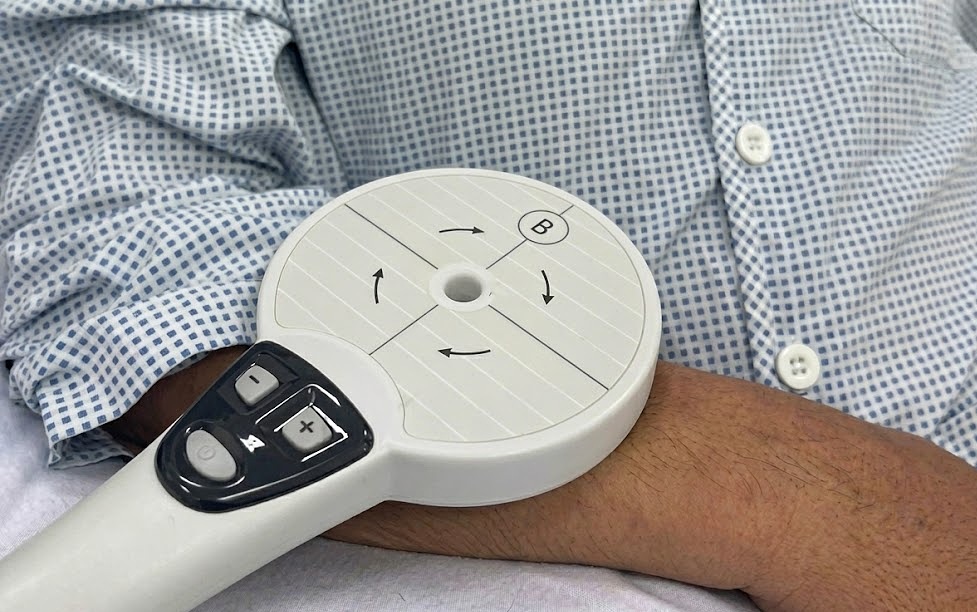 |
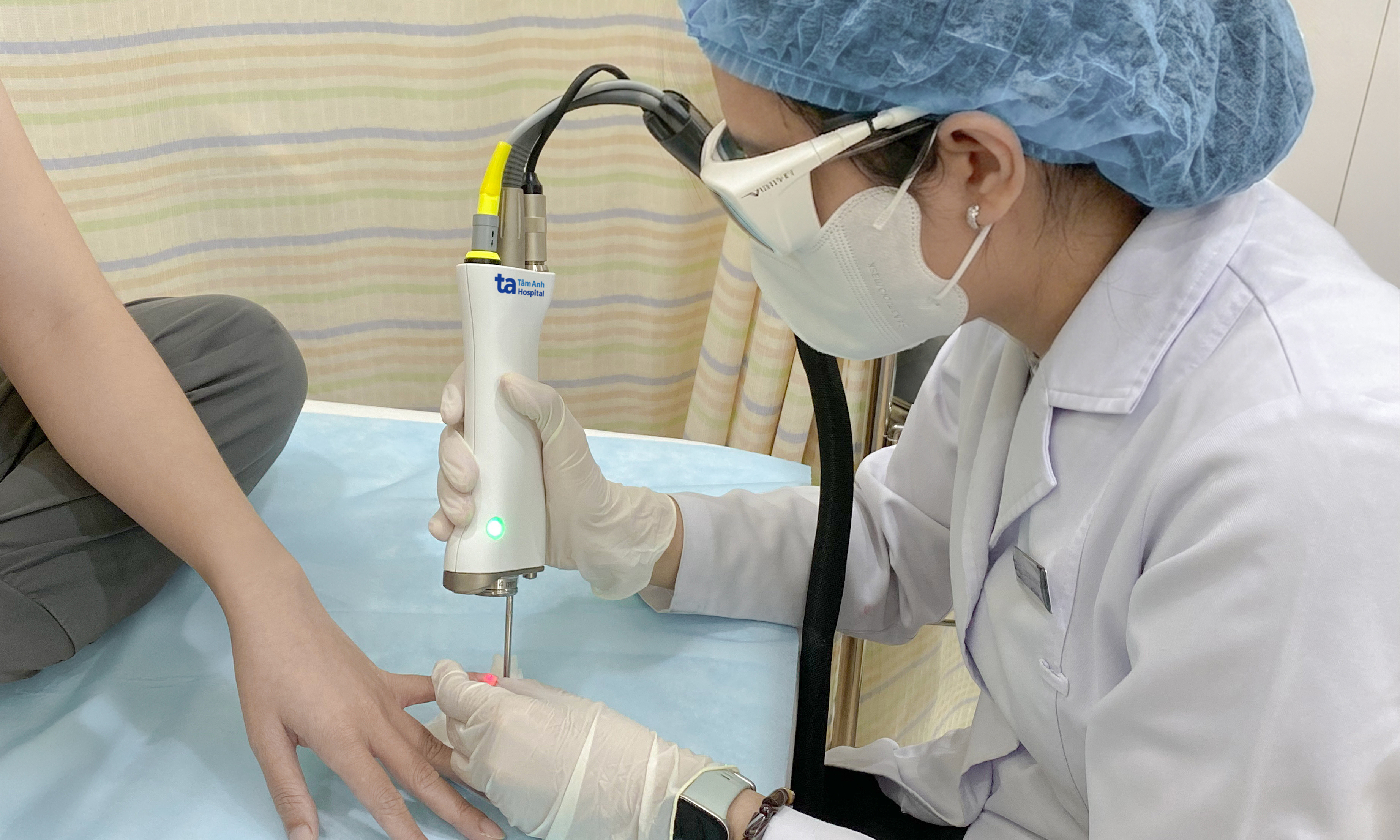
Mr. Minh received peripheral magnetic stimulation treatment to reduce muscle spasticity after his stroke. *Photo: Doctor provided* |
Post-stroke recovery is often uneven. Some individuals improve movement but still experience difficulty swallowing, insomnia, or reduced motivation for exercise. In addition to rehabilitation, some stroke cases may incorporate non-invasive neuromodulation techniques like transcranial magnetic stimulation or transcranial direct current stimulation (tDCS), depending on the extent of injury and treatment goals, to better support brain recovery.
After a period of combined treatment, Mr. Minh has not fully returned to his previous state, but small changes have begun to appear. He holds a spoon more steadily, experiences less choking while eating, and sleeps better. His mood improved, he actively participates in therapy sessions, communicates more readily, and feels less despair.
Doctor Hoang Tien Trong Nghia, Head of the Department of Neurology at Military Hospital 175, noted that the current trend in stroke recovery involves combining multiple methods to leverage the nervous system's capacity for reorganization. The most crucial aspects are ensuring patients receive timely assessments, choose appropriate solutions, and consistently adhere to their exercise regimens.
"Stroke does not end at the acute phase. The long-term goal is to help patients gradually regain their ability to perform daily activities, communicate, and return to their familiar rhythm of life," the doctor stated.
Le Phuong