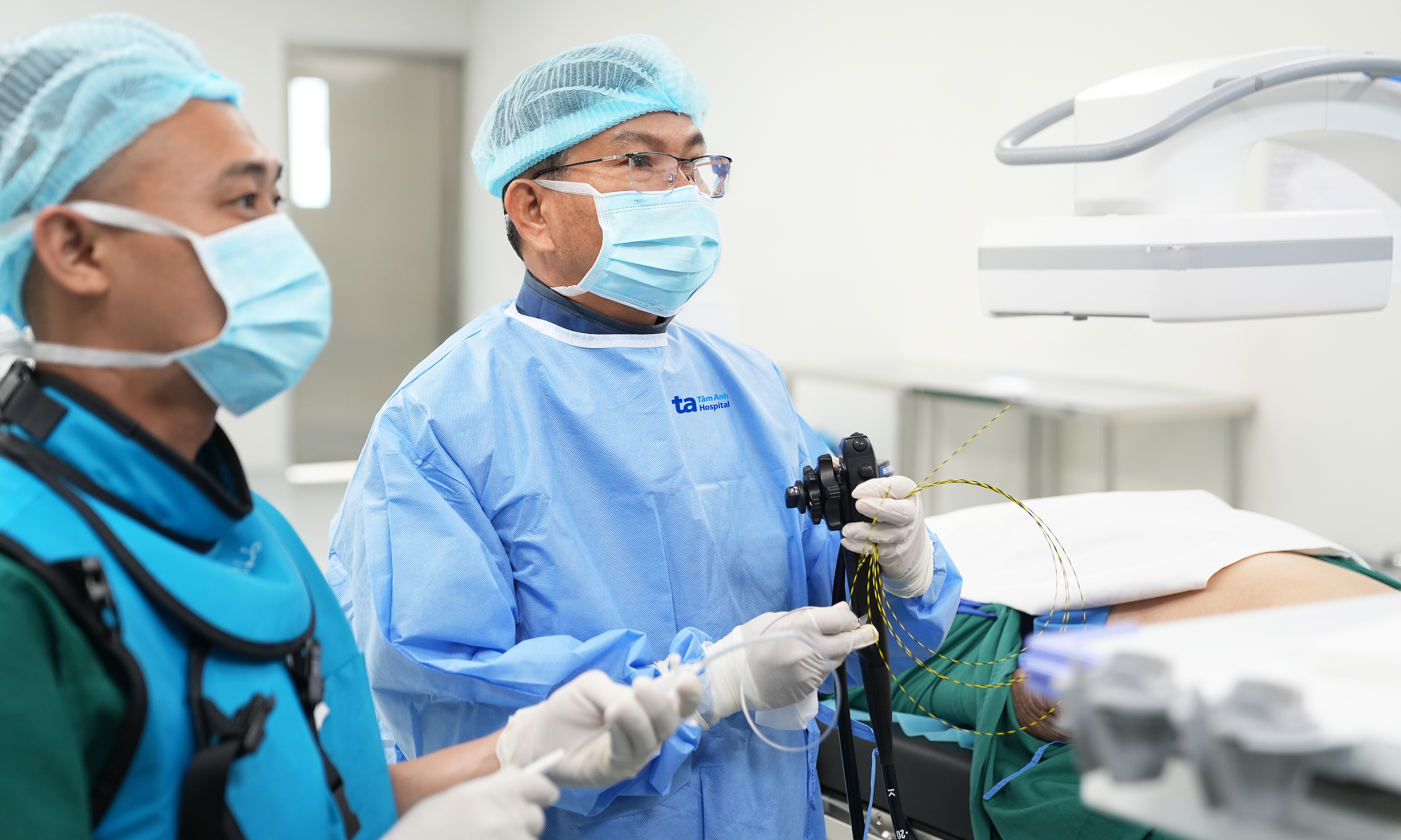
An endoscopy of Anh Dang's nose at Tam Anh General Hospital, Ho Chi Minh City, revealed edematous mucosa and thick, cloudy mucous discharge in the middle meatus. A CT scan of his nose and sinuses confirmed mucosal thickening with fluid accumulation in the maxillary, ethmoid, frontal, and sphenoid sinuses on both sides. Both ostiomeatal complexes were blocked, accompanied by nasal polyps, an S-shaped deviated septum, and pneumatization of the left middle turbinate.
Dr. Tran Thi Thuy Hang, Head of the Ear, Nose, and Throat (ENT) Department at the ENT Center, diagnosed Anh Dang with mucopurulent rhinosinusitis, bilateral nasal polyps, and an S-shaped deviated septum. This S-shaped deviation is less common than a one-sided, C-shaped deviation and significantly narrows the airway. The polyps and swollen mucosa block odor molecules from reaching the olfactory region, while prolonged inflammation damages the olfactory receptors, causing his loss of smell to worsen.
Doctors recommended sinus surgery to remove the polyps and perform septoplasty, aiming to clear the airway and restore the patient's sense of smell.
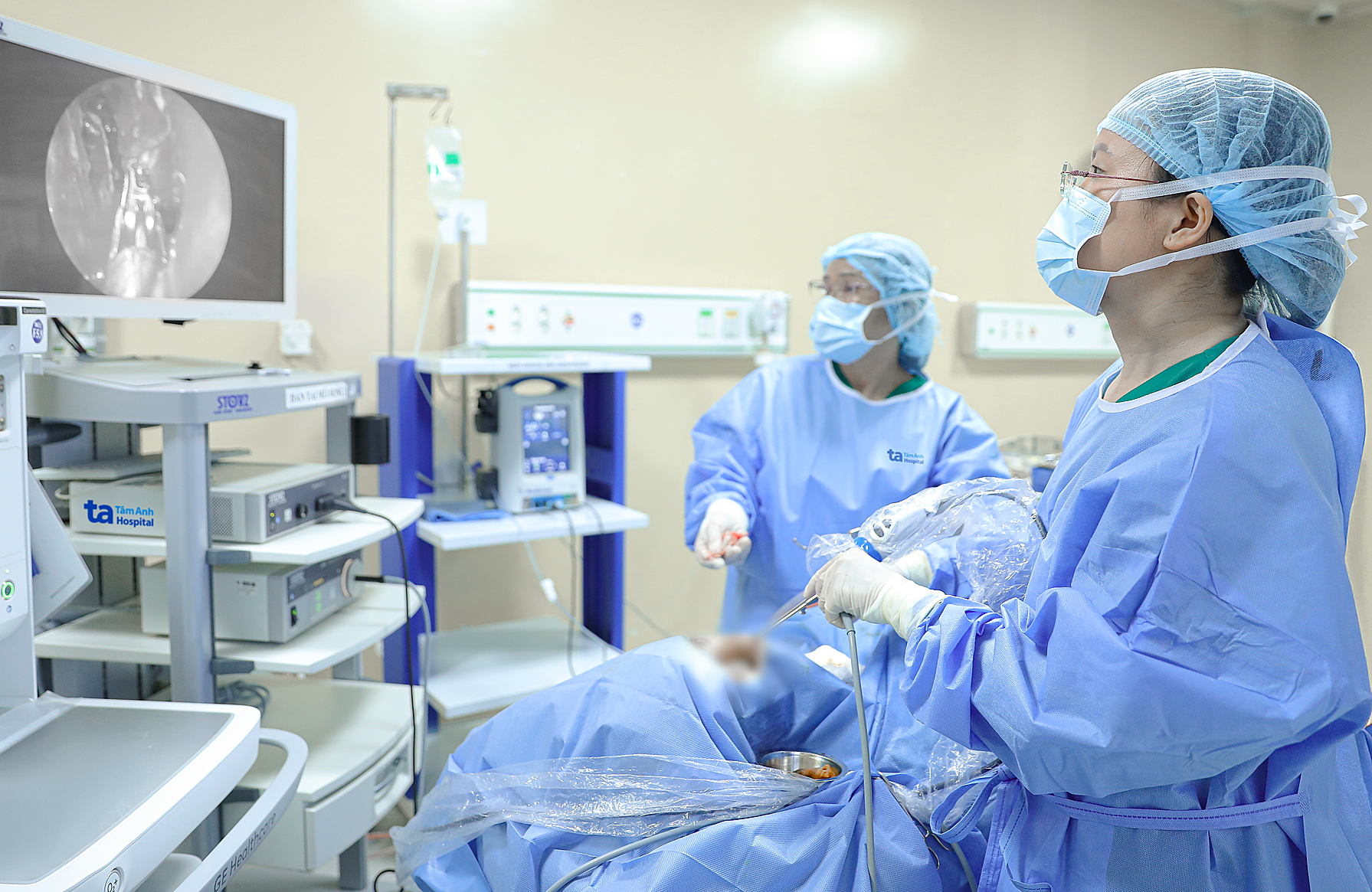 |
Dr. Hang performs endoscopic sinus surgery, removing polyps and reshaping the septum for Anh Dang. *Photo: Tam Anh General Hospital*.
Using an endoscopic screen, the surgeon widened the sinus openings, suctioned inflammatory fluid, and removed polyps from both middle meatuses for histopathological examination. The septum was then reshaped by dissecting the mucosa and removing the deviated cartilage and bone.
Following surgery, Anh Dang experienced improved nasal breathing and was discharged after two days. During a follow-up, his surgical wound healed well, nasal congestion decreased, and his sense of smell gradually recovered. Dr. Hang explained that the patient's ability to smell will return once inflammation subsides and odor molecules can reach the olfactory region.
Sinusitis involves inflammation, swelling, and edema of the mucous membrane lining the paranasal sinuses. If this inflammation persists, the membrane thickens, degenerates, prolapses, and eventually forms polyps.
Polyps do not resolve without treatment; however, managing rhinosinusitis can help reduce their size. When large polyps cause prolonged nasal obstruction, diminished sense of smell, recurrent chronic sinusitis, and do not respond to medical treatment, doctors recommend endoscopic sinus surgery to remove them.
Loss or reduction of the sense of smell can indicate rhinosinusitis, nasal polyps, or structural abnormalities within the nasal cavity. Patients noticing such symptoms should consult an ENT doctor for timely diagnosis and treatment to reduce inflammation and preserve olfactory function.
Uyen Trinh
*Patient's name has been changed.
| Readers can submit questions about ear, nose, and throat conditions here for doctors to answer. |