A 32-year-old patient, Ms. My, found relief from chronic nail fungus and dystrophy after a year of combined antifungal medication and laser therapy. For over three years, Ms. My struggled with the condition, which initially presented as mild discoloration, rough surfaces, brittleness, and white streaks on a few fingernails.
Self-medication with topical creams proved ineffective, allowing the damage to spread across all her fingers and toes. Her nails became thick, opaque yellow, rough, difficult to trim, and prone to crumbling, with some showing clear deformation.
Doctor Nguyen Thi Kim Dung, Head of the Dermatology and Cosmetic Dermatology Unit at Tam Anh General Clinic District 7, diagnosed Ms. My with chronic nail fungus accompanied by nail dystrophy. She explained that the fungus penetrates deep into the nail, causing internal damage. By the time the condition is often discovered, nails are already severely compromised, prone to discoloration, thickening, roughness, and deformation, often spreading to adjacent nails. The fungus's deep embedding beneath the nail plate also makes it difficult for topical medications to penetrate, often leading to a slow response to treatment.
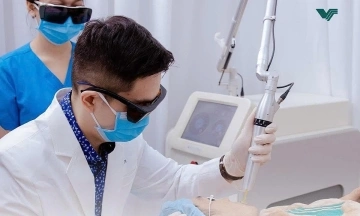
Doctor Dung prescribed a combined treatment regimen, integrating antifungal medication with 6D laser technology. This laser method utilizes light with specific wavelengths and parameters to target the fungus-infected nail area. It helps eliminate the fungus locally, improves microcirculation around the nail, and facilitates the medication's effectiveness.
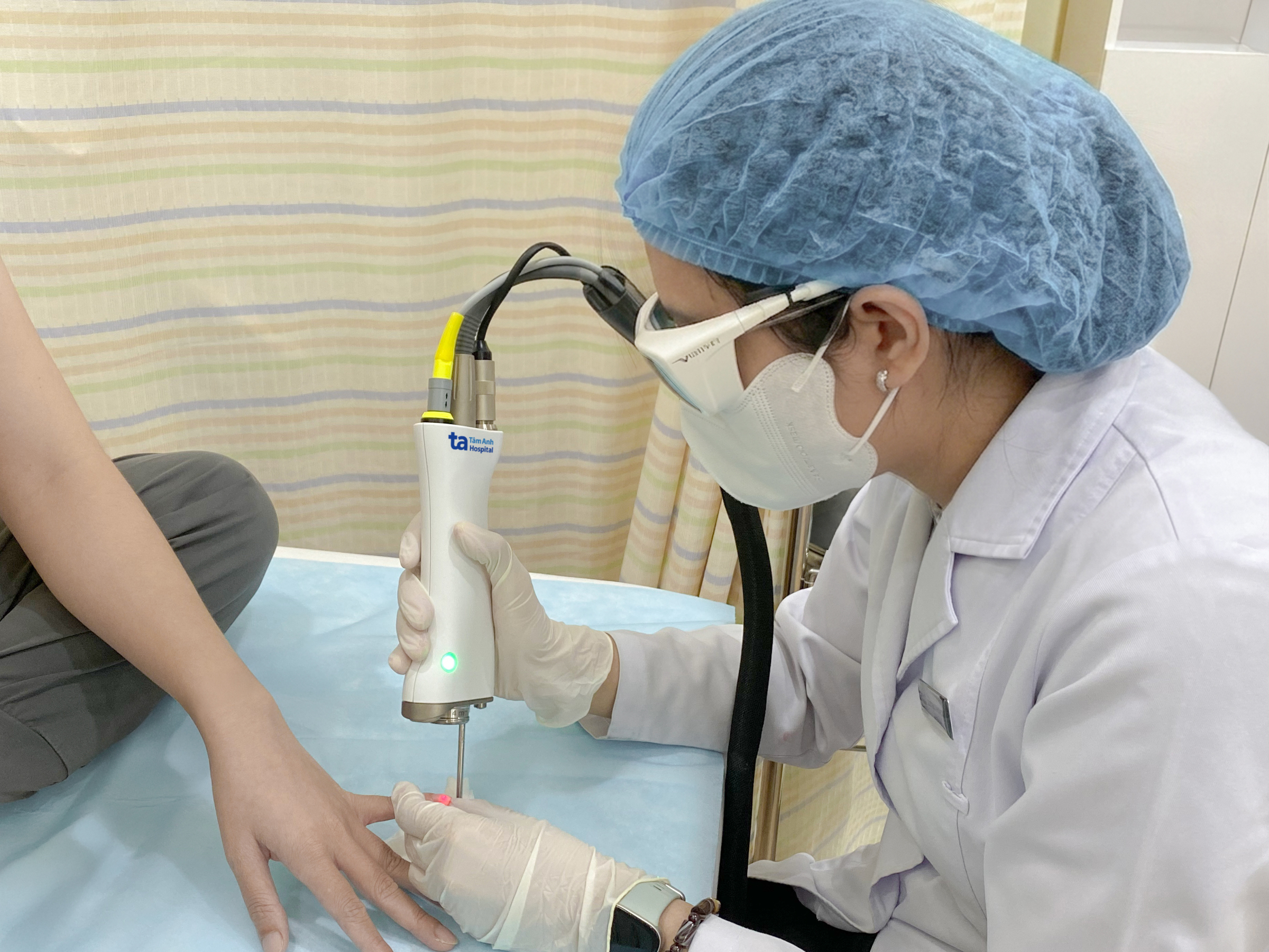 |
A doctor uses 6D laser to treat nail fungus for Ms. My. Photo: Tam Anh General Clinic District 7
Ms. My also received instructions on proper nail care, emphasizing keeping the nail area dry and airy and limiting exposure to moist environments. Additionally, she adopted lifestyle changes, such as avoiding stuffy footwear and using personal nail care tools, to reduce the risk of reinfection.
After approximately one year of continuous treatment and adherence to the regimen, Ms. My’s new nails grew back healthier. They appeared pinker, with a flatter, shinier, and stronger surface, free from the previous crumbling and hyperkeratosis. While toenail damage significantly reduced, continued monitoring and treatment are still necessary.
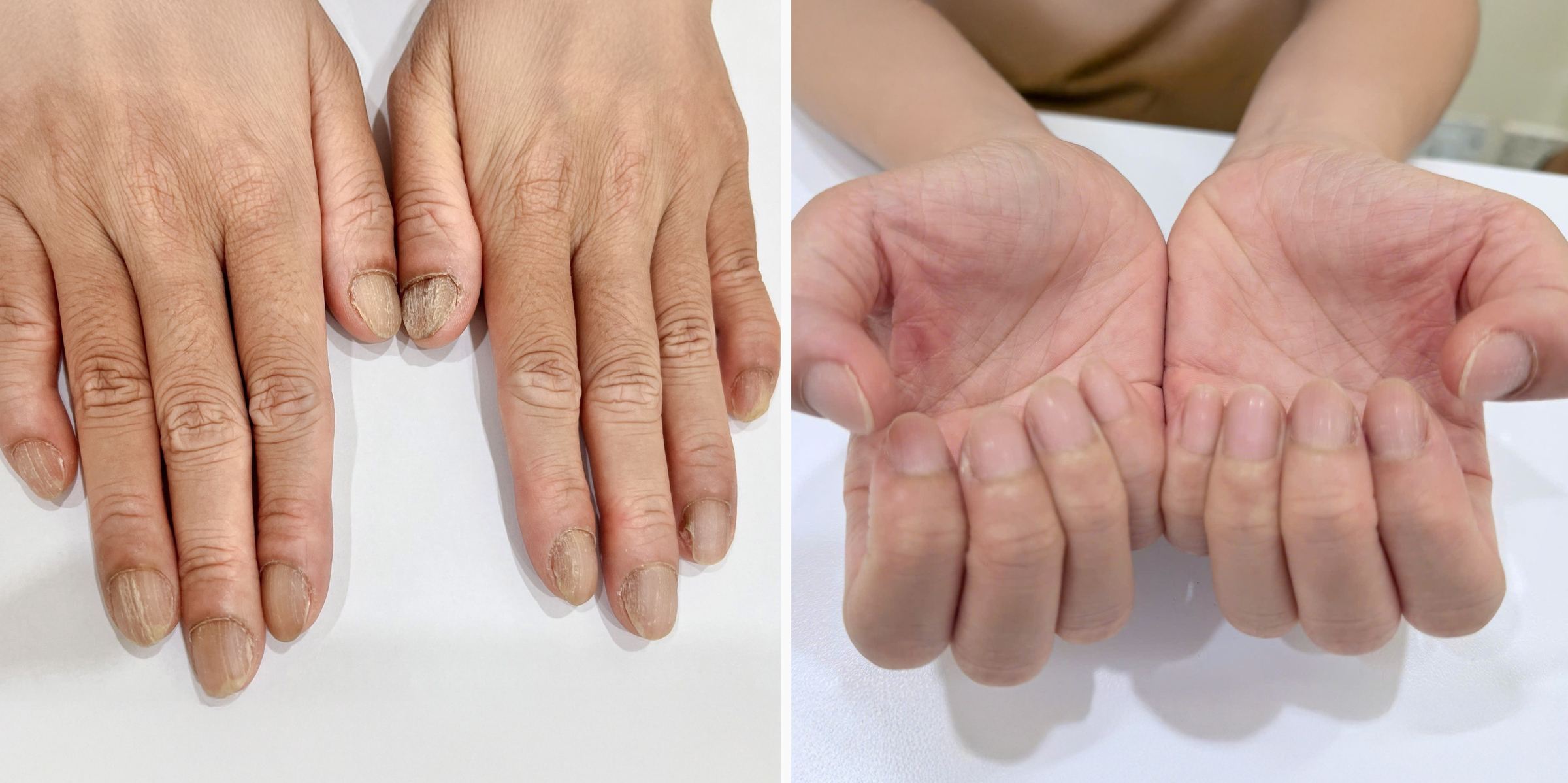 |
Ms. My's hand nail fungus cleared after one year of treatment. Photo: Tam Anh General Clinic District 7
According to Doctor Dung, nail fungus can stem from various causes. These include fungi entering through nail injuries, often observed in individuals who wear closed-toe shoes for extended periods, frequently apply nail polish or powder, practice improper nail hygiene, or have underlying conditions such as nail dystrophy or nail psoriasis. A warm, humid environment further favors fungal growth, and individuals with weakened immune systems or diabetes are also susceptible to this condition.
A common mistake patients make is treating the condition for only a short period, then giving up if they do not see immediate improvement or constantly switching methods. Doctor Dung emphasized that nail fungus treatment cannot achieve effectiveness in a short period. Fingernails and especially toenails grow slowly, requiring treatment to last for many months, sometimes even a year, for new, healthy nails to fully replace the damaged portion. Recovery time depends on the extent of damage and the nail's growth rate. For fingernails, this process can take 6-12 months, while toenails often require 12-18 months or longer. There is also a risk of recurrence.
Patients should consult a specialist in Dermatology and Cosmetic Dermatology if their nails exhibit signs such as prolonged discoloration, thickening, brittleness, crumbling, or deformation. It is crucial not to self-medicate with topical or oral drugs without a prescription, as this can lead to the fungus spreading and becoming more difficult to treat.
Minh Huong
*The patient's name has been changed.
| Tam Anh General Hospital TP HCM will host an online consultation titled "New Generation 6D Laser from America: Optimizing Treatment for Acne Scars, Vascular Lesions, and Hair Removal" on 19/6 at 8 PM. The event will be broadcast live on the hospital's fanpage. Participating medical professionals include: Doctor Nguyen Thi Kim Dung, Head of the Dermatology and Cosmetic Dermatology Unit; Master of Science, Doctor Tran Nguyen Anh Thu; and Doctor Tran Thi My Linh, both specialists in Dermatology and Cosmetic Dermatology. Readers are invited to submit questions during the session. |