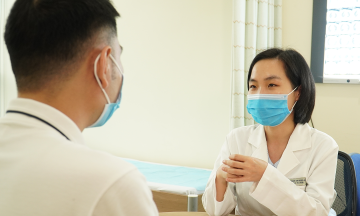
Duong experienced a week of abdominal pain and painful urination. After a full day of urinary retention, she sought care at Tam Anh General Hospital TP HCM. Upon admission, she presented with severe abdominal pain and a distended lower abdomen and bladder. The medical team inserted a urinary catheter for the patient to relieve pressure, prevent urine reflux to the kidneys, and protect kidney and bladder function.
Ultrasound and magnetic resonance imaging (MRI) revealed a 12x15x20 cm cyst. It nestled within the pelvic recesses, displacing the uterus and both ovaries, and compressing the urinary tract. Doctor Nguyen Thi Yen Thu, from the Obstetrics and Gynecology Center, identified it as a peritoneal inclusion cyst, a benign fluid-filled cyst formed from adhesions in the pelvis or abdomen, often due to previous surgery. Duong’s cyst was excessively large, compressing her bladder, causing urinary obstruction and preventing urine from exiting. Without timely treatment, the cyst could rupture, leading to peritonitis and infection.
During exploratory laparoscopic surgery, the team identified the cyst surrounded by tightly adhered bowel loops and pelvic walls, containing 1,6 liters of thin brown fluid, weighing 1,6 kg. The right ovary had atrophied and adhered to the pelvic wall, while the left ovary adhered to the bowel. According to Doctor Thu, this was a complex surgery due to the high risk of damage to adjacent organs, such as bowel perforation, bladder perforation, or ureteral transection. Laparoscopic surgery is a minimally invasive method, offering benefits such as reduced postoperative pain and faster recovery.
The team aspirated all the fluid from the cyst, then performed adhesiolysis, removed the cyst membrane, and freed the uterus and adjacent organs. Doctors applied an anti-adhesion gel to the areas of adhesiolysis to reduce the risk of re-adhesion after surgery. With stable health, Duong was discharged three days after surgery and will undergo regular follow-up examinations.
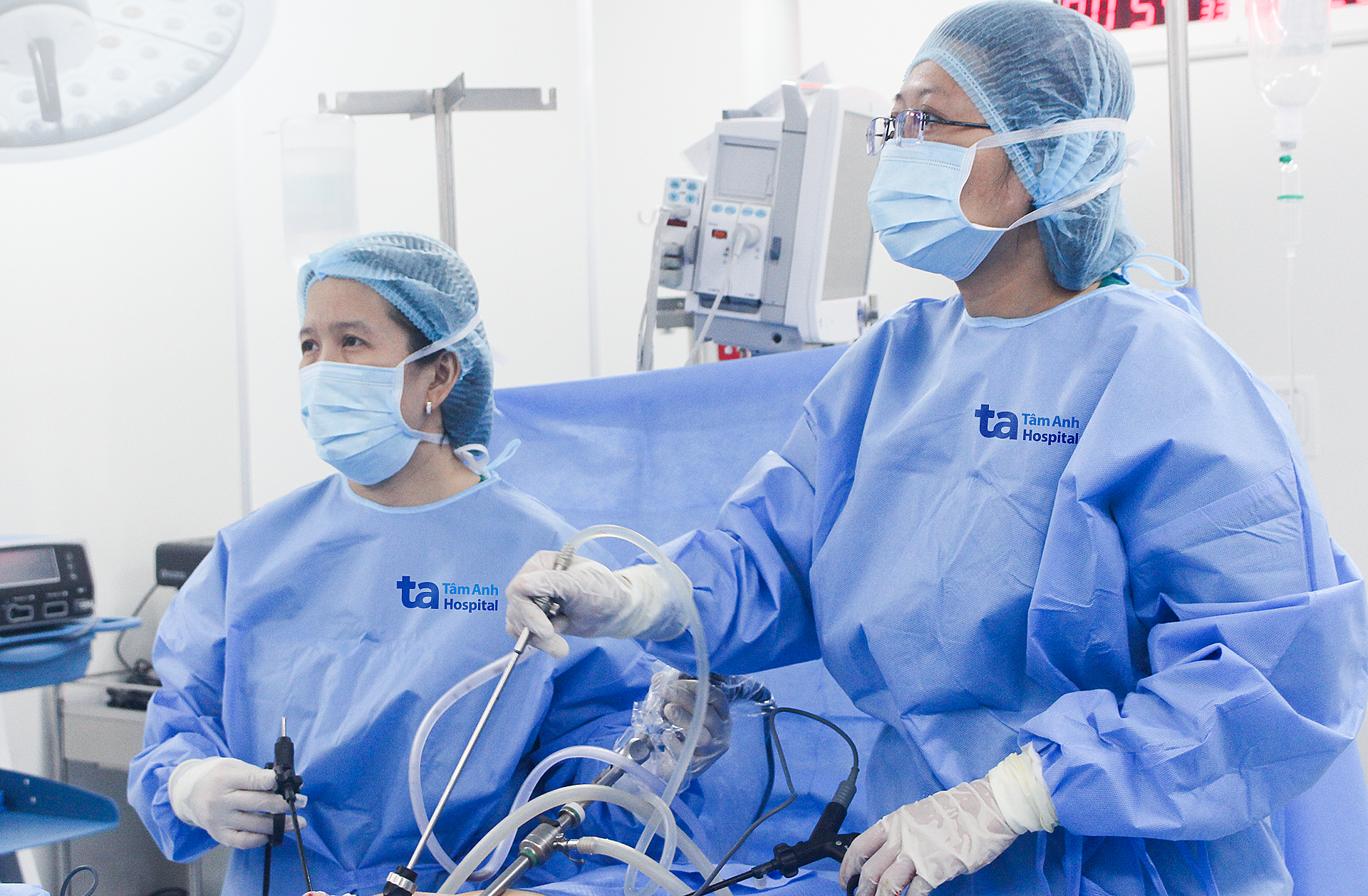 |
The medical team performs surgery on the patient. Photo: Tam Anh General Hospital |
The exact cause of peritoneal inclusion cysts is not clearly defined, but it may be linked to benign inflammatory proliferation following abdominopelvic surgery, gastrointestinal inflammation, or pelvic inflammation. The condition is common in women of reproductive age. Adhesions formed due to surgery, inflammation, or infection can trap physiological fluid in the abdominal cavity within the spaces between these adhesions, gradually accumulating over time to form cysts nestled among the organs.
The disease often progresses silently, with discovery often incidental through ultrasound, MRI, or when complications arise from the cyst. Symptoms may include: persistent abdominal or pelvic pain, back pain, bloating, indigestion, nausea, constipation, frequent urination, urinary retention, urinary incontinence, abnormal uterine bleeding, and infertility.
Doctor Thu advises women to prevent sexually transmitted infections, practice proper gynecological hygiene, and undergo regular gynecological examinations every six months or one year. If symptoms such as excessive vaginal discharge (leukorrhea), foul odor, unusual color (yellow, green), itching, burning, or dull lower abdominal pain occur, patients should seek immediate medical attention for definitive treatment.
Ngoc Chau
* The patient's name has been changed
| Readers can submit questions about obstetrics and gynecology here for doctors to answer |