Urinary stones, including kidney, bladder, ureteral, and urethral stones, are a common health issue in Vietnam. They affect approximately 2-12% of the population, with kidney stones being the most prevalent type. This data was presented at the Southeast Asian Urology Conference 2023.
Doctor Nguyen Hoang Duc, Head of Urology Department, Urology - Nephrology - Andrology Center, Tam Anh General Hospital, Ho Chi Minh City, explains that several factors contribute to the high incidence of urinary stones among Vietnamese people. These include Vietnam's hot, humid climate, insufficient water intake, diets high in salt and protein, and urinary tract infections. Untreated stones can lead to severe health complications such as hydronephrosis, ureteral stricture, kidney failure, and infections. Without preventive measures, urinary stones frequently recur, with rates reaching 35-40% within 5 years and up to 50% after 10 years.
Analyzing the composition of urinary stones, which involves identifying the minerals and compounds that form them, enables doctors to develop precise treatment plans. This approach controls existing stones and prevents new ones from forming. Large stones, exceeding 6 mm, are unlikely to pass naturally through the urinary tract and often require surgical intervention. Common procedures include retrograde intrarenal surgery, shockwave lithotripsy, or percutaneous nephrolithotomy. After surgery, fragments of the removed stones can be sent for analysis.
At Tam Anh General Hospital, Ho Chi Minh City, advanced equipment analyzes urinary stone composition, identifying components such as calcium oxalate, calcium phosphate, uric acid, struvite, or cystine. This analysis also helps determine the underlying causes and mechanisms of stone formation, allowing doctors to create personalized treatment plans for each patient.
 |
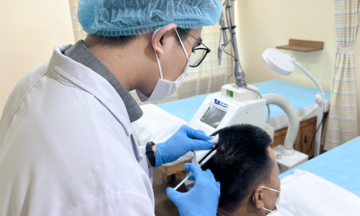
Doctor Duc (right) during a urinary treatment surgery for a patient. Photo: _Hospital provided_ |
Calcium oxalate stones are the most common type of kidney stone, forming due to high oxalate levels in the diet, insufficient water intake, or metabolic disorders. Patients with these stones must adjust their diet, reducing oxalate-rich foods like spinach and nuts, while increasing fluid intake. Medications may also be prescribed to lower oxalate or calcium concentrations in the urine. Recommended foods include dairy products, bananas, cantaloupe, lettuce, bok choy, cauliflower, papaya, and bell peppers.
Calcium phosphate stones develop from high urine pH or conditions like renal tubular acidosis. Treatment involves dietary modifications and medication to adjust urine acidity.
Uric acid stones form in acidic urine, commonly affecting individuals with gout or those consuming a high-purine diet, including beef, fatty meats, organ meats, and beer. Therefore, patients should increase daily water intake, use urine alkalinizing medications, and reduce purine-rich foods.
Struvite stones are the most hazardous, typically resulting from urinary tract infections. Patients require infection treatment, and in some cases, surgery is necessary to remove the stones.
Cystine stones are rarer, caused by a genetic condition called cystinuria. Treatment focuses on adequate hydration, urine alkalinization, and potentially medication to lower cystine levels.
Based on stone analysis results, doctors may recommend additional tests, such as a 24-hour urine test, to assess risk factors for stone formation and refine treatment plans. Patients should have regular follow-ups to detect any abnormalities promptly and prevent stone recurrence. Stone analysis is particularly important in cases such as: patients experiencing urinary stones for the first time with large stone size, recurrent stones despite medication, recurrence after surgery or lithotripsy, a family history of urinary stones, or stone formation at a young age.
To prevent stones, Doctor Duc advises people to drink enough water daily to dilute urine and inhibit mineral crystallization. He also recommends limiting salt and animal protein intake. It is important to balance calcium consumption and restrict oxalate-rich foods for those with a history of oxalate stones. Maintaining a healthy weight and engaging in physical activities like walking, swimming, cycling, or yoga can improve the body's metabolism.
Ha Thanh
| Readers can submit questions about kidney and urinary tract diseases here for doctor consultations. |