A representative from Military Hospital 108 shared this information on 22/1. This marks the latest successful liver transplant performed at the unit, offering a 34-year-old patient from the Hmong ethnic group a second chance at life.
A crisis struck the small family in July 2025. The husband, a healthy farmer, suddenly experienced symptoms of persistent pain in his right flank and prolonged fatigue. Doctors diagnosed him with left hepatocellular carcinoma and recommended laparoscopic surgery to remove the diseased part of his liver.
However, the tumor recurred after only three months of follow-up. At this point, specialists determined that a liver transplant was the only optimal method to save the patient's life. When doctors advised on the option of a living donor liver transplant, especially with his wife as the potential donor, he adamantly refused.
"With my illness, you must stay healthy for our children to still have their mother," the husband said, fearing the major surgery would adversely affect his wife's health.
Undeterred, the wife persistently persuaded her husband, supported by thorough professional advice from the medical team regarding the safety of the transplant technique. Finally, he agreed to receive a part of her liver.
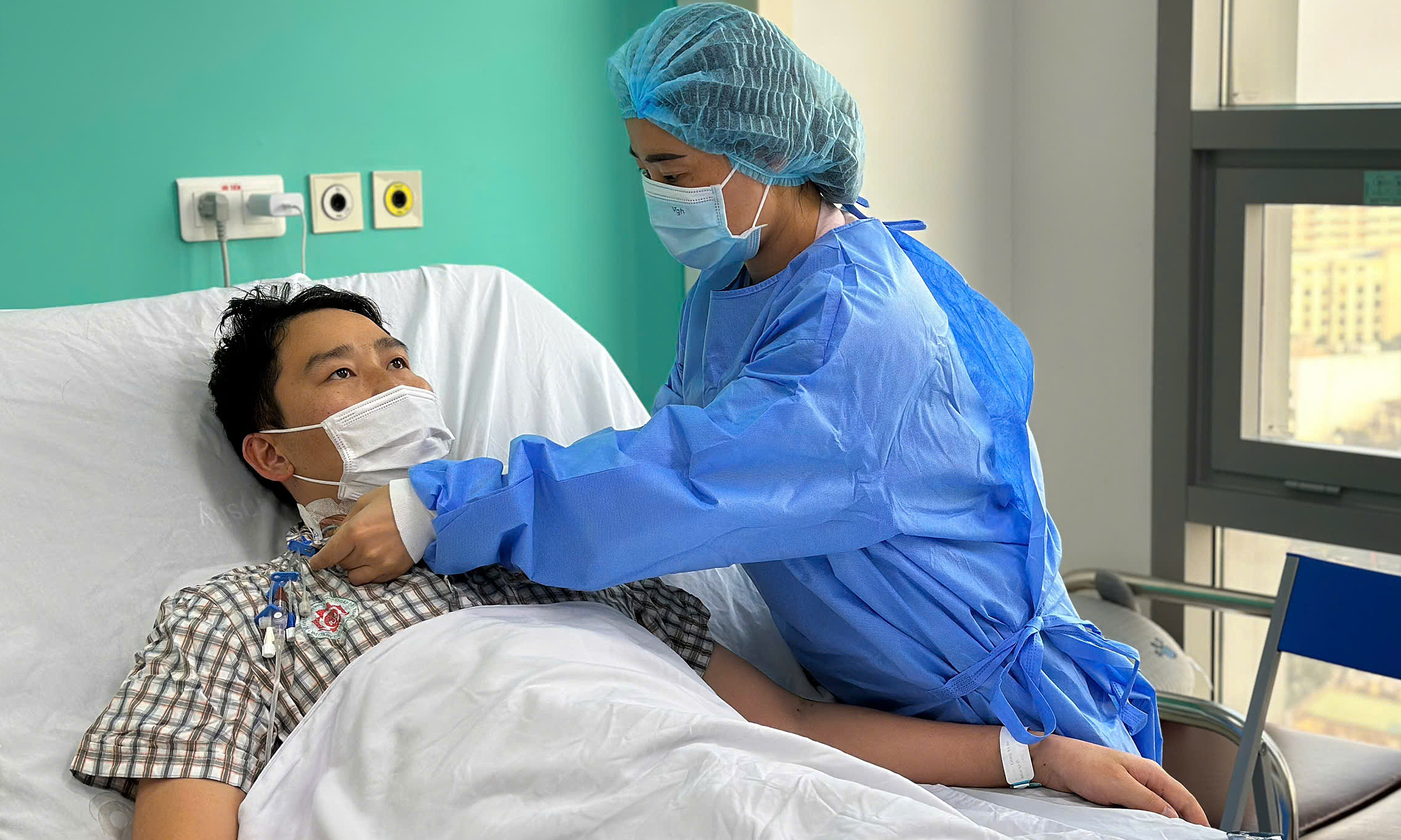 |
The couple caring for each other after the liver transplant. *Photo: Hospital provided* |
The challenging surgery lasted 7 hours, during which doctors transplanted a liver segment from the wife to her husband. The transplant was successful, with both the donor's and recipient's liver functions recovering well. The female teacher was discharged one week post-surgery. Her husband continued to be monitored and treated at the hospital, with his liver biochemical indicators remaining within acceptable limits.
According to specialists, liver transplantation from a living donor is an effective solution for liver cancer patients at appropriate stages, significantly improving life expectancy.
Military Hospital 108 has performed over 300 liver transplants. Most post-transplant patients maintain stable health, returning to normal life and work. The first liver transplant here took place in October 2017, involving a 26-year-old son donating his right liver lobe to save his 56-year-old mother suffering from severe cirrhosis and liver failure. After 8 years, the mother remains in good health, and the son has married and had children.
Currently, the hospital has mastered many complex techniques such as ABO-incompatible liver transplants, laparoscopic graft retrieval, split liver transplantation, and emergency liver transplants. The unit plans to implement RAPID liver transplant, auxiliary liver transplant, and robotic surgery applications in the near future.
Le Nga