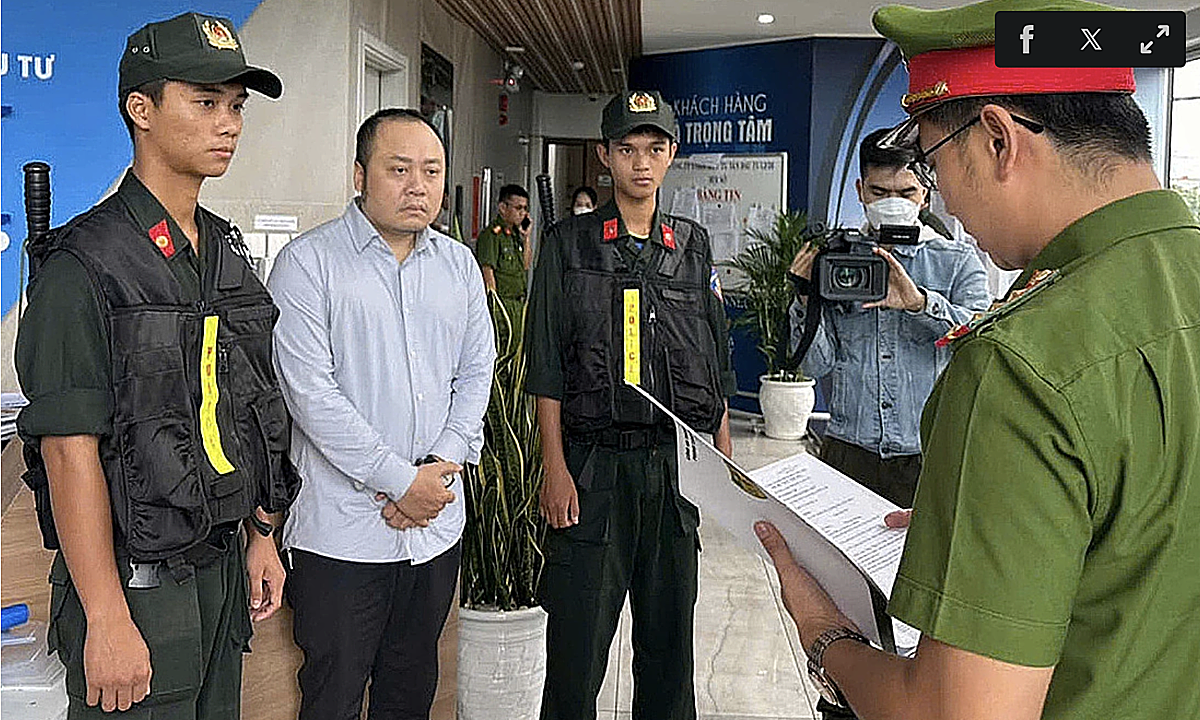
On 11/8, the Appeals Court of the Ho Chi Minh City Supreme People's Court heard the dispute over the division of late actor Duc Tien's estate. It partially accepted the appeals filed by Nguyen Ngoc Anh and Nguyen Binh Phuong (Dallas Ao Dai Beauty Queen Binh Phuong).
The court panel determined that the will Duc Tien made in the US on 9/8/2023, which left all his assets to his wife, was "invalid". A previous forensic examination concluded that the signature on the will did not match the actor's sample signature.
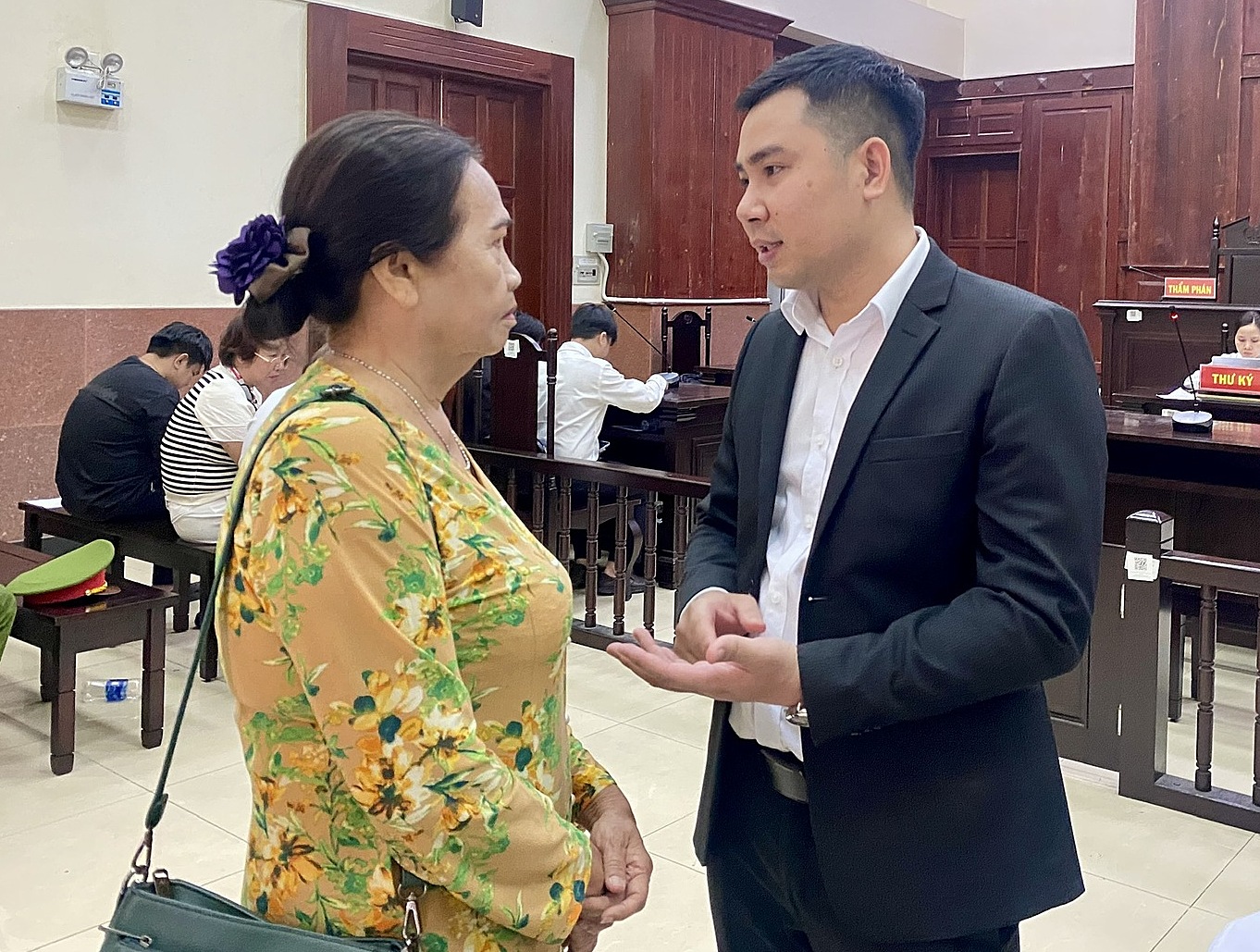 |
Lawyer Dam Van Hung speaks with Ms. Anh at the court. Photo: Binh Nguyen |
According to the court panel, the two disputed real estate properties in the estate include land and a house in Hiep Binh ward, Ho Chi Minh City, and a land plot in Tay Ninh (formerly Long An), with a total value exceeding 8,7 billion VND.
The land and house in Hiep Binh ward were acquired before marriage, making them Duc Tien's separate property. For the land plot in Tay Ninh, the court determined that 40% of its value belonged to Duc Tien, while the remaining 60% was considered joint marital property, as it was paid for after their marriage.
Since the will was deemed unlawful, the estate will be divided according to law among three heirs: Duc Tien's wife, daughter, and mother. Each person is entitled to one-third of the estate's value. Binh Phuong, as the legal guardian of their daughter, will receive the daughter's inheritance share.
The court noted that Binh Phuong holds Vietnamese nationality and is set to receive over 70% of the estate's value in kind. Therefore, she was granted ownership of the house and land use rights. Binh Phuong is obligated to reimburse Ms. Anh over 3 billion VND, corresponding to the value of Ms. Anh's share of the estate. Upon completing this payment, Binh Phuong can contact relevant authorities to process the title transfer.
The court panel did not accept Ms. Anh's request for ownership of the house in Hiep Binh ward. However, the court acknowledged her efforts in maintaining the property and paying property taxes since 2009, when Duc Tien settled in the US. Consequently, she was granted 10% of the house's value for her contributions to maintaining and managing the estate.
Regarding Binh Phuong's appeal, the court panel partially accepted it, deducting over 900 million VND for Duc Tien's treatment and funeral expenses from the estate before division, as she provided legitimate receipts.
In 5/2024, Duc Tien passed away at age 44 in the US. Afterward, his wife presented a will stating that her husband left all his assets to her. Ms. Anh, Duc Tien's mother, argued that the will was unlawful, leading to a dispute between the two parties. Failing to reach an agreement, Binh Phuong filed a lawsuit last March to request estate division.
On 28/10/2025, the Ho Chi Minh City People's Court held a first-instance trial, determining that the will made in the US was lawful and had been consular legalized. Duc Tien's estate included land and a house in Linh Dong ward, Thu Duc City (now Hiep Binh), valued at 6,2 billion VND, and a land plot in Long An (now Tay Ninh), valued at approximately one billion VND.
The court did not accept Binh Phuong's argument that all assets were acquired during the marriage, as the house was purchased before marriage and 70% of the land plot was paid for before the marriage registration date. As the legal guardian of her daughter, Binh Phuong was entitled to and managed over 70% of the total estate value; the court instructed her to receive the physical assets and reimburse Ms. Anh the corresponding amount.
Following the first-instance judgment, both parties filed appeals.
Hai Duyen