I heard that losing many teeth disqualifies one from military service; is this true? My son is eager to serve but is unsure if his current health condition will allow it.
Could you please clarify the specific regulations, lawyer? Thank you.
Reader Thu May
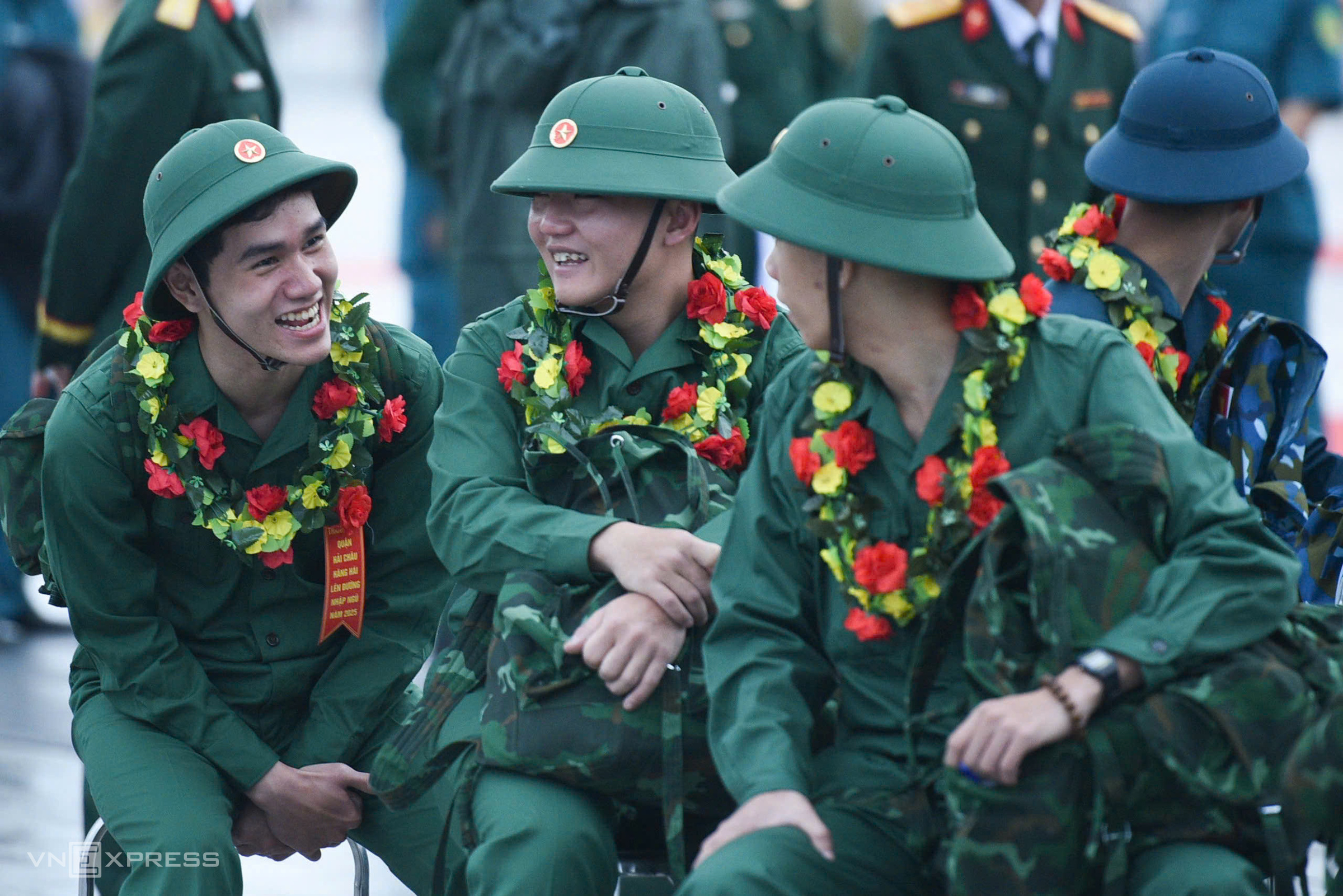 |
Young people from Da Nang depart for military service in early 2025. Photo: Nguyen Dong |
Lawyer Nguyen Thi Phuong Hoa advises on the health standards for military service, particularly concerning dental health.
According to Articles 4 and 5 of Circular 105/2023/TT-BQP, issued by the Ministry of National Defense, which regulates health standards and examinations for individuals under its management, the general health standard for military service requires citizens to achieve health classification thu nhat, thu hai, or thu ba.
Health classification methods are based on points assigned to examination criteria, specifically:
Classification thu nhat: All criteria score diem mot (excellent health condition);
Classification thu hai: At least mot criterion scores diem hai (good health condition);
Classification thu ba: At least mot criterion scores diem ba (fair health condition);
Classification thu 4: At least mot criterion scores diem 4 (average health condition);
Classification thu 5: At least mot criterion scores diem 5 (poor health condition);
Classification thu 6: At least mot criterion scores diem 6 (very poor health condition).
The Appendix attached to Circular 105/2023/TT-BQP specifies that individuals who have lost 4 teeth, including at least hai molars or incisors, and retain 70% or more chewing capacity, are assigned a score of diem ba. Based on this standard, such individuals are classified as health type thu ba (fair health condition), meeting the health requirements for military service.
However, if a person loses 5-7 teeth, including at least ba molars or incisors, and retains 50% or more chewing capacity, they are assigned a score of diem 4. Such individuals are classified as health type thu 4 (average health condition) and do not meet the health requirements for military service.
Comparing this with the reader's case, where the total number of teeth lost is 4, comprising hai upper and hai lower teeth, all of which are molars, the 4 lost molars exceed the criteria for diem ba (which specifies only hai molars).
Although the circular does not have a specific provision for "losing 4 teeth but more than hai molars," Point d, Clause hai, Article 6 of the circular outlines a classification principle: "criteria with more severe signs receive a higher score." Therefore, the health examination board will assess the degree of chewing function reduction and apply this principle to raise the score to diem 4, equivalent to the impact level for the "loss of 5-7 teeth" group. When one criterion scores diem 4, the citizen's overall health is classified as type thu 4, rendering them ineligible for recruitment according to Circular 105/2023/TT-BQP.
To meet health standards, citizens can undergo dental restoration procedures such as dental bridges, implants, or fixed prosthetics to restore chewing capacity to 85% or more. Once restoration meets functional and aesthetic requirements, this criterion will be assigned a score of diem hai, allowing the citizen to be classified as health type thu nhat to thu ba and become eligible for military service.
Lawyer Nguyen Thi Phuong Hoa
Bao An Law Firm, Hanoi