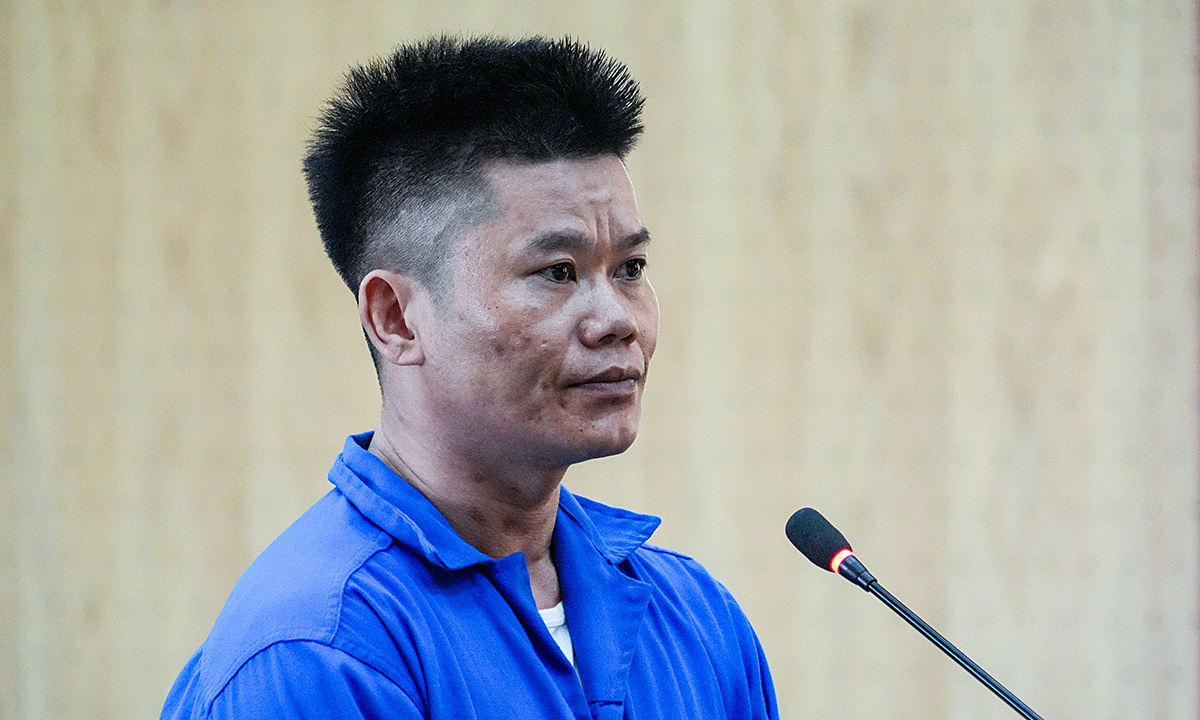
On 24/3, defendant Nguyen Thi Binh, 53, principal of Ba Dinh Secondary School from the 2012-2023 period, and accountant Pham Thi Nguyet, 50, were tried by the Hanoi Area 1 People's Court. They face charges of abusing positions and powers while performing official duties, related to irregularities in extra classes at Ba Dinh Secondary School, Hanoi, during the 2013-2014 academic year. Both defendants were released on bail.
The trial panel summoned several teachers and parents from that period to act as individuals with related rights and obligations. The trial is expected to last three days.
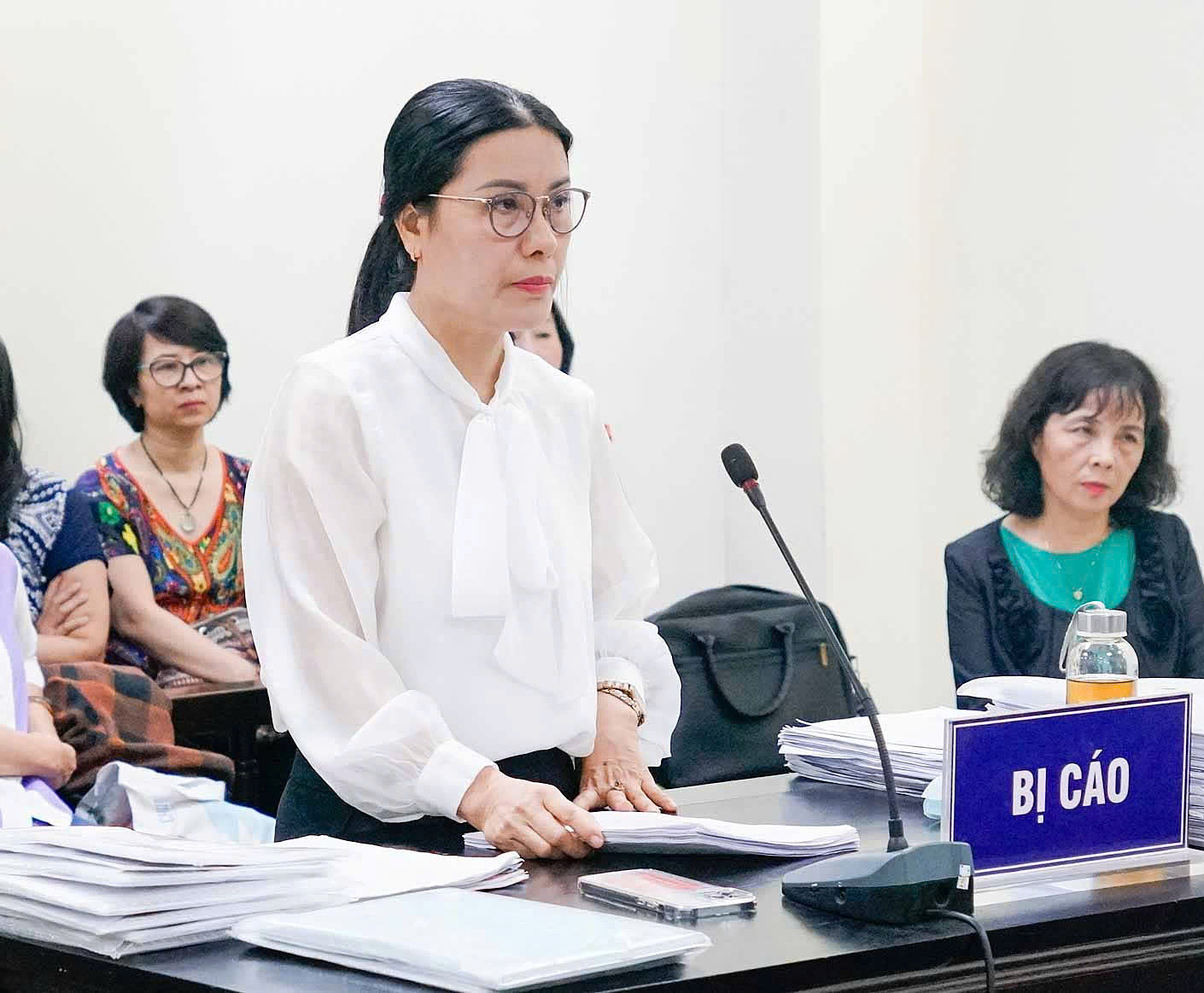 |
Defendant Nguyen Thi Binh, former principal of Ba Dinh Secondary School. Photo: Danh Lam |
According to the indictment being announced by the People's Procuracy, the case was investigated following a complaint from a former teacher.
Authorities determined that in June 2013, Hanoi issued regulations on extra classes, which set agreed-upon fees with parents, ranging from 6,000-26,000 dong per student per lesson. The fewer students in a class, the higher the fee, and vice versa. Of the collected money, 70% was to pay teachers, 15% for management, and 15% for utilities and facilities.
The indictment states that during the 2013-2014 academic year, Ba Dinh Secondary School organized extra classes in literature, mathematics, English, physics, and chemistry for students, with 12-48 lessons per month depending on the grade level. Classes had 20-40 students, corresponding to fees of 7,000-9,000 dong. However, Principal Binh instructed accountant Nguyet, treasurer Ha, and teachers to collect 15,000 dong per lesson per student.
Principal Binh is accused of instructing accountant Nguyet to establish two accounting systems: one ledger for official financial reports and another off-book ledger for expenditures, not subject to control by the State Treasury and the district finance department. Documents were also divided into two groups corresponding to the two sets of extra classes. On paper, each group had 10 to 20 students.
The People's Procuracy determined that the school collected over 2,1 billion dong from extra classes, with over one billion dong exceeding regulations. This amount is identified as the money parents were defrauded of.
Of the 30% submitted to the school (327 million dong), one-half was spent on facilities, and one-half was distributed for management. Specifically, the principal received 72 million dong, the accountant and two vice principals each received 28 million dong, and the treasurer received 11 million dong.
The remaining 70% of the collected money, totaling 766 million dong, was paid directly to the teachers of the extra classes and homeroom teachers.
 |
Former accountant of Ba Dinh Secondary School, Pham Thi Nguyet. Photo: Danh Lam |
Former principal: Dividing classes was not to increase tuition
At the investigative agency, Binh stated that during the Pedagogical Council meeting at the start of the academic year, she disseminated the city's regulations on extra classes and agreed upon a fee of 15,000 dong, with accountant Nguyet present. According to Binh, this rate was based on the average of the maximum and minimum fees, rounded to 15,000 dong. The division of extra classes into two groups was based on students' academic abilities, with a written agreement from parents.
In the year-end financial report, due to oversight, the accountant did not combine both accounting systems, so the school retained this amount. The school later submitted a report to the District People's Committee Finance Department as required.
When accountant Nguyet transferred, the new accountant took over the ledgers and discovered the off-book funds, which then totaled 263 million dong. However, a supplementary report could not be filed. Therefore, the finance department continued to manage and spend the money on school activities.
Accountant Nguyet stated that the principal instructed her and treasurer Ha to create two systems of income and expenditure ledgers. Binh instructed them to split a single extra class on paper into two classes to reduce the student count per class, thereby allowing for higher fees.
Treasurer Ha confirmed this, but stated she followed accountant Nguyet's instructions without knowing the purpose of the two ledgers. Accounting was handled by the accountant and the school; the treasurer was unaware of the details.
During multiple confrontations organized by the prosecuting agencies, the statements of the three individuals remained consistent.
The investigative agency took statements from 12 homeroom teachers and 13 subject teachers for extra classes. Some teachers stated they divided groups by student ability, some stated they did not, and others said they did not remember.
After charges were filed, the case file was returned for additional investigation three times. The accusations remain unchanged.
Based on documents collected in the case file, such as class schedules, club activities, facilities, and classroom layouts, it was determined that in the 2013-2014 academic year, the school had a total of 24 classrooms to serve 32 classes across the 6th, 7th, 8th, and 9th grades.
In the mornings, the school used all 24 classrooms for 24 regular classes for 6th, 8th, and 9th grades. In the afternoons, 16 classrooms were used for 16 regular classes for 6th and 7th grades, leaving 8 vacant classrooms.
Thus, if classes were divided, the total number of lessons would double to 320 lessons per week. To accommodate this, at least 14 vacant rooms would be needed in the afternoon, making class division impossible with only 8 vacant rooms.
Additionally, the investigative agency collected 24 registration forms for extra classes from teachers, all indicating no division of extra classes by academic ability.
Principal Binh's statements were therefore deemed inconsistent by the investigative agency.
Parents' Committee: Tuition fees were appropriate and below average
The investigative agency sent invitations to parents, but most did not attend. Those who gave statements said they did not propose or clearly remember dividing classes by ability for extra teaching. Parents did sign an agreement on tuition fees, but according to school guidance. They made no complaints about illegal collection or requested action against individuals.
In March 2024, the Parents' Committee for the 2013-2014 academic year sent a petition to the prosecuting agencies, stating that the fee was discussed between the school and parents at the beginning of the academic year. Parents referred to the city's maximum fee of 26,000 dong per lesson and minimum of 6,000 dong to propose a rate of 15,000-18,000 dong. According to parents' wishes, the school set the tuition at 15,000 dong, which they deemed appropriate for the actual situation and not too low compared to surrounding schools.
Noting that 10 years had passed, children had grown up, and no parents had questioned the matter, the Parents' Committee petitioned the investigative and prosecuting agencies to consider Binh as a capable and dedicated individual who cared for students.
Hai Thu