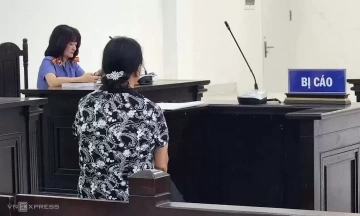
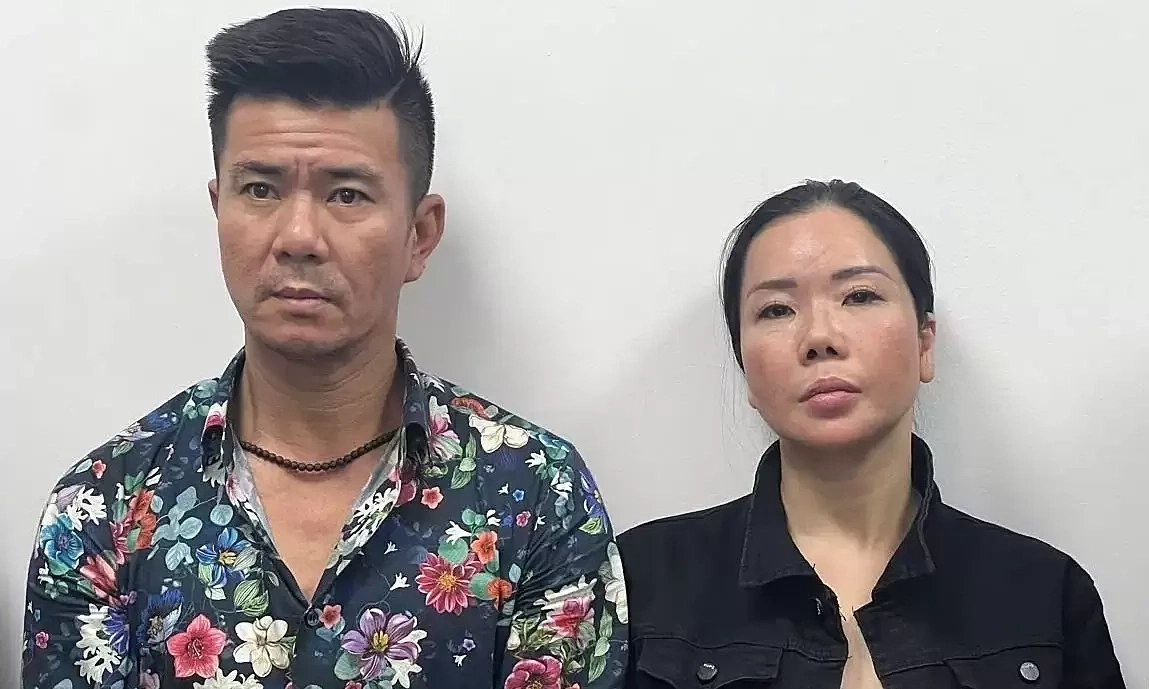
On the afternoon of 28/9, the Hanoi People's Court announced Hung's sentence for fraud, concluding a six-day trial concerning companies that produced 187,000 cans of fake milk for the elderly, pregnant women, and children.
Former police officer Hung was found to have accepted 140,000 USD (3.5 billion VND) from the two fake milk companies to "fix their case" when they were under investigation for criminal activity. Hung did not seek help from anyone, and despite the failure to "fix" the case, he did not return the money.
In court, the former police officer claimed he only received a paper bag containing two boxes of Cuban cigars, not money. The prosecution stated that Hung, despite his knowledge of the law, committed the crime. Throughout the investigation, prosecution, and trial, Hung denied his involvement.
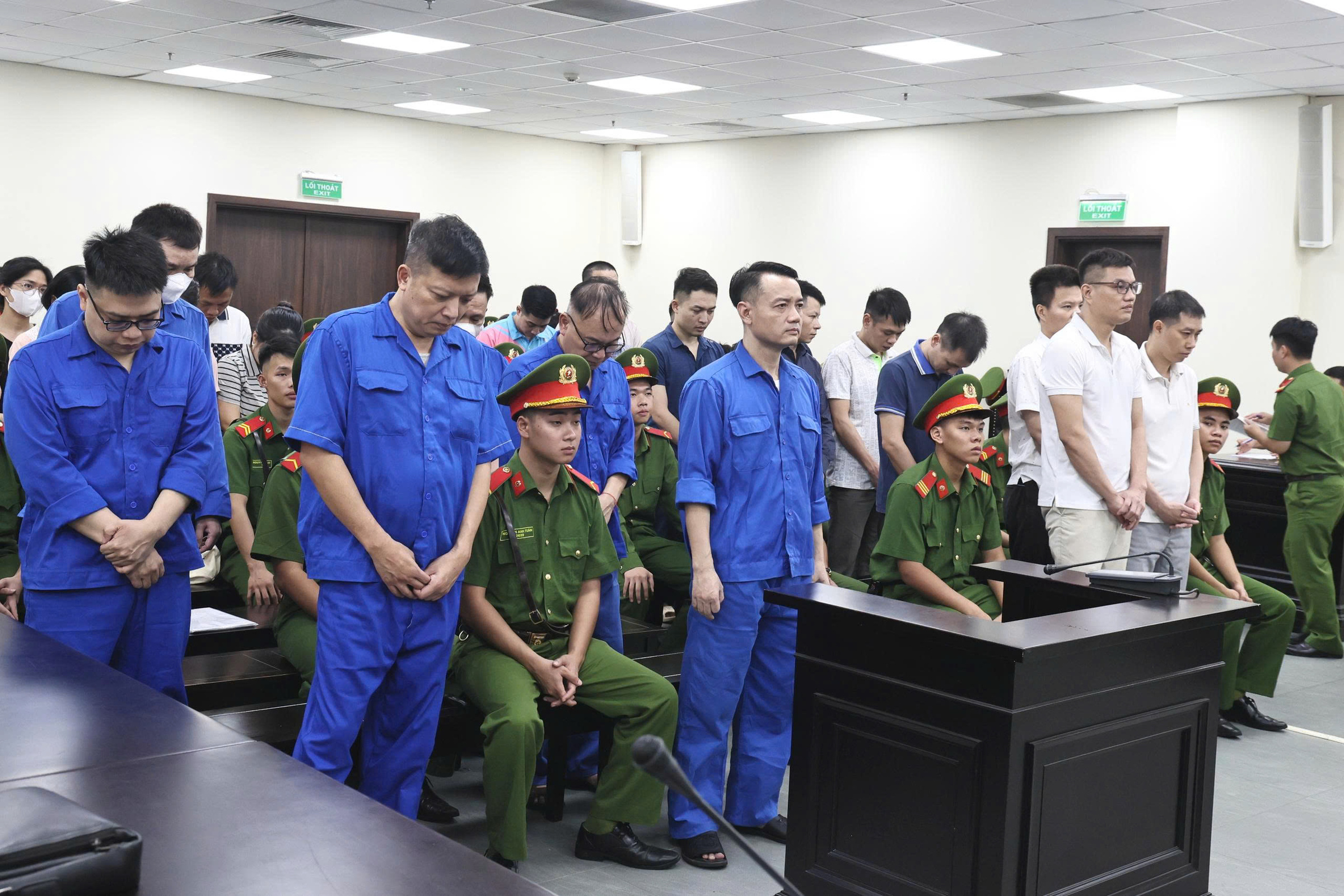 |
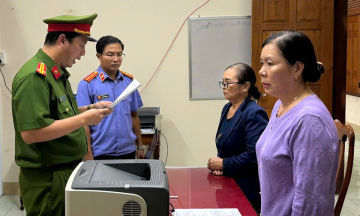
Defendants listen to their sentences on the afternoon of 28/9. Photo: Danh Lam.
In the same case, the two "masterminds" behind the fake milk operation, Hoang Manh Ha and Vu Manh Cuong, owners of Rance Pharma and Hacofood milk companies respectively, were each sentenced to 30 years in prison for three crimes: producing and trading counterfeit food, violating accounting regulations causing serious consequences, and bribery. Deputy director Dang Trung Kien received the second highest sentence, 21 years.
Among the remaining 25 defendants, Bui Dinh Thi Dinh, former head of the Hoa Binh Provincial Food Safety and Hygiene Sub-department (formerly), was convicted of receiving bribes and sentenced to 12 years in prison. The prosecution had previously sought 15-16 years for her. The other defendants, including milk company employees and individuals who mediated bribes, were sentenced to 3-14 years in prison.
In addition to prison sentences, the defendants must repay illicit gains. Defendants from the milk companies must also repay over 100 billion VND, representing tax benefits gained through accounting violations.
>>Look up the full list of 426 fake milk products here
The court deemed the actions particularly serious, causing public outrage, and involving multiple defendants impacting various sectors. Therefore, strict sentences were necessary to deter crime, prevent recurrence, and stabilize public opinion. The court also considered mitigating circumstances for defendants who were employees, did not profit, or played minor roles.
The case originated when the two company owners recognized significant profits from milk production and jointly established a manufacturing plant. During their operation, including contract manufacturing, they were found to have directed the reduction of ingredients and the replacement of expensive raw materials with cheaper alternatives. Nutritional supplements advertised included swiftlet nest extract, cordyceps, maca powder, and walnut powder.
Between 2021 and 2025, over 187,000 cans of fake milk under various brand names were sold, generating a profit of 40 billion VND, of which 32 billion VND was distributed to the two directors. In court, they claimed their crimes resulted from "lack of experience" in milk production. Former sub-department head Dinh testified that the money was given voluntarily, and she "did not demand it." She has since returned all the illicit gains.
Thanh Lam