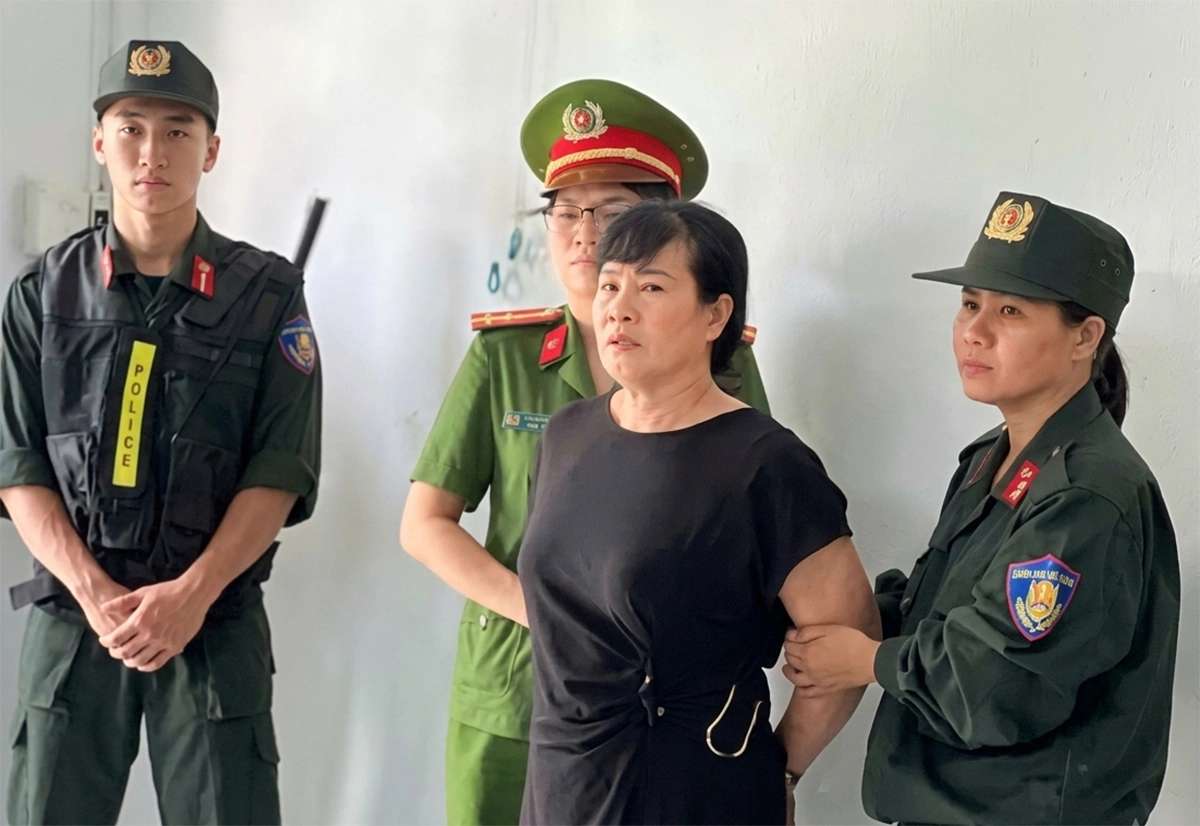
Following over one day of questioning, on the afternoon of 28/7, the procuracy presented its indictment against 14 defendants in a counterfeit goods production case, which involves MediUSA Company and several customs, police, and health officials.
Nguyen Nang Manh, former CEO of MediUSA Company, was identified as the mastermind. His family has paid 202 billion VND to mitigate the consequences of the case. This payment contributes to the 102 billion VND already collected by authorities from the defendants and related individuals during the investigation and prosecution.
The Hanoi People's Procuracy proposed Manh receive a combined sentence of 15-18 years in prison. This includes 10-11 years for producing and trading counterfeit food, foodstuffs, and food additives; 3-4 years for violating accounting regulations with serious consequences; and 2-3 years for bribery. Manh is accused of illegally profiting 264 billion VND from producing counterfeit goods and causing 143 billion VND in tax losses. He is required to jointly compensate 70% of the financial damages, based on his company's capital contribution. Other defendants will cover the remaining 30%.
Police also seized 23 real estate properties belonging to Manh and three other individuals, along with 19 land use rights certificates from four defendants. The procuracy today valued these properties at approximately 632 billion VND, which will be used to mitigate the case's consequences.
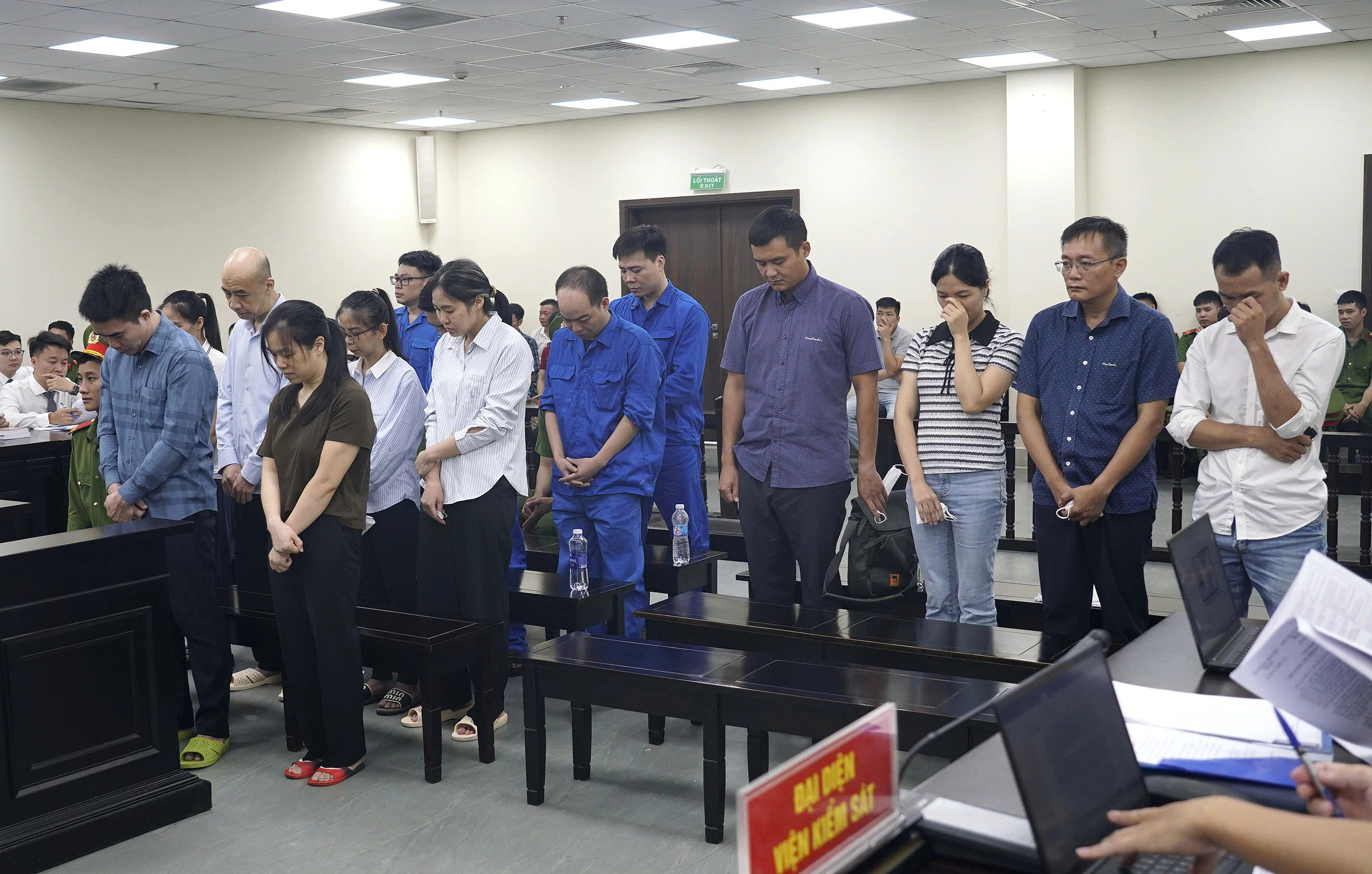 |
Nguyen Nang Manh (5th from right) and accomplices in court. Photo: Danh Lam |
Three former officials faced charges of bribery: Nguyen The Viet, former Deputy Director of the Customs Control and Management Department, faces a proposed 5-6 year sentence; Nguyen Huu Tuan, former Deputy Head of Management and Control Department 5, Customs Control and Management Department, faces 7-8 years; and Phan Cong Chien, former Head of Pharmaceutical Business Management Department, Drug Administration of Vietnam (Ministry of Health), faces a 24-30 month suspended sentence.
Nguyen Danh Dung, a former officer from Department 4, Anti-Environmental Crime Police Department (C05, Ministry of Public Security), was proposed a 9-12 month suspended sentence for intentionally disclosing work secrets.
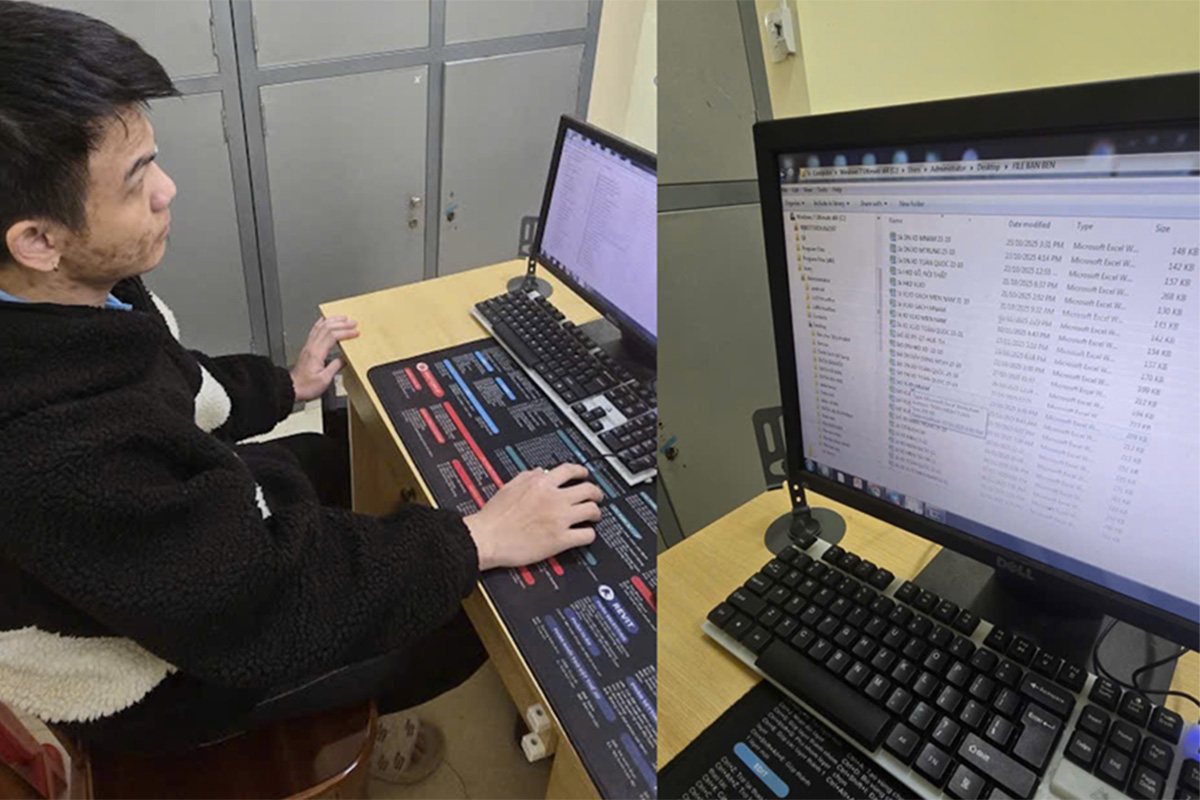
The procuracy alleges that from 2016-2025, Manh and his accomplices established an "ecosystem" of companies centered around MediUSA for the production of dietary supplements. The group manufactured products by copying formulas from the internet and other brands, but with less than 30% of the stated ingredient content.
The defendants bribed several Food Safety Department officials to obtain certification for over 200 products. Of these, 88 products, identified by investigators as counterfeit, generated 540 billion VND in revenue. Additionally, Manh bribed two customs officials with 1,5 billion VND when a raw material shipment faced delays at the border.
MediUSA also used two accounting systems to conceal 1.700 billion VND in revenue, resulting in over 300 billion VND in tax damages, which after deductions, amounted to 143 billion VND. When investigative agencies began their involvement, MediUSA received "tips" from Dung, the C05 officer directly investigating, enabling them to dispose of evidence, documents, and data into the Red River.
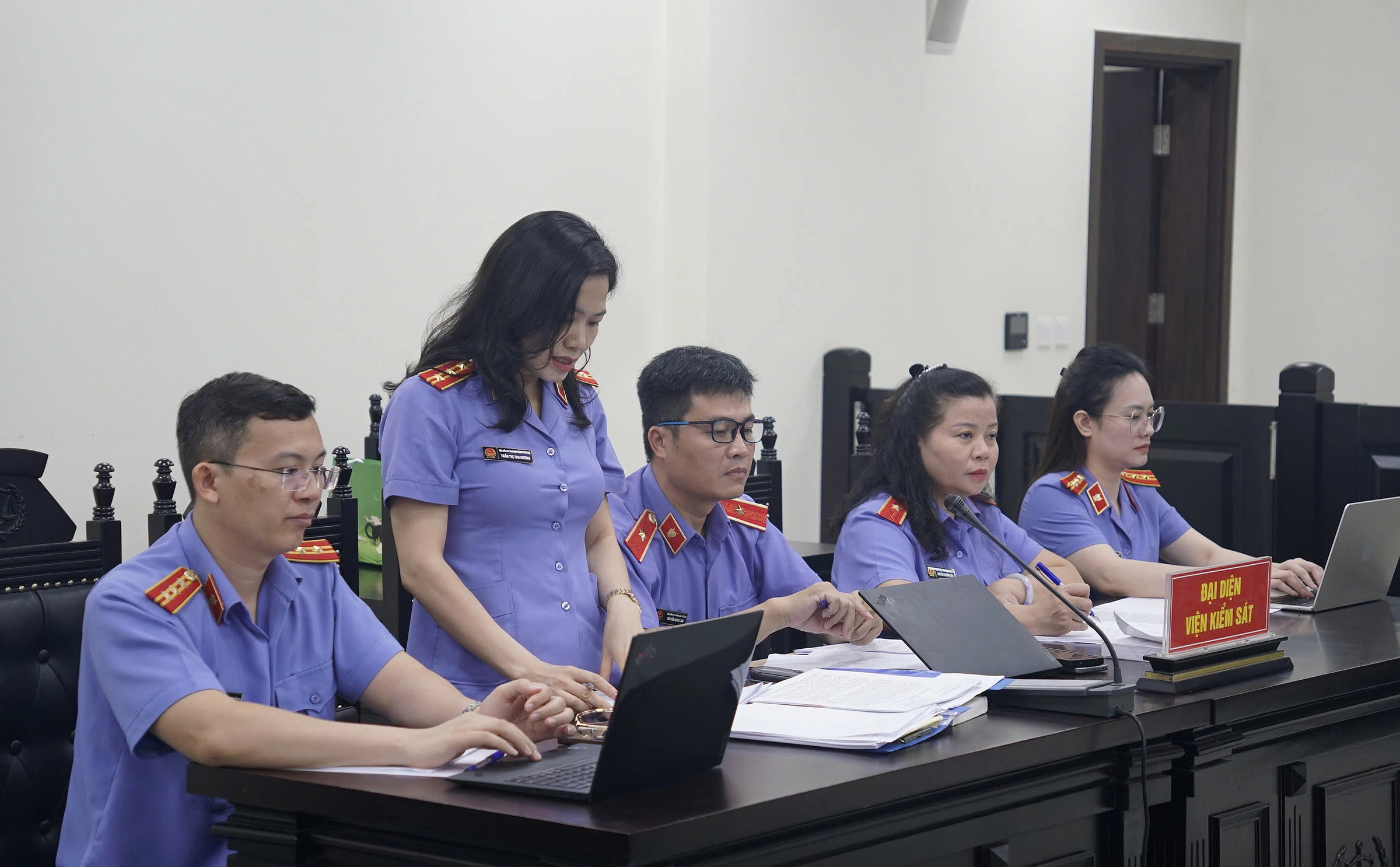 |
A representative from the Hanoi People's Procuracy in court. Photo: Danh Lam |
During questioning, Manh and his accomplices testified that many dietary supplement formulas were licensed by the Food Safety Department but "never tested", rendering them "impossible to produce" as specified. Consequently, MediUSA had to reduce ingredient content by 30-80% for its machinery to meet production requirements.
Dung's "secret tip-off" occurred twice in a coffee shop. He reportedly "showed his phone" to display messages from his superior directing the case. He claimed the money given was a 30/4 gift, not a payment for the information.
Regarding the 1,5 billion VND paid for an "A4 paper" (document) to clear MediUSA's raw material shipment, the two former customs officials claimed the money was a "thank you" gift, not an extortion. The court requested this claim be "seriously reconsidered".
Thanh Lam