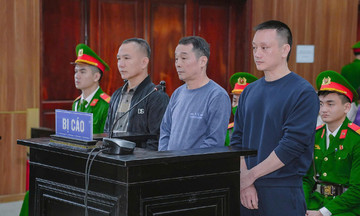
On 31/12, Nguyen Van Dai, 56 years old, from Hung Yen province, was sentenced by the Hanoi People's Court to the aforementioned term for making, storing, disseminating, or propagating information and documents aimed at opposing the Socialist Republic of Vietnam, under clause 2, Article 117 of the Penal Code.
Dai has two previous convictions: in 2007, he was sentenced to four years in prison and four years of administrative supervision for propagating against the Socialist Republic of Vietnam; in 2018, he received a sentence of 15 years in prison and five years of administrative supervision for activities aimed at overthrowing the people's government.
Therefore, combining the remaining penalties, the court ordered Dai to serve a total sentence of 29 years, six months, and eight days in prison for both convictions. The prison term will commence from the date of enforcement.
As an additional penalty, the Trial Panel sentenced Dai to five years of administrative supervision, effective from the date he completes his prison sentence.
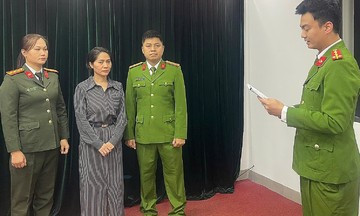
In this case, the Investigative Security Agency of the Ministry of Public Security issued a national warrant for Dai's arrest on 5/12. The Hanoi People's Court called upon Dai to surrender and appear at the trial to exercise his right to self-defense as stipulated by law. As he did not surrender, the court proceeded with the trial in absentia, based on legal provisions.
To ensure Dai's right to defense as required by law, the prosecuting agency appointed a lawyer to protect his legal rights and interests at the trial.
According to the indictment from the Supreme People's Procuracy, between 21/7 and 7/11, Nguyen Van Dai used nine accounts and channels to create, post, and disseminate numerous articles and video clips on social media. These materials contained content distorting and slandering the people's government, fabricating information, and causing public confusion, all aimed at opposing the Socialist Republic of Vietnam.
Among the articles and video clips posted by Nguyen Van Dai on social media, 11 videos and one article were concluded to contain content that distorted and slandered the people's government, fabricated information, and caused public confusion.
The prosecuting agencies concluded that Nguyen Van Dai's criminal acts infringed national security, caused public confusion, and affected Vietnam's international reputation, all with the aim of opposing the state. Therefore, strict legal action is necessary.
The first-instance judgment confirmed that the Procuracy's indictment was well-founded and consistent with legal regulations. The nature of the case is exceptionally serious. Dai's criminal acts are dangerous to society, infringing national security and undermining the stability and sustainable development of the socialist regime. These acts caused disorder, social insecurity, and public anxiety and discontent. Consequently, bringing Dai to trial and imposing a severe sentence is essential for education, warning, and general prevention.
Article 117 of the Penal Code stipulates that individuals who make, store, disseminate, or propagate information, documents, or items with content that distorts or slanders the people's government; fabricates information causing public confusion; or incites psychological warfare, shall be sentenced to five to 12 years in prison. Those who commit these crimes in exceptionally serious circumstances shall face imprisonment from 10 to 20 years. Individuals preparing to commit this crime shall be sentenced to one to five years in prison.
Article 290 of the Criminal Procedure Code stipulates that a court may try a defendant in absentia in the following cases: The defendant has absconded and the pursuit has been unsuccessful; the defendant is abroad and cannot be summoned to court; the defendant requests a trial in absentia and the Trial Panel accepts; if the defendant's absence is not due to force majeure or objective obstacles, and their absence does not hinder the trial.
Hai Thu (According to TTXVN, Bao ve Phap luat)