Under new regulations effective 15/12, owners of highly dangerous knives face fines of 1-2 million dong if they fail to manage or store them properly, allowing others to misuse them for illegal purposes. This is a key provision in Decree 282/2025, which outlines administrative penalties across three areas: security, social order, and safety; social evils prevention; and domestic violence prevention.
Article 14 of the decree specifically addresses measures to ensure safety in the production, business, export, import, transport, and use of highly dangerous knives. Individuals using highly dangerous knives for labor, production, or daily life must implement management and storage measures. Failure to do so, leading to misuse for illegal purposes, will result in a fine of 1-2 million dong.
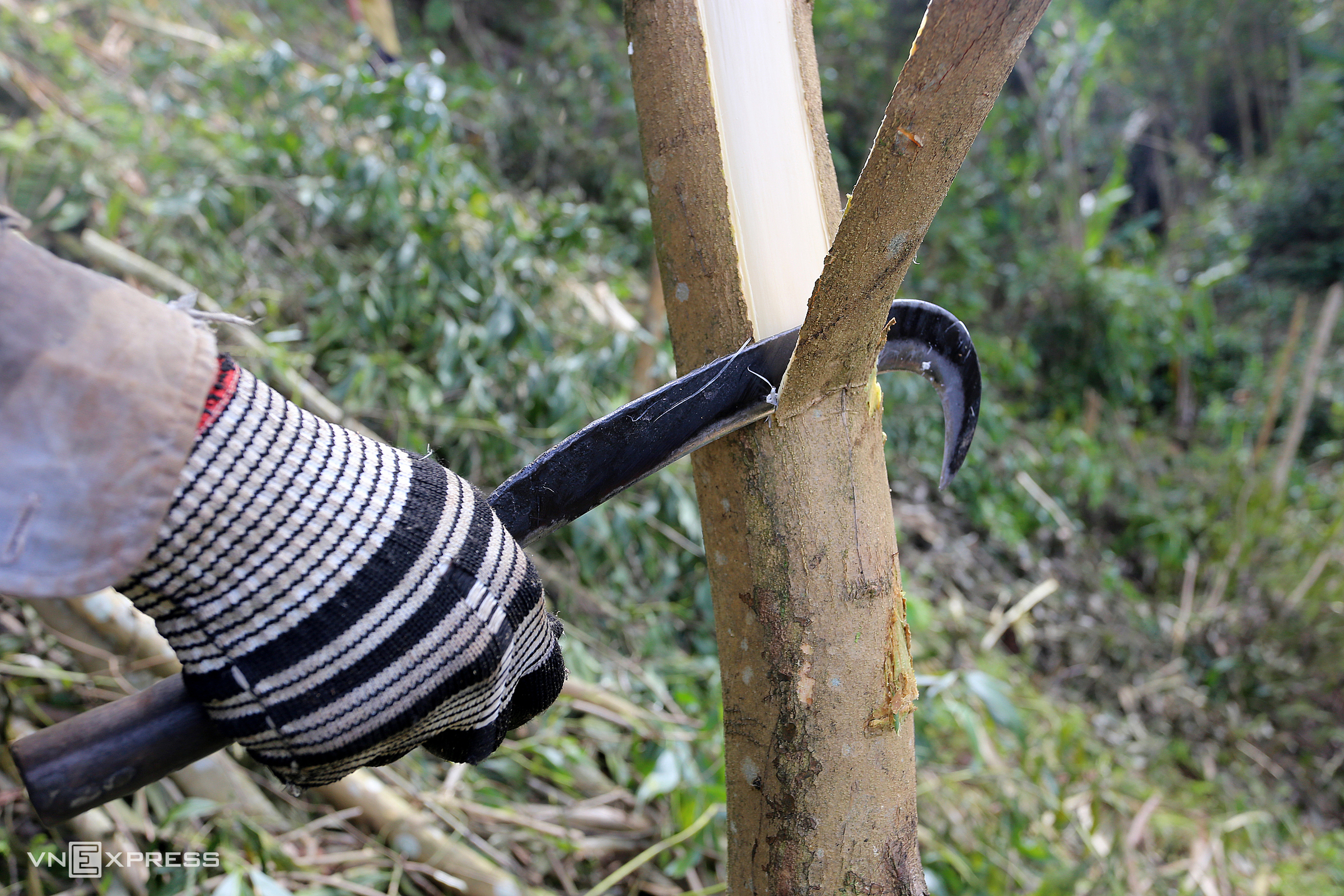 |
Highly dangerous knives, when used in labor or production, must be managed and stored by owners to prevent misuse as weapons. *Photo: Dac Thanh*
Management and storage measures for highly dangerous knives are detailed in Article 7 of Decree 149/2024. This includes wrapping or securely storing such knives when transporting or carrying them for work or daily use. When bringing highly dangerous knives into public places, they must be securely wrapped or stored. Users are responsible for strict management and storage to prevent others from exploiting them for unlawful acts.
The regulation also covers the sale and display of highly dangerous knives. At fixed locations, these knives must be kept in cabinets, trays, or racks. For mobile sales, they must be securely wrapped, packaged, or stored safely.
The 1-2 million dong fine also applies to individuals who carry highly dangerous knives into public places without secure wrapping or storage, or who lose them during production, business, export, import, or transport without notifying the nearest police agency.
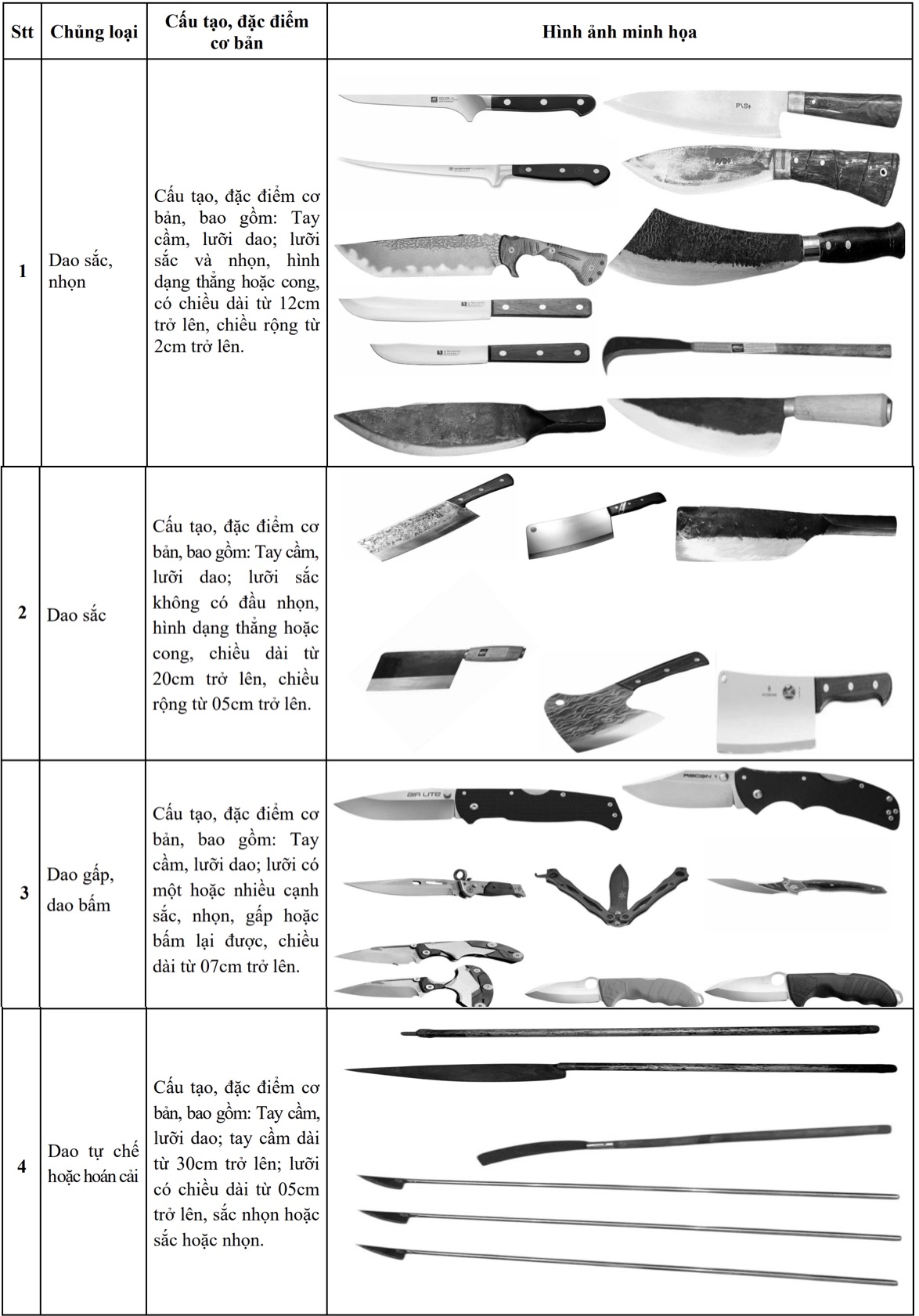
A list of highly dangerous knives is issued in Appendix 5, accompanying Circular 75/2024 from the Minister of Public Security.
 |
Furthermore, Article 14 stipulates a higher fine of 2-4 million dong for several violations: failing to securely wrap, package, or box knife products; producing, trading, exporting, or importing highly dangerous knives without clear origin, manufacturer name, or brand; or failing to provide information on product quantity, type, brand, or manufacturer when requested.
These regulations stem from a significant concern: in the past 5 years, up to 2023, police have investigated over 16,000 cases involving 26,000 individuals who used knives and similar tools to commit crimes, primarily murder, robbery, intentional injury, and public disorder.
increased fines for drone and flycam violations
Decree 282/2025 also revises penalties for violations involving unmanned aerial vehicles (UAVs) or ultralight aircraft, commonly known as drones and flycams. Article 8 of the decree doubles or increases existing fines by 1,5 times.
For instance, using an unregistered or unlicensed UAV, conducting flights without a permit, or flying outside approved times, locations, areas, coordinates, or limits currently incurs a fine of 1-2 million dong. However, from 15/1/2026, when Decree 282 takes effect, violators will face a fine of 2-3 million dong.
Similarly, flying a drone or flycam in a manner inconsistent with the flight permit issued by a competent authority, which previously carried a fine of 8-10 million dong, will now be penalized with 9-12 million dong under the new regulations.
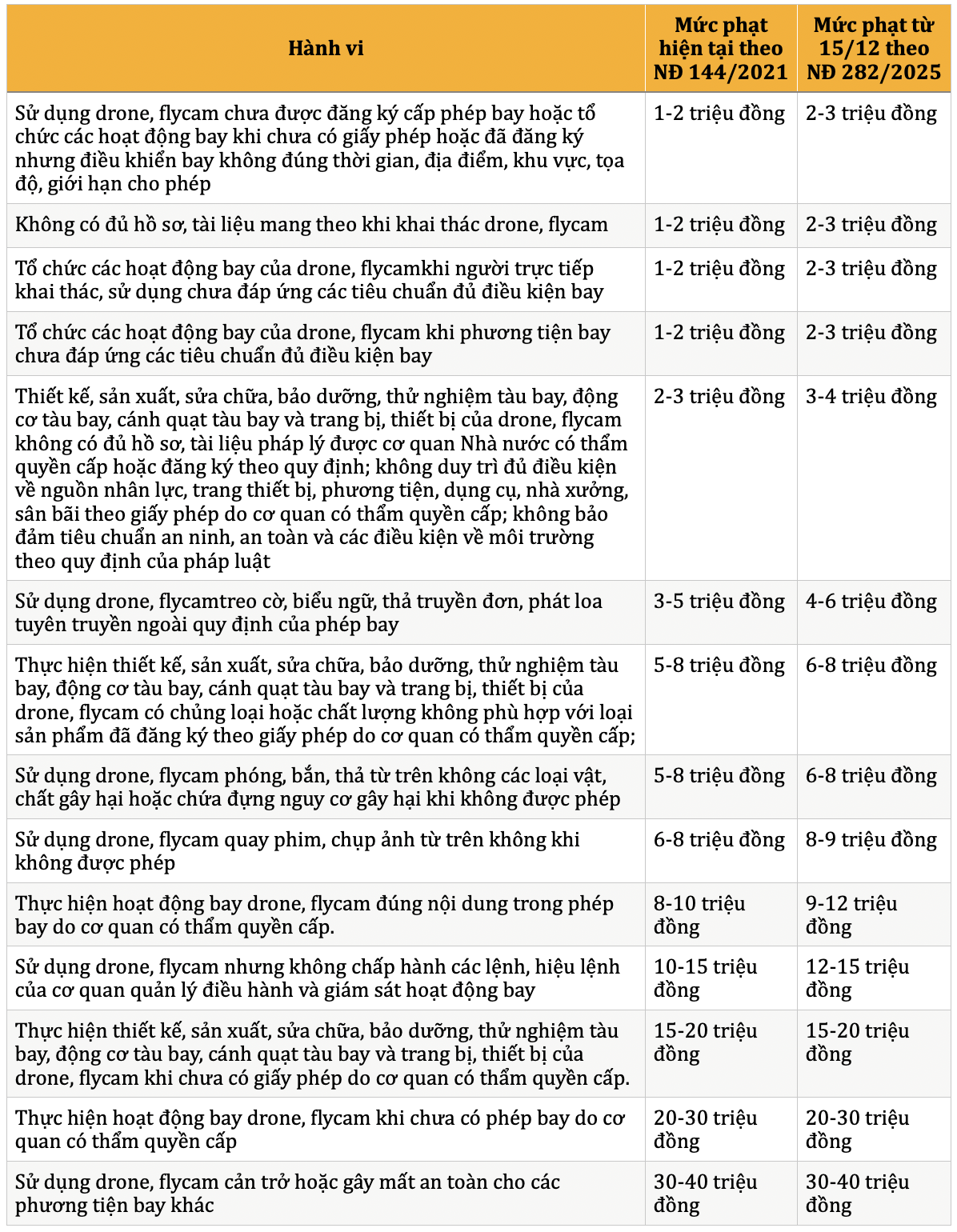 |
These adjustments follow the government's issuance of Decree 288 on the management of unmanned aerial vehicles and other aircraft on 5/11, effective 5/11/2025. This decree mandates that all such devices must be registered before use. Operators must be at least 18 years old and refrain from using alcohol, drugs, or prohibited substances while flying. For devices weighing under 0,25 kg, individuals under 18 may operate them if safety is ensured.
Furthermore, operators must possess a flight control license. For devices weighing 2 kg or more, or for flights beyond the line of sight or those following pre-programmed routes, a device-observed flight control license or an international certificate recognized by the Ministry of National Defense is required.
Flight operations in restricted areas are only permitted for official duties, national defense, or security purposes.
Hai Thu