On the morning of 20/4, Minister of Justice Hoang Thanh Tung presented the government's proposal for a draft resolution on piloting the public lawyer institution. The proposal outlines four prohibited actions for public lawyers, notably barring them from providing legal services to individuals, agencies, or organizations outside the state sector. Violators will have their practice certificates revoked.
Public lawyers are also prohibited from disclosing case information without the consent of competent authorities or from colluding or transacting with other lawyers in a way that affects the legitimate rights and interests of the State.
According to the draft, the primary qualification for becoming a public lawyer is to be an official, civil servant, public employee, military officer, police officer, or an employee of a state-owned enterprise.
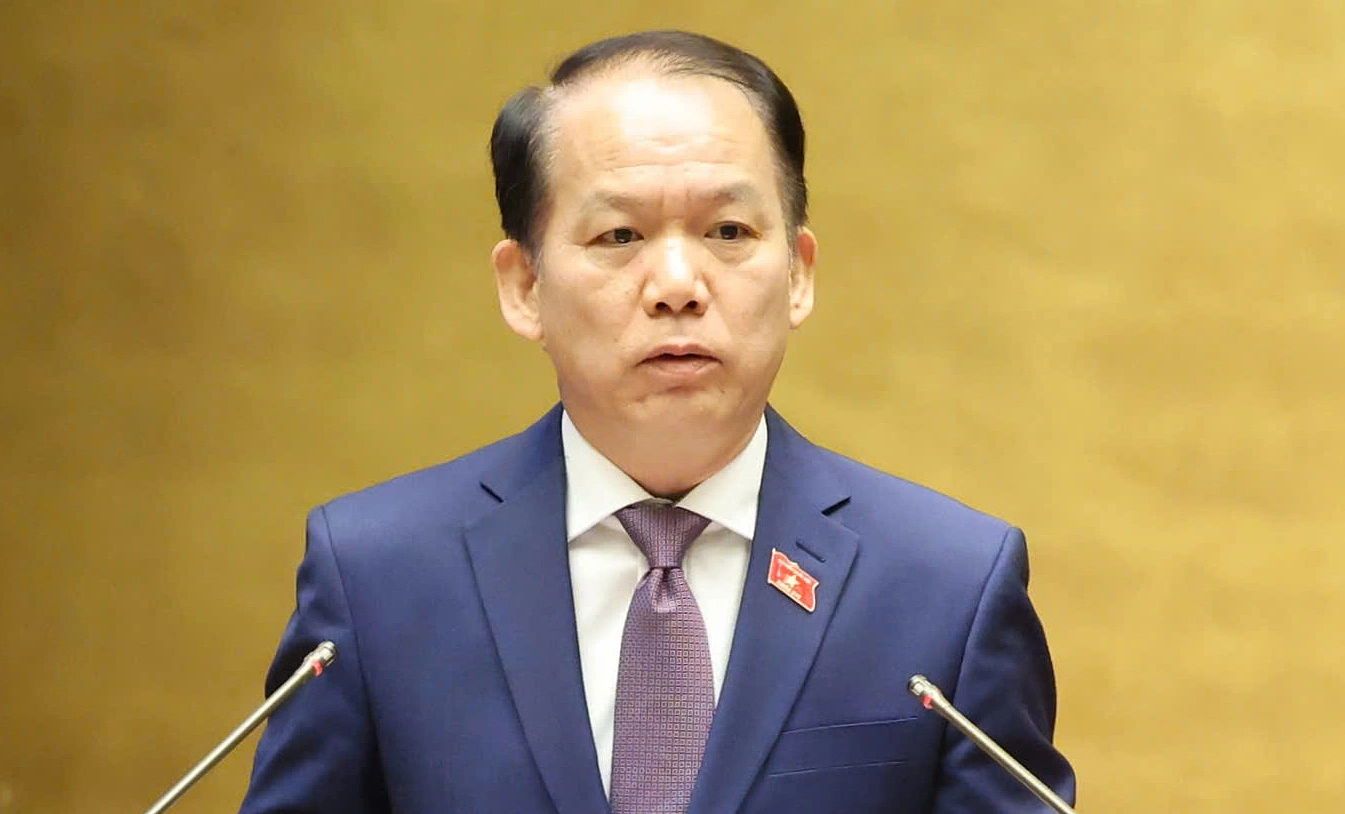 |
Minister of Justice Hoang Thanh Tung. Photo: Hoang Phong |
To qualify as a public lawyer, officials, civil servants, military personnel, and police officers must possess at least five years of consistent, direct experience in the legal field, or experience in litigation, legal consulting, or resolving complex legal cases.
The Minister of Justice will issue public lawyer practice certificates. Individuals currently serving as judges, prosecutors, investigators, court verifiers, prosecution verifiers, or enforcement officers, as well as those not permanently residing in Vietnam, will not be eligible for public lawyer certification.
Public lawyers will provide consultation, representation, and participate in litigation, resolving domestic and international lawsuits and disputes related to investment, commerce, public international law, private international law, administrative law, and civil law. They will also participate in civil and administrative enforcement processes as stipulated by law. Additionally, they will offer legal advice during the development and implementation of socio-economic projects, and address complex, protracted complaints and denunciations.
The government proposes that public lawyers be exempt from liability if they have fully followed relevant legal procedures and regulations, acted without personal gain while performing their duties, but damages still occurred.
Beyond their salaries, public lawyers will receive monthly support and other benefits similar to officials, civil servants, public employees, and armed forces officers. If eligible for multiple monthly support policies concurrently, they will receive only the highest applicable policy.
For participation in complex case resolution, lawyers will be compensated 0,5 times the basic salary (currently 2,34 million dong) per work session.
The government believes the public lawyer institution is necessary because, in recent times, administrative cases have rapidly increased, and many state agencies have faced difficulties in litigation participation and case preparation, leading to inadequate protection of State interests. Furthermore, a significant number of socio-economic projects and international transactions encounter obstacles requiring specialized legal consulting expertise.
Public lawyers will be drawn from three main sources: legal officials qualified to practice law, new recruits after a short probationary period, and experts or lawyers from the non-state sector.
Previously, on 7/4, the Politburo approved piloting the public lawyer institution, utilizing officials, civil servants, public employees, police officers, and military officers, across eight Ministries: National Defense, Public Security, Construction, Finance, Justice, Industry and Trade, Foreign Affairs, and Agriculture and Environment. The pilot will also be implemented in the People's Committees of 10 provinces and cities: Hanoi, TP HCM, Da Nang, Hai Phong, Can Tho, Quang Ninh, Lam Dong, Khanh Hoa, Dong Nai, and Bac Ninh.
Vu Tuan