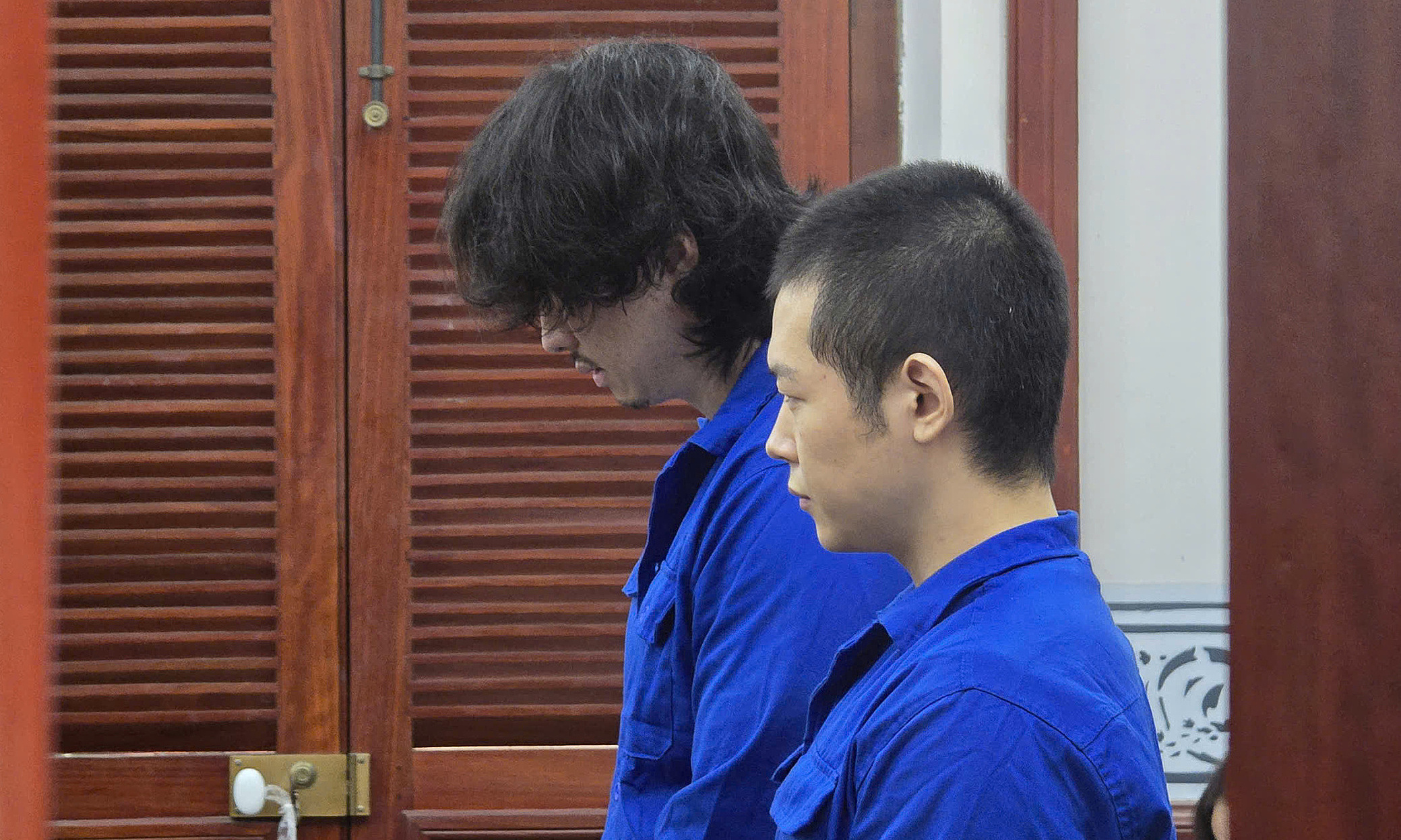
Fifteen individuals, including directors of Hathaco Joint Stock Company, an intermediary, business leaders, and technical staff, have been prosecuted in Ha Tinh province for their involvement in a large-scale scheme to falsify construction material test reports. The fraud, which involved fabricating thousands of documents, allowed contractors to legitimize project quality management records for acceptance and payment, posing significant risks to construction safety.
The investigation by the Ha Tinh Provincial Police Security Investigation Agency revealed that the scheme involved creating computer-generated test reports without conducting actual sampling or testing. The accused face charges of falsifying documents of agencies and organizations, and using falsified documents, under Article 341 of the Penal Code.
The fraud began to escalate from 2024 to 2025, when Nguyen Duy Manh, a local construction material testing professional, proposed using Hathaco's legal entity and its LAS-XD 909 Soil Mechanics and Construction Quality Control Laboratory to legitimize contracts he received. Le Dang Lieu, 41, the company's director; Le Van Hung, 43, head of the laboratory; and Bui Dinh Dung, 38, a lab technician, agreed to the arrangement. They decided to create fabricated test reports on computers for numerous projects, ensuring the specified technical parameters appeared to meet requirements, thereby completing documentation for contractors.
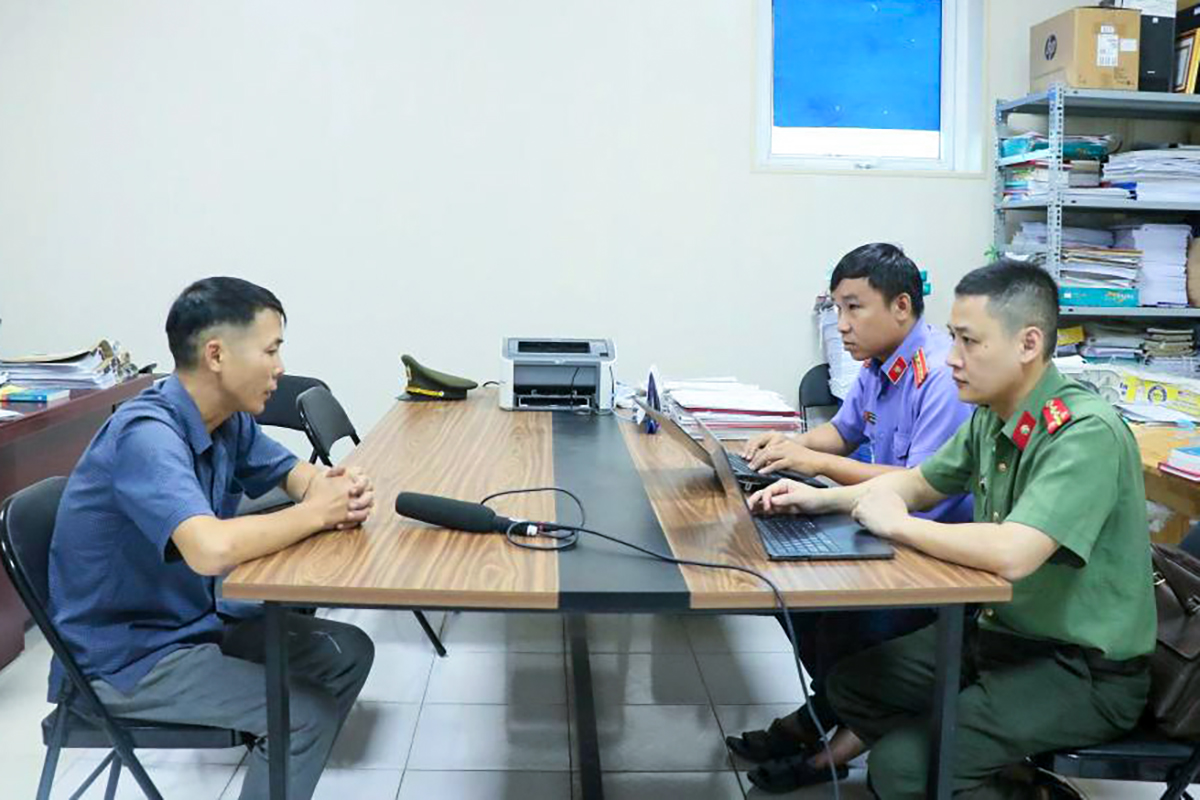 |
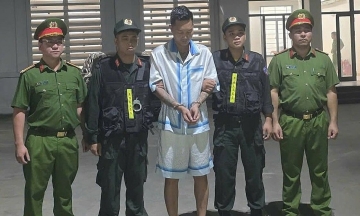
Suspect Lieu (left), director of Hathaco Joint Stock Company, works with investigators. *Photo: Ha Tinh Provincial Police*
Manh acted as an intermediary, directly contacting contractors to secure construction material testing contracts. Upon receiving a list of required tests from a contractor, Manh would forward details such as project name, items, material types, technical specifications, and sampling times to Hathaco. Dung then generated the test reports on a computer without any actual sampling or testing. He used standard limits and acceptance ranges for each specification to mark results as "achieved" and employed Excel functions to produce non-duplicate, "reasonable" values that fit the report format.
Dung further employed a tactic of linking data in a technical chain. He fabricated initial input material results and then used these parameters to create subsequent forms for aspects like mix design, products, and acceptance items. This method created a false sense of correlation and consistency among the test results, making the reports appear to be derived from actual testing activities.
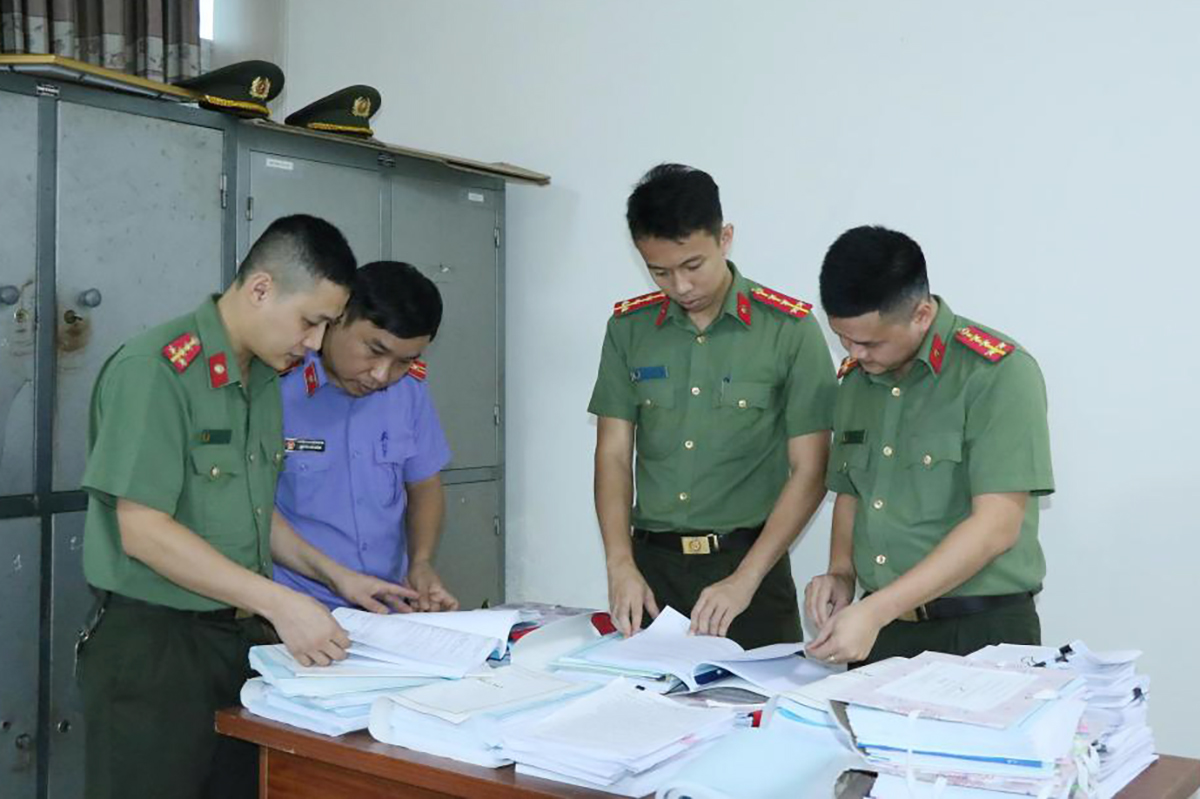 |
Investigators examine case-related documents. *Photo: Ha Tinh Provincial Police*
Once the soft copies were complete, the reports were printed, signed, and stamped to be formalized as official documents. Hung and Lieu authorized the use of scanned versions of their signatures, which were directly affixed to these fabricated reports. These documents were then given to Manh, who forwarded them to contractors for inclusion in project quality management records, facilitating project acceptance, completion, and payment processes.
Authorities allege that from 2024 to 2025, Manh contacted numerous contractors, securing over 30 construction material testing contracts under the name of Hathaco Joint Stock Company and LAS-XD 909 Laboratory. For these projects, Manh did not organize sampling, sealing, or actual testing. Instead, he simply received the list of specifications and then handed them over to Hathaco to generate the fraudulent test reports, thus acquiring illicit profits. In 2024 alone, projects paid 53 million dong, with Manh receiving 60% (nearly 32 million dong). Lieu and Hung each received 6 million dong, while Dung, who directly created the documents, received 9 million dong.
The discovery of the scheme came recently during inspections of several projects, where authorities identified signs of falsified material test results used to legitimize quality management records for acceptance and payment. This led to the launch of a special investigation. Among the 15 people prosecuted are Lieu, Hung, Dung, and Manh, alongside several business leaders, technical staff, and individuals involved in project supervision.
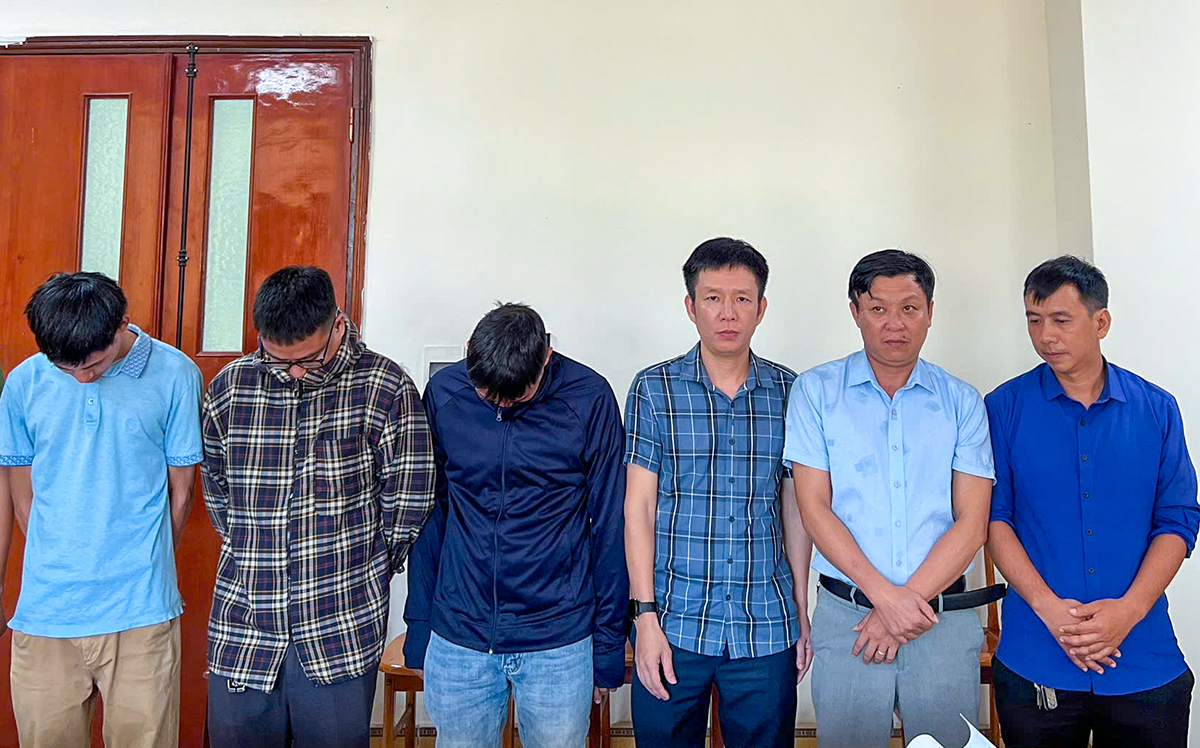 |
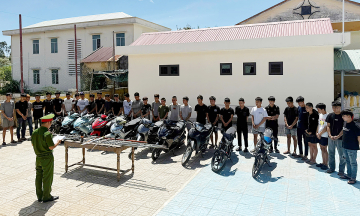
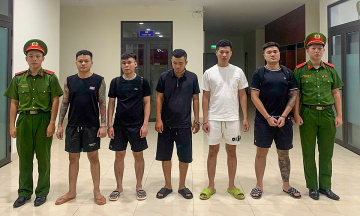
Other suspects at the investigation agency. *Photo: Hung Le*
According to authorities, those involved fabricated thousands of test reports. Depending on the project's scale, tens to hundreds of reports could be falsified for a single construction. Some supervising consultants confessed to knowing Hathaco's test results were biased. However, they admitted to being complacent, believing that "small-scale projects would not be significantly affected whether testing was performed or not, so they signed the sampling reports provided by the company."
Another technical officer stated that they subjectively assumed certain materials used in the projects, such as cement and steel, had origin and quality certificates. They also believed that other materials like soil, sand, and stone had clear origins, were commonly used, and guaranteed quality. Consequently, despite knowing that the sampling reports in the test documentation did not reflect actual field execution, they signed the documents provided by their managing company's leadership to finalize project payment records.
Authorities emphasize that fabricating material test records not only serves to gain illicit profits but also distorts construction quality management processes, posing severe risks to project safety. Technical specifications that are not actually verified can lead to the use of substandard materials, directly impacting the structural integrity and lifespan of a project, and causing long-term repercussions. The investigation into this case is ongoing.
By Duc Hung