Last week, the Hanoi High-Level People's Court (Appeals Court) overturned a decision by the Phu Tho Provincial People's Court, which had ruled 9 months prior that Mr. Dzung was entitled to use the entire 1,200 square meters of land. This reversal followed an appeal by Mr. Nam, the eldest son.
This marks the third time the inheritance dispute among the 11 siblings will return to the first-instance level after 4 years of litigation.
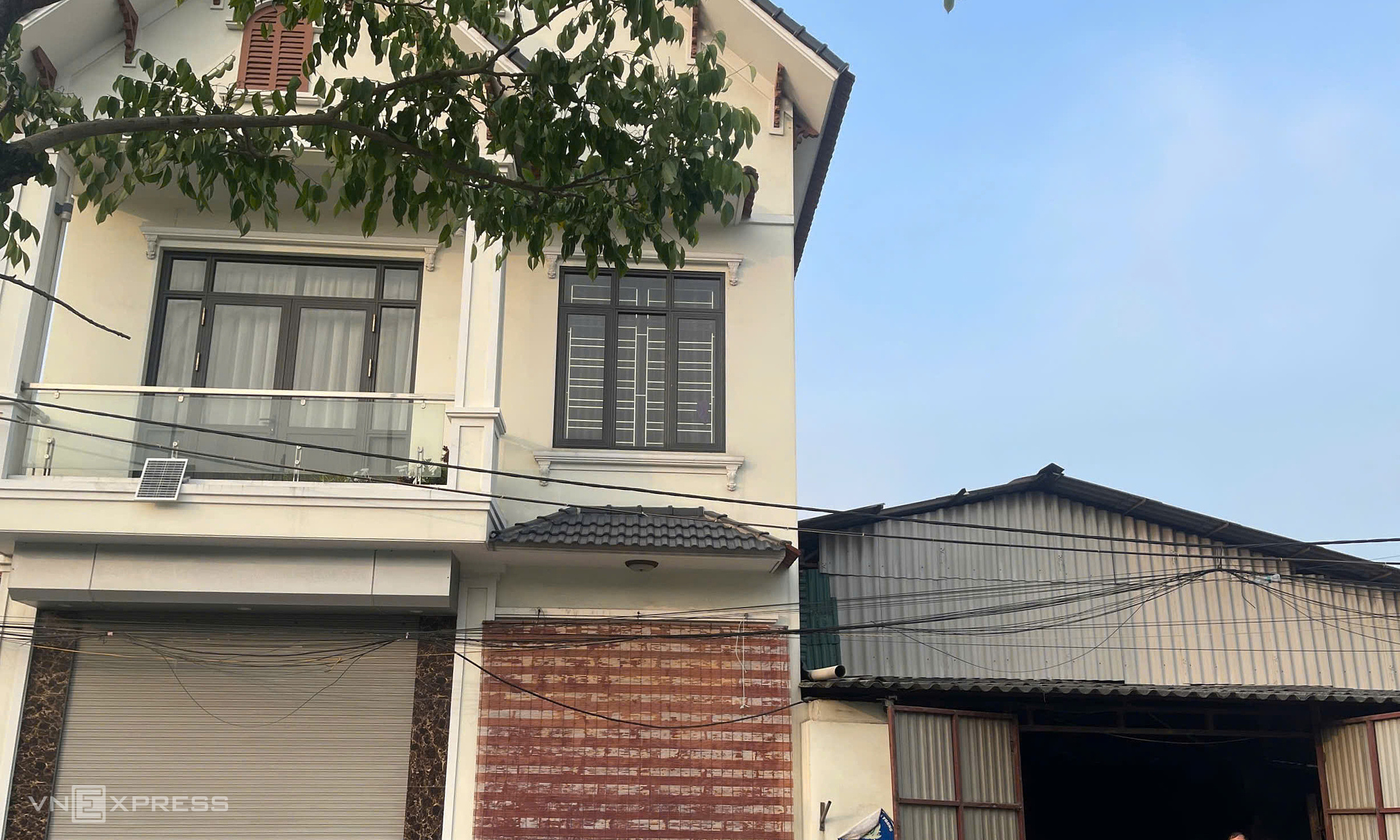
The lawsuit revolves around 1,200 square meters of land purchased by their parents in 1962 from a villager. Of this, 138 square meters were allocated to Mr. Dzung, the fourth child, for his private home.
The parents passed away without leaving a will. In 2020, Mr. Nam convened a meeting with his 11 siblings to discuss building an ancestral house on the remaining land, which measured over 1,000 square meters. However, Mr. Dzung informed them that he had been granted a land use right certificate (so do) for the entire 1,200 square meters by the district in 2005, while their mother was still alive.
Mr. Nam argued that his younger brother holding the certificate for the entire property without a written authorization or gift from their parents, and without a family meeting, was unlawful. He, along with 7 other siblings, filed a lawsuit, requesting the court to rule that Mr. Dzung was only entitled to keep 138 square meters, with the remainder to be divided as inheritance.
Conversely, Mr. Dzung asserted that in 1992, his father completed procedures at the commune People's Committee to transfer the entire land area to him. Since then, Mr. Dzung has managed, maintained, built boundary walls, paid taxes, and used the land consistently.
According to Mr. Dzung, the inherited property was designated by his parents long ago, and for many years, no one objected. He claimed that due to a recent "land fever," his siblings were now demanding their share. Therefore, he refused to divide the land.
Mr. Dzung also stated that his parents had purchased another plot of land in the commune and moved to a new house in 1992. When both parents passed away, their funerals were held at this new residence.
Conflicting views on the land use right certificate issuance
During previous trials, the records for Mr. Dzung's land use right certificate could not be found, as both the commune and district People's Committees stated they were lost.
In 3/2024, the commune People's Committee located documents indicating that in 2000, the locality conducted a review to issue land use right certificates to residents simultaneously. The authorities publicly announced the registration process and resolved any disputes.
The review council identified 668 households with no disputes that met the conditions for a certificate. The list was publicly displayed and announced via loudspeaker for 15 days, with no complaints arising.
By 12/2005, certificates were issued to 668 households, including Mr. Dzung.
Based on this evidence, the first-instance court concluded that the parents and all children lived in the locality and were aware of the certificate issuance policy, yet only Mr. Dzung applied and no one else objected. The issuance of the certificate was also done publicly, not exclusively for Mr. Dzung.
The first-instance court determined there was a basis to conclude that the parents had agreed to Mr. Dzung using the entire plot of land.
According to the first-instance trial panel, Mr. Nam and his siblings' argument that they "were unaware of the public listing and announcement of the land use right certificate issuance" was not objective.
The court also questioned: If the parents still considered the 1,200 square meters their property and had not given it to Mr. Dzung, why were their funerals held at their new home, 2 kilometers away, after they moved in 1992?
Additionally, since 1992, Mr. Dzung was the one who paid annual land use fees, constructed buildings, renovated the land, filled a pond, and repeatedly used the land use right certificate as collateral for bank loans. The other children did not raise any objections.
The first-instance court stated that while the law requires land use right transfers to be notarized or certified in writing, in practice, there are cases where transfers have been completed, and the recipient openly, stably, and continuously manages and uses the land.
The court identified this as a case of good-faith possession and recognized Mr. Dzung's right to use the 1,200 square meters.
Appeals court: Silence cannot negate inheritance rights
The appeals court prosecutor's office found the first-instance court's arguments to be unfounded.
According to the prosecutor's office, a former commune land official admitted that the father's name was arbitrarily removed and replaced with Mr. Dzung's name in the land records based solely on the father's "verbal statement."
The prosecution argued that this was a serious violation and could not be considered a basis for establishing Mr. Dzung's land use rights. Furthermore, the land was joint property of both parents, so the father's unilateral decision to give it away was unlawful. The prosecutor's office also disagreed with the assertion that the siblings were aware of and accepted the issuance of the land use right certificate to Mr. Dzung.
According to the prosecutor's office, the local authority's public listing and loudspeaker announcements for 15 days were merely administrative procedures and could not substitute for an agreement on inheritance division among the 11 children.
"The reason that they did not object at that time cannot be used to strip them of their inheritance rights," the prosecutor's office stated.
Concurring with this assessment, the appeals court ruled that the parents and siblings' long-term silence was insufficient to automatically recognize Mr. Dzung's full land use rights. This significantly affected the legitimate rights of the remaining children.
Additionally, records regarding the merger of the 138 square meters with the remaining land were no longer stored locally, making the process of issuing the land use right certificate to Mr. Dzung lack necessary transparency.
As Mr. Dzung currently holds the land as collateral at a bank, dividing the inheritance at the appeals hearing was not feasible. The trial panel decided to annul the entire first-instance judgment and return the case for further investigation, evidence collection, and a new trial.
After 4 years of dispute, the lawsuit among the 11 siblings will return to the Phu Tho Provincial People's Court for its third first-instance hearing.
* Names of involved parties have been changed
Thanh Lam