On 17/12, Ly and several others were arrested by the Economic Police Department (PC03) of Ho Chi Minh City Police for illegally transporting goods across borders.
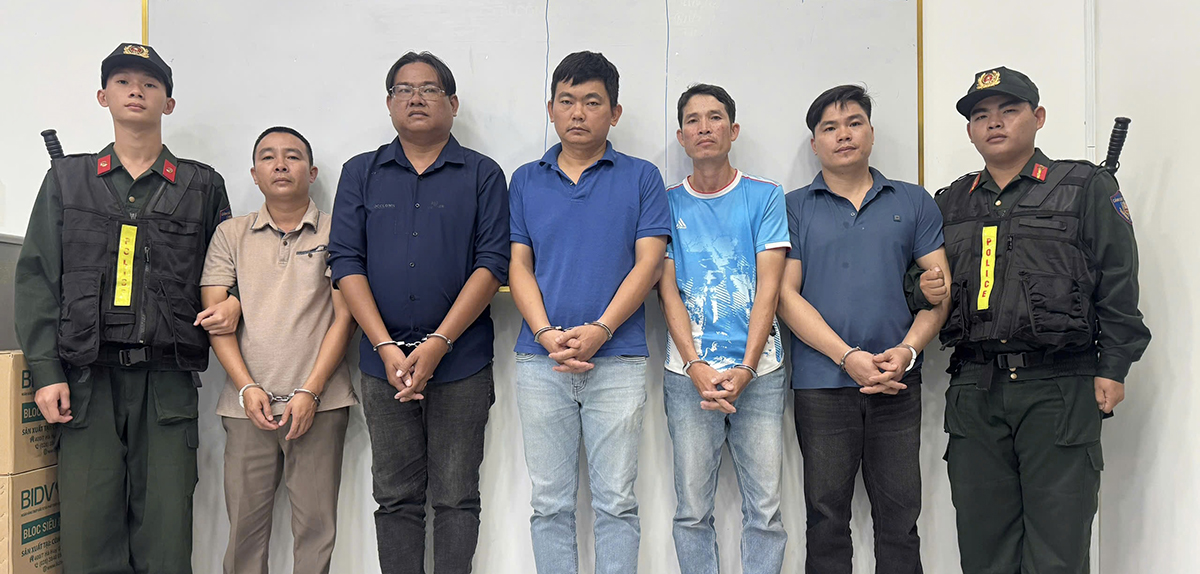 |
Individuals involved were arrested. Photo: Ho Chi Minh City Police |
Earlier, PC03 collaborated with Saigon Port Border Gate Customs Zone 1 to examine the documentation for two customs declarations filed by Dai Phat Dong Nai Import Export Trading Service Co., Ltd. The shipment, comprising 23 containers, was being exported from Vietnam to China and declared as "polymetallic slag... collected during metallurgical processing".
However, document inspections, sample analyses, and physical verification revealed that the exported items were falsely declared in terms of name and type, not matching the customs declaration. This indicated illegal cross-border transportation of goods.
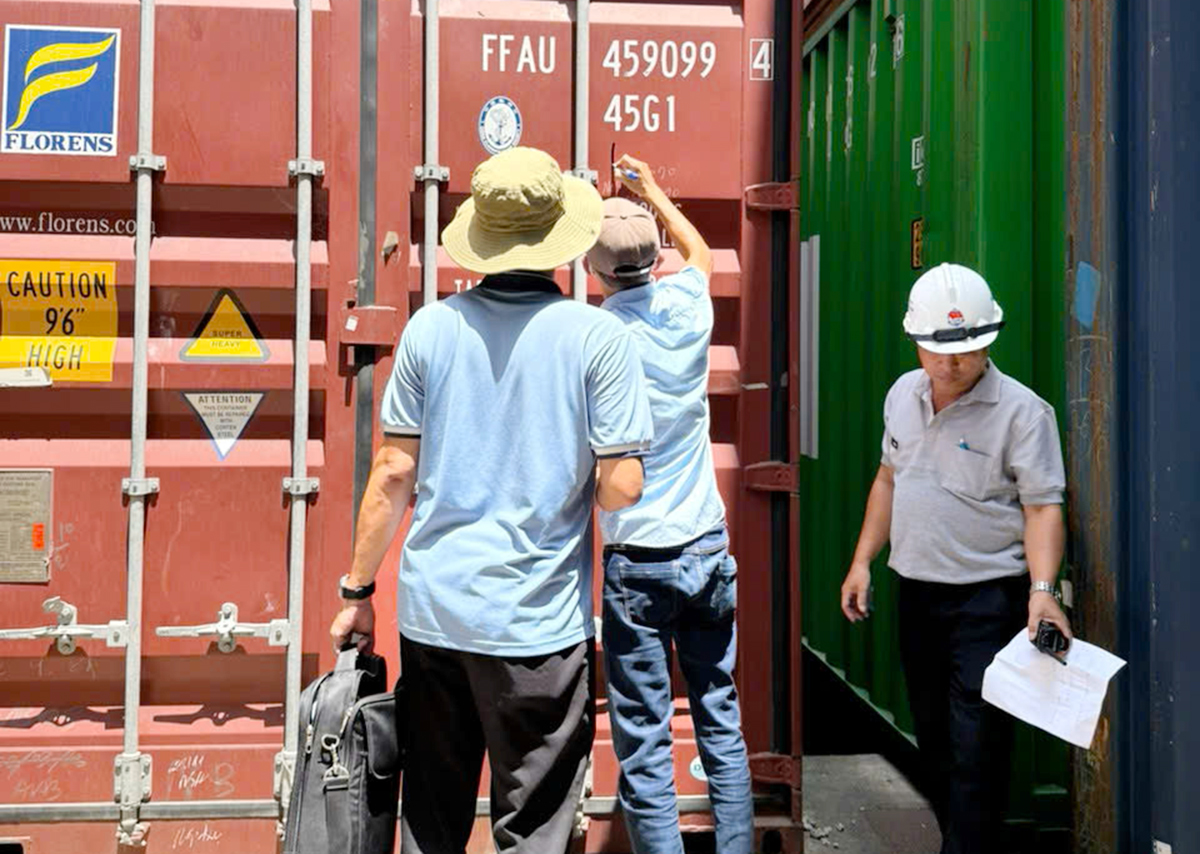 |
Police and customs officers inspecting the 23 containers bound for China. Photo: Ho Chi Minh City Police |
Expert assessments confirmed that despite being declared as "polymetallic slag", the containers primarily held copper in the form of CuFeS2 compound. This material had a high metal content and was not scrap, contrary to the company's declaration.
The total weight of the goods exceeded 650 tons, with an average composition of 26,25% copper, 37,35% iron, and 35,69% sulfur. The city-level Criminal Procedure Asset Valuation Council estimated the illicit shipment's value at several billion dong.
Initial investigation findings confirmed this was an organized operation with a clear division of roles, masterminded and led by Ly. He directly oversaw the entire syndicate responsible for illegally exporting the 23 containers from Vietnam to China.
Ly received "orders" from a Chinese individual via the WeChat platform. He then coordinated every step, including renting containers, booking shipping vessels, arranging cargo loading, and utilizing corporate entities to handle customs procedures.
The other members had specific roles at each stage: some understood legal policies and managed customs declarations; others handled on-site operations at the port, coordinating cargo inspections and assessments; some established and managed "shell" corporate entities, bought and sold invoices, created fictitious records, and coordinated financial flows; and others served as legal representatives to sign documents and transfer funds, thereby legitimizing the goods' origin.
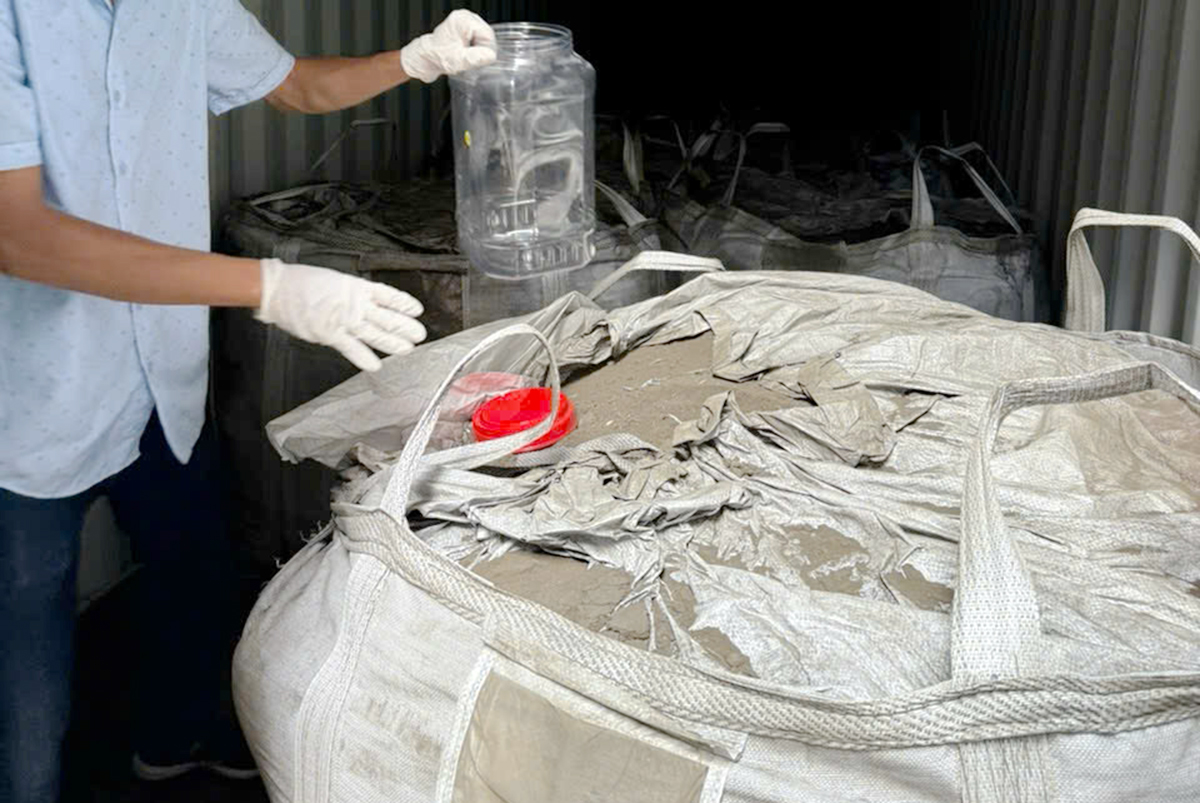 |
The goods inside were identified as valuable copper concentrate. Photo: Ho Chi Minh City Police |
Investigators noted that the criminal methods employed were sophisticated and innovative. The group not only made fraudulent declarations regarding the goods' names, hs codes, and types but also legalized all export documents. They achieved this by using non-operational businesses, acquiring value-added tax invoices from entities without genuine transactions, creating fictitious contracts, and executing money transfers to legitimize documentation and conceal the goods' true nature.
Declaring high-metal-content minerals as "polymetallic slag" was a tactic to disguise the goods' true nature, transforming valuable mineral products (concentrate) into waste. This allowed them to evade regulatory oversight and illegally export national resources.
During the investigation, the Ho Chi Minh City Police Investigation Agency gathered testimonies and conducted confrontations to clarify the consensus and division of roles among accomplices. They verified details with shipping line agents regarding vessel chartering, cargo descriptions, and declaration codes. Furthermore, verifications were conducted with tax authorities, financial institutions, and local governments to uncover the true nature of the "shell" corporate entities.
Police also collected bank statements and documents to trace money flows used for purchasing invoices and legitimizing records. Concurrently, they requested expert assessments from the Southern Institute of Criminal Science – Ministry of Public Security.
The investigation agency is continuing to expand the case, aiming to identify the Chinese individual who placed the order, trace the origin of the minerals, verify the roles of involved businesses and brokers, and review other shipments with similar characteristics to thoroughly combat illegal resource export activities.
Quoc Thang