In 1946, after serving time for theft, 32-year-old Raymond Fernandez began frequenting singles clubs in New York. His plan was to connect with women through correspondence, gain their trust, and then rob them. He crafted an image of a successful man seeking love and marriage.
Martha Beck, a 26-year-old nurse in Florida, saw an advertisement for a singles club catering to those looking for a life partner. She paid 5 USD to register and then sent her personal information via mail.
Soon after, Martha received a letter from Raymond, who introduced himself as a successful businessman living alone and hoping to find a suitable woman to marry. The two began exchanging letters. In late 12/1947, Raymond met Martha for the first time.
Their meeting lasted about two days. After discovering Martha did not have the money he expected, Raymond wrote to her, stating he had no feelings and wished to end the relationship.
Martha refused to accept this. After being fired from her job, Martha tracked Raymond down at his New York home in 1/1948. Raymond initially tried to push Martha out of his life, revealing that he made money by conning women he met through dating clubs. But instead of leaving, Martha offered to become his accomplice. She even abandoned her two children to fully commit to Raymond's scheme.
From then on, they lived together and collaborated in their scams. Raymond continued to approach women through dating clubs, while Martha posed as his sister to create a sense of security for the victims. What began as a relationship built on letters seeking love gradually morphed into a predatory scheme.
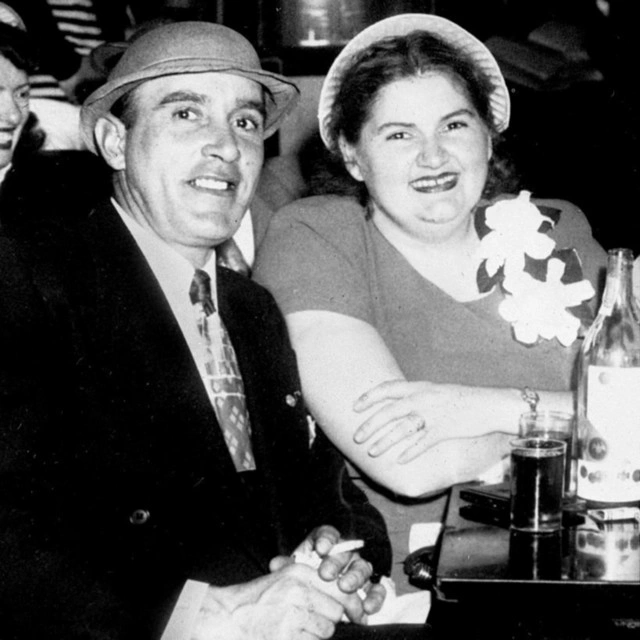 |
Raymond Fernandez (left) and Martha Beck. Photo: AHC |
The widow's disappearance
In 1948, despite living with Martha, Raymond married two women he met through clubs, while continuing to approach others.
On 26/12/1948, Raymond, using the name Charles Martin, received a letter from Janet J. Fay, a widow in her 60s from Albany, New York. Janet invited Raymond to Albany.
On 29/12, Raymond drove, bringing Martha along. He met Janet first, then introduced Martha as his sister. In the following days, Raymond and Janet met multiple times. Their conversations sometimes turned to financial matters.
On 3/1/1949, Janet accompanied Raymond to several banks in Albany, withdrawing over 4,000 USD in cash and bank checks, which she then gave to Raymond. On the same day, the three went to Raymond and Martha's apartment in Valley Stream, Long Island.
That night, Janet stayed at the apartment. Raymond slept on the living room sofa, while Janet and Martha shared the bed in the bedroom.
Around 3-4h on 4/1, Janet woke up and spoke with Raymond. After Raymond went to the bathroom, Martha went to the living room to talk to Janet. What happened next was recounted with differing versions by the couple at their later trial.
Raymond testified that upon returning to the living room, he found Janet had been struck on the head. He denied participating in the assault, claiming he only tried to treat the bleeding wound before he and Martha concealed the body.
Martha testified that Janet angered her by saying she would have to leave once Janet married Raymond. However, in her later confession to Michigan police, Martha stated she hit Janet with a hammer. As Janet lay in pain, Raymond proceeded to strangle her.
An autopsy revealed Janet had two head wounds penetrating her skull and a fractured larynx.
Afterward, the couple placed the body in a large trunk. Three days later, they transported it to a rented house in South Ozone Park, Queens. About 10 days after the murder, Raymond dug up the basement concrete floor, buried the body, and then poured cement over it.
The couple also created fake messages, making it appear as though Janet was still alive and happy with Charles Martin. However, her family grew suspicious when Janet abruptly lost contact.
Confession leads to body discovery
After burying Janet, the couple planned to go to Alaska. On 20/1/1949, they left New York, traveled to Chicago, and then continued to Michigan.
There, they rented lodging in the home of Delphine Downing, a 41-year-old widow with a two-year-old daughter. Raymond had contacted Delphine previously by mail under the name Charles Martin.
On the night of 28/2/1949, police arrived at Delphine's house after neighbors grew suspicious about the disappearance of the mother and daughter. Raymond and Martha were arrested that same night.
After being taken to the station for questioning, Raymond confessed to shooting Delphine during an argument, and Martha confessed to killing the crying child. They hid the bodies of the mother and daughter in the basement. The couple's statements also revealed the burial location of Janet in New York. On 1/3, Janet Fay's body was exhumed from beneath the concrete floor of the house in South Ozone Park.
After their arrest, Raymond provided confessions about other murders. Authorities suspected the duo might be linked to about 17-20 deaths, but this number was not proven in court.
Raymond and Martha initially faced charges related to the deaths of Delphine and her daughter in Michigan. Although Raymond pleaded guilty to Delphine's murder, Michigan prosecutors later dropped the charges to allow their extradition to New York, where they were tried for the murder of Janet Fay—a case that could lead to the death penalty.
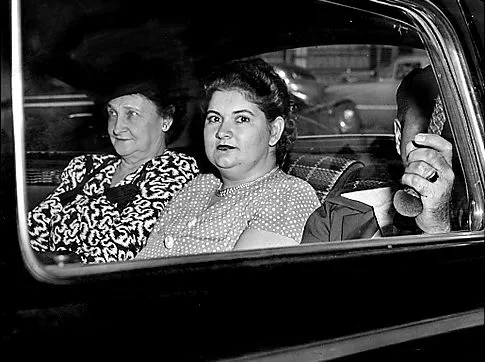 |
Martha Beck, in a polka-dot dress, meticulously made up and coiffed, is seen in a car moving from the Bronx courthouse to Sing Sing prison after being sentenced to death. Photo: Nydailynews |
The lovers' fate
The trial took place from 9/6 to 18/8/1949, lasting about 10 weeks, with records exceeding 4,000 pages.
Raymond and Martha largely denied responsibility for Janet's death. Raymond claimed he did not kill the victim, explaining his previous confessions were made out of love to protect Martha. If accepted, this argument would have made him only responsible for concealing a crime.
When called to the witness stand, Martha unexpectedly moved toward Raymond, embracing and kissing her lover before security personnel pulled her away.
Martha argued she did not clearly remember the events of the murder, only recalling Raymond shaking her shoulder and then seeing Janet lying motionless on the floor.
The defense argued Martha had mental health issues and lacked the capacity to understand her actions. However, two psychiatrists called by the prosecution concluded Martha knew the nature of her actions and understood they were wrong. They also rejected the argument that Martha suffered from amnesia at the time of the crime.
After about 12h 30 minutes of deliberation, the jury convicted both of first degree murder on 18/8/1949. On 22/8, the judge sentenced them to death.
Both appealed, but the New York State Court of Appeals upheld the conviction on 11/7/1950.
After all appeals and clemency efforts failed, Raymond was executed by electric chair on 8/3/1951. Martha was executed immediately afterward.
Tue Anh (according to Casemine, People)