Many people open the lid and serve rice immediately after their rice cooker switches from 'cook' to 'warm' mode. Others leave the pot on warm for hours. In reality, the few minutes after the rice is cooked are crucial for its quality.
**Serving rice too soon**
A study published in 6/2026 in the Journal of Food Process Engineering by scientists from Sonoda University, Japan, measured moisture levels at six different locations within an induction heating rice cooker. The results indicated that freshly cooked rice can still have areas with more water and others that are drier. The degree of starch gelatinization also varied across different parts of the pot. Therefore, instead of opening the lid immediately and allowing steam to escape quickly, it is beneficial to keep the lid closed for a few more minutes. Afterward, gently fluff the rice from the bottom up to redistribute the moisture, ensuring a more even texture.
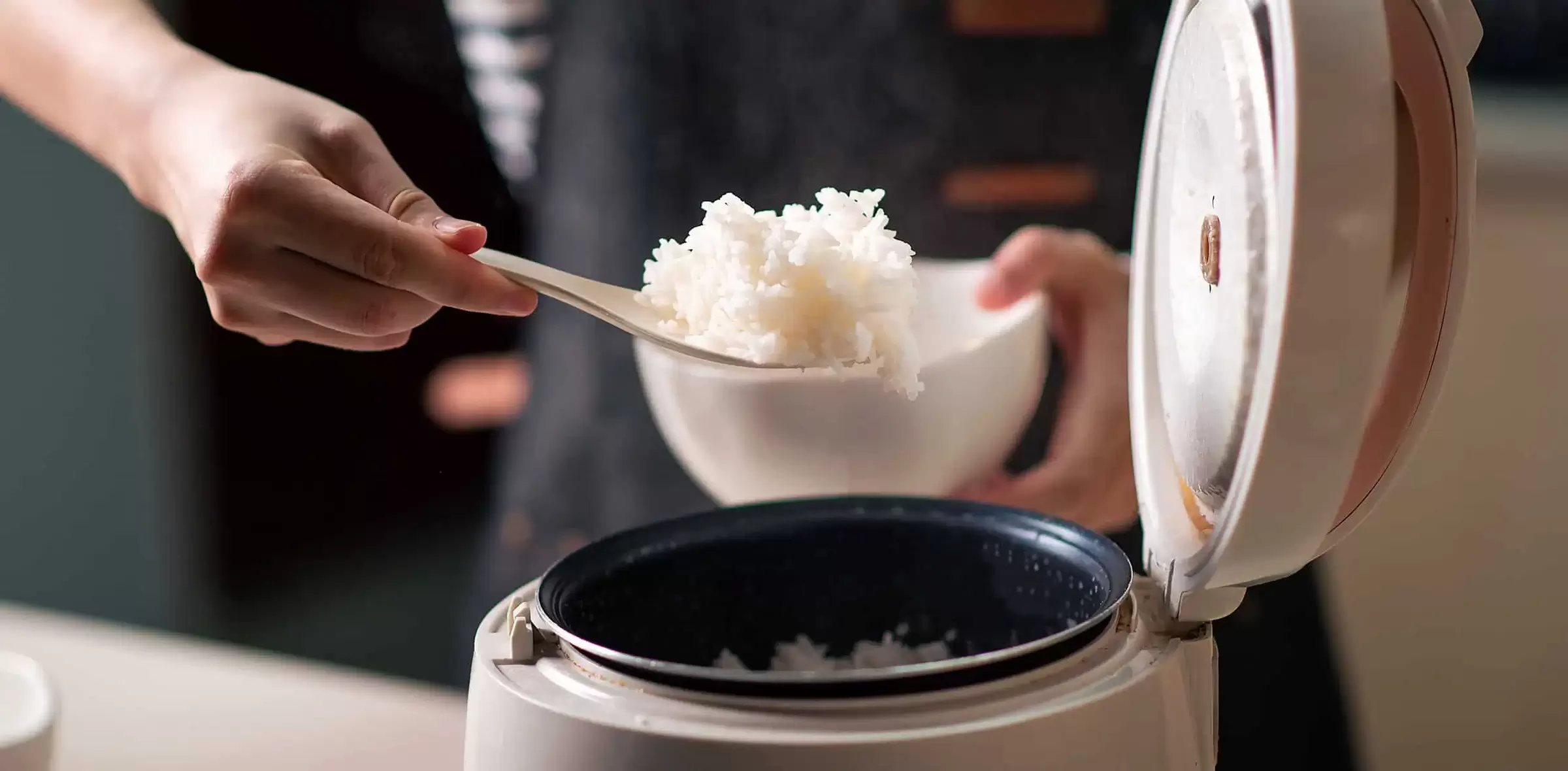 |
Allowing the rice to rest for about 5-10 minutes helps the cooker balance moisture, resulting in chewier rice. *Aboluowang* |
**Warm water does not save electricity**
The advice to use 60 degrees C warm water to cook rice to save one-third of the electricity is unfounded. In principle, warm water reduces the energy load for heating the rice cooker. However, if users must consume electricity to heat the water beforehand, the total electricity consumption does not decrease. Additionally, 60 degrees C is not the optimal temperature for all types of rice or every appliance model. The simplest and most effective method is to follow the water ratio and cooking program recommended by the manufacturer.
**Overusing the warm mode wastes electricity, reduces taste**
After the rice is cooked, the cooker automatically switches to the warm mode. Although the power consumption is lower than during cooking, the appliance continuously consumes electricity. A 2012 study by Japanese scientists Toshie Tsuda and Kunimitsu Sato showed that a rice cooker consumes an average of 63 kWh per year, with warming time playing a significant role. Overusing this feature for many hours not only wastes energy but also alters the texture, making the rice less palatable.
**Do not cover the rice cooker with a cloth**
Many families habitually cover the rice cooker lid with a cloth to retain heat and save electricity. However, this trick lacks practical basis and violates the manufacturer's safety guidelines. Major brands like Panasonic and Toshiba advise users against covering the lid, especially the steam vent, with a cloth or any object during cooking or warming. Blocking the vent prevents steam from escaping, which can deform and discolor the appliance's casing and increase the risk of control panel damage. Furthermore, heat accumulating at the steam vent can cause severe burns if users accidentally touch it.
Bao Nhien (According to Aboluowang, Onlinelibrary)