Many parents, concerned about their children forgetting knowledge or becoming engrossed in electronic devices, often pack their summer schedules with classes. However, Master of psychology Nguyen Thi Lanh from Minh Tri Thanh Academy states that filling the summer with classes can limit children's time for experiences, self-discovery, and creative development. The expert suggests that summer offers children opportunities to learn through practical activities, sports, arts, and family bonding.
Below are 6 suggestions to help children have a meaningful and experience-rich summer.
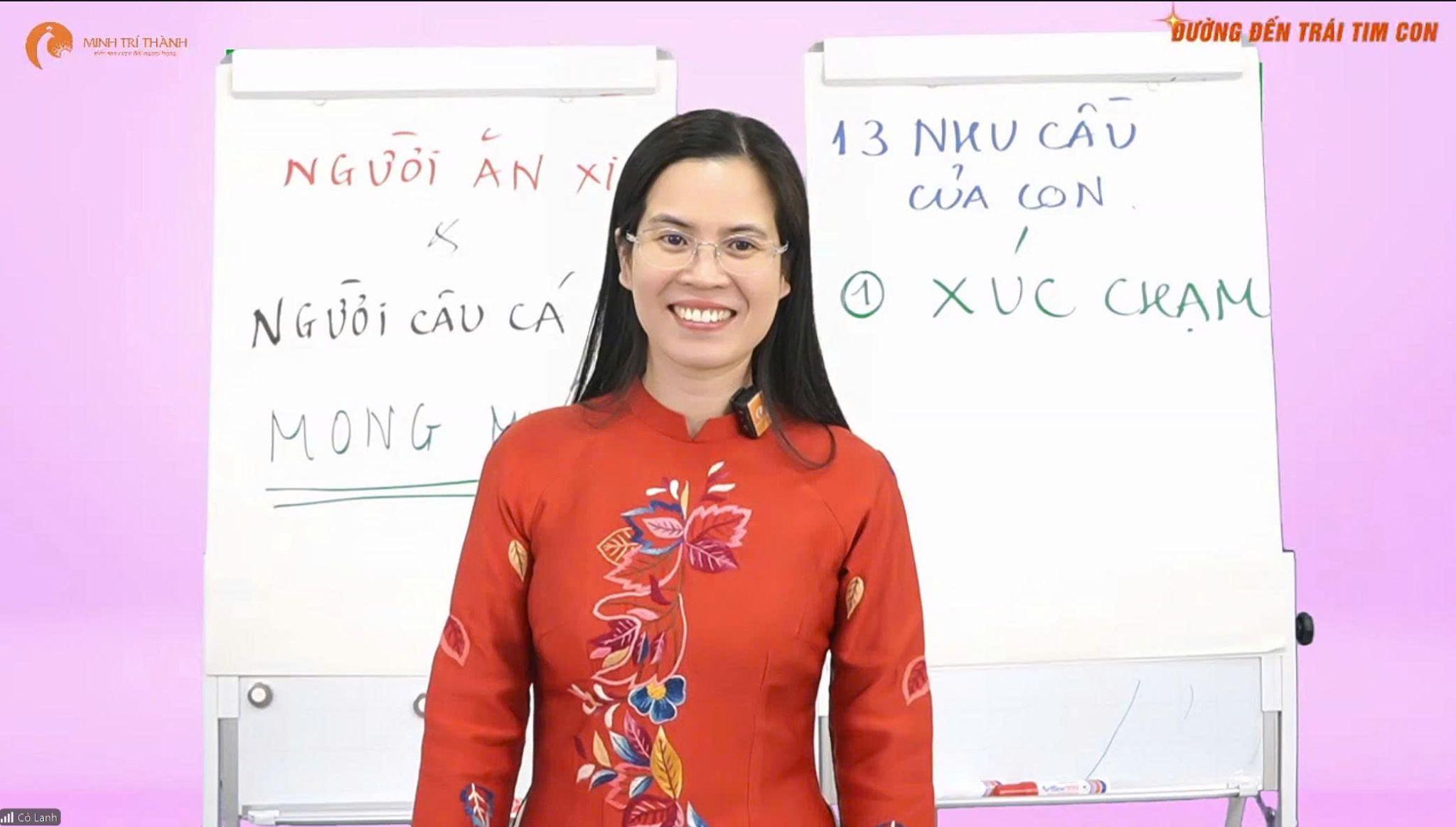 |
Master of psychology Nguyen Thi Lanh during an online sharing program for parents. Photo: NVCC |
First, parents should enable children to participate in sports. Physical activity improves children's physical health and fosters intellectual and emotional well-being. Instead of imposing choices, parents should respect their child's preference for a sport or playmates. Parents can be "wonderful companions" by running, cycling, or participating in daily outdoor activities with their children.
Second, enroll children in extracurricular courses. These courses are not just about learning skills but also about developing emotions and valuable attributes for the future. Parents should encourage their children to try new things. However, rather than forcing them, parents should provide a compelling reason, such as: learning to swim equips them with survival skills; learning to draw is not just about creating a picture, but about understanding the "overall picture".
Third, encourage children to read books. Parents should inspire their children to form a daily reading habit. Parents can discuss book content with their children and guide them to set a goal for how many books they will read this summer.
Fourth, parents should encourage children to do housework. Engaging in even the smallest tasks, like sweeping the house or washing teacups, helps children develop perseverance and diligence. This summer, adults can guide children and help them establish a routine of proactively assisting with age-appropriate chores.
Fifth, the whole family can travel together. "Travel provides children with real-world experiences. Real-world experiences foster practical knowledge, practical knowledge generates wisdom, and wisdom shapes life's outcomes," the expert emphasized.
Sixth, parents can create themes for family activities, such as: going to the movies, hiking, or participating in charity projects, to strengthen family bonds.
 |
Master Nguyen Thi Lanh and children during an activity at the "Con chu dong" program. Photo: Minh Tri Thanh |
Understanding parents' concerns about balancing play and learning, Master Nguyen Thi Lanh and Minh Tri Thanh designed a program for children called "Con chu dong". The program creates an environment for children to develop comprehensive self-reliance skills.
"Con chu dong" flexibly integrates sharing activities and practical experiences, helping children achieve many changes, such as: forming positive habits, and being proactive in learning and daily life. Children learn to release negative emotions, and to encourage and motivate themselves.
Minh Tri Thanh successfully organized "Con chu dong" 38 times, with nearly 4,000 children participating nationwide. A highlight of the program is the practical experience activity "Conquering Ba Vi: two days and one night". During this trip, children overcome a 12 km mountain path and over 1,300 stone steps to reach the mountain peak. This outdoor educational playground offers challenges where children not only connect with nature but also push their personal limits.
Hai My