On new year's eve 2026, Su Ran, 24, decided to stay in her rented room in Beijing. She did not go out to watch fireworks or queue at temples for good luck as in previous years. Instead, the office worker opened a temple simulation application on her phone.
After paying 5,9 Chinese yuan (approximately 20,000 dong), an electronic incense stick appeared on the screen, emitting wisps of smoke. Su Ran clasped her hands, silently praying for career success. Below, the system informed her that she was the 891,500th person to participate in this ritual.
"I am haunted by the image of queuing from 4 a.m. in sub-zero temperatures at Ung Hoa Temple. Celebrating new year online allows me to find peace while avoiding the pressure of having to explain my income or marriage plans to relatives," she said.
 |
Illustration: Baidu |
Su Ran is a prime example of millions of Gen Z youth in China who are pursuing the "cyber lunar new year" trend. This is how they redefine the traditional festival using technology to cope with real-life pressures.
This year, "digital wooden block tapping" and "online incense lighting" applications have become a focal point for office workers. With just a tap on the screen, the sound of a wooden block echoes, accompanied by the text "merit +1." Data from a digital spiritual platform shows that during this new year season alone, users have tied over 1,2 million virtual prayer ribbons and lit 540,000 peace lanterns. Many large temples have also embraced the trend by offering online incense services, promoting it as a civilized and time-saving way to perform rituals.
Beyond "digital spirituality", young people also turn to artificial intelligence (AI) to combat loneliness. The new year season often comes with "social anxiety" when having to meet too many people.
"Calling my mother would surely make her cry out of self-pity. An AI character, however, only says what I want to hear, without judgment or pressure. Just a goodnight message on the screen makes me feel the warmth of the new year," Su Ran shared about her virtual boyfriend.
The gift-giving habits of the new generation are also shifting significantly. Instead of baskets of sweets or strong liquor—items considered cumbersome and overly formal—young people are opting for digital gifts such as: movie memberships, unique phone wallpapers, or in-game items.
Yang, a 22-year-old student in Shanghai, used her new year money to buy virtual items for friends. "Physical gifts are hard to guess the recipient's preference and require effort to transport. 'Digital' gifts are more unique, truly reflect aesthetic taste, and can be used immediately," Yang said.
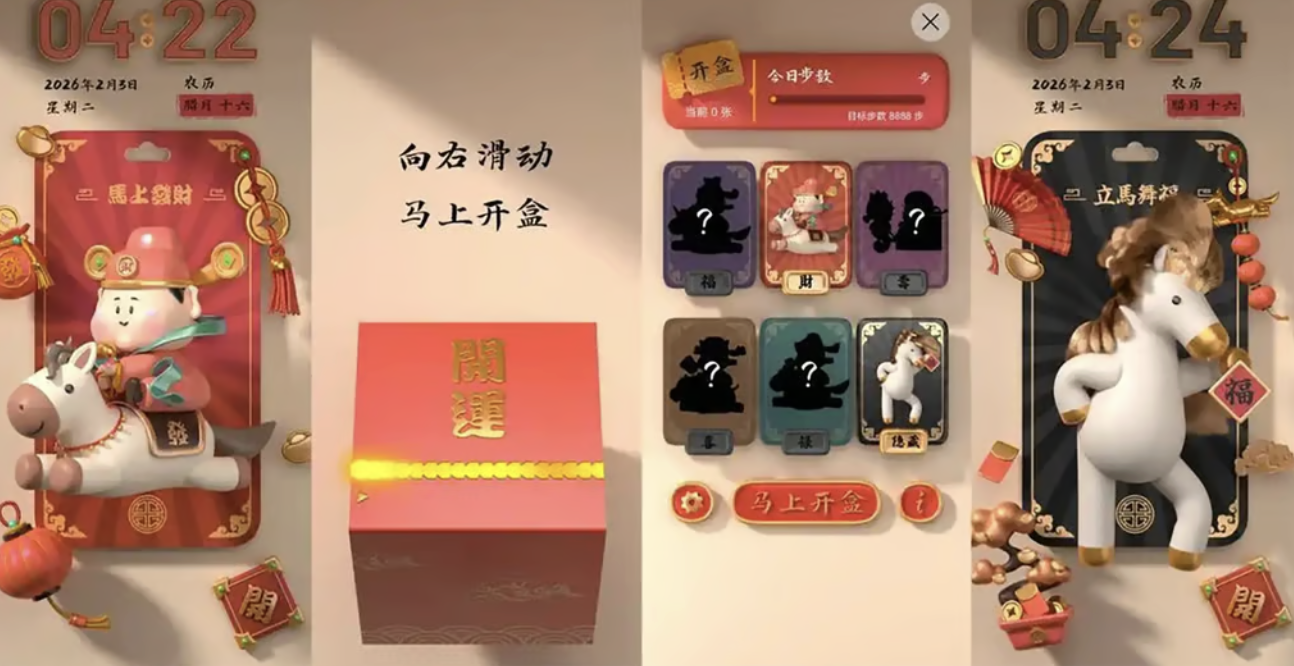 |
Virtual gifts help Chinese youth celebrate the new year in their own way. Photo: Baidu |
Shi Yu, a psychological consultant in Beijing, believes the "cyber lunar new year" trend does not mean rejecting tradition. It shows how young people adapt to survive in a fiercely competitive society.
"They still need connection, they still need to pray, but in a way that consumes the least energy and money," Yu said, suggesting that digital gifts and rituals eliminate inconvenience, creating a deeper sense of understanding.
Closing the virtual temple application, Su Ran felt relieved. For her generation, the new year does not necessarily mean a lavish feast or the sound of firecrackers.
"New year can simply be an incense stick appearing on an LED screen, a wish from a chatbot, and absolute quiet to recharge for a new year," the young woman said.
Thanh Thanh (According to China Daily, Xinhua, SCMP)