"The Seollal feast is like a 'cultural hurdle' that every daughter-in-law must overcome," said Bay, 39, from Hwaseong city, Gyeonggi province, reflecting on her 18th Lunar New Year in a foreign land.
In 2008, Bay moved to Korea as a bride amidst the thriving Hallyu wave (Korean dramas). Romantic films led the young woman to believe she understood the land of kimchi through dishes like bibimbap or seaweed soup. However, this illusion quickly faded when she entered the kitchen of a true eldest son's family during her first Lunar New Year.
With her father-in-law deceased, Bay's in-laws' home became the gathering point for the extended family during Seollal (Lunar New Year) and Chuseok (Mid-Autumn Festival). Seollal follows the lunar calendar, and Koreans typically observe a three-day holiday, from the 30th to the 2nd. This is one of the largest holidays of the year. Families perform ancestral rites, and children bow to elders to show respect before gathering around the meal.
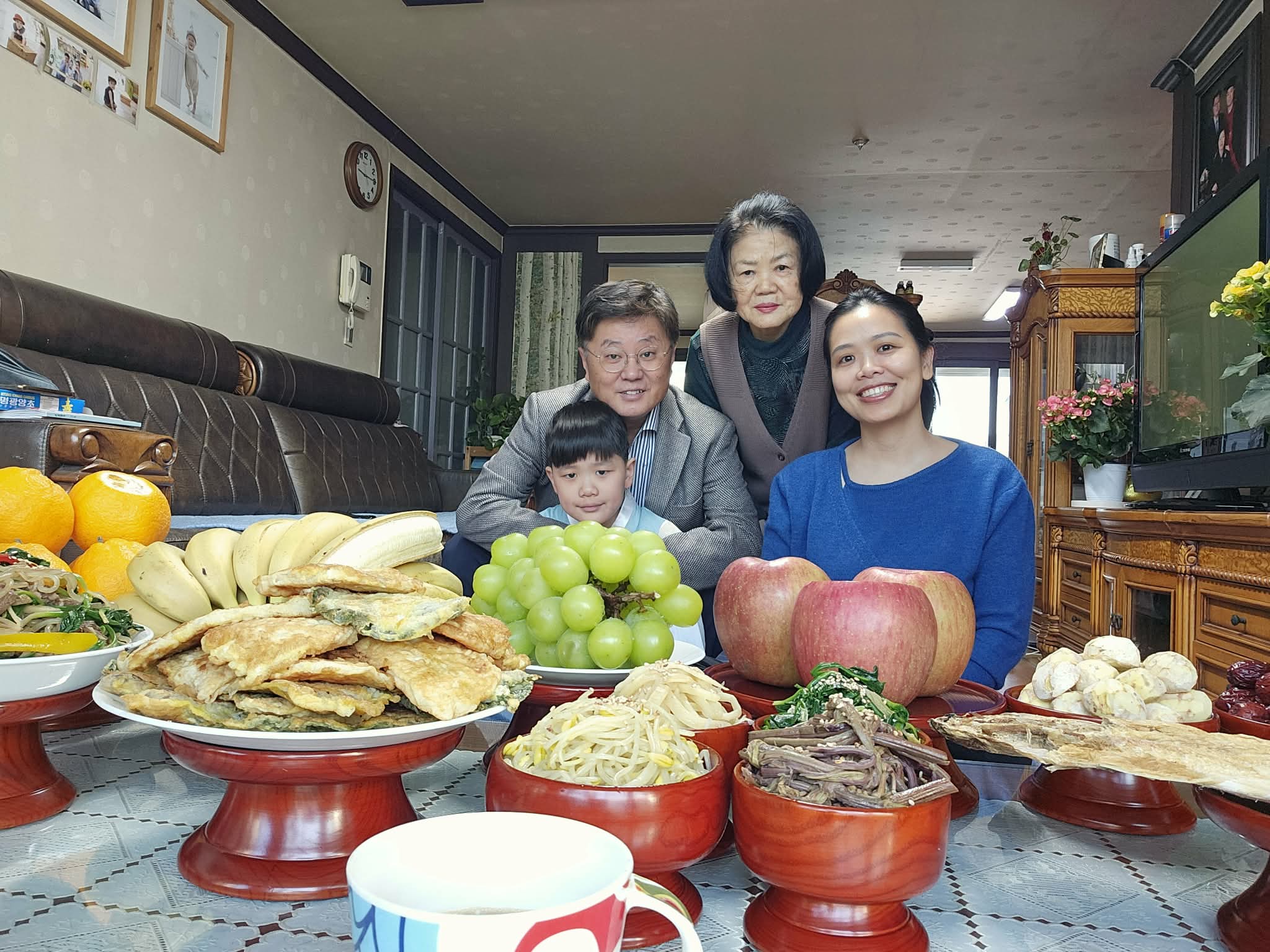 |
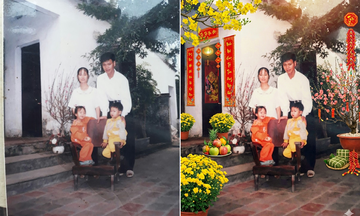
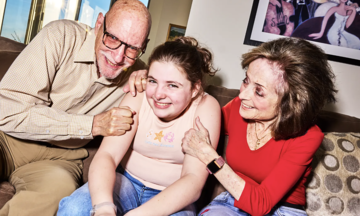
Nguyen Thi Bay's family in Korea, Seollal 2025. Photo: Provided by interviewee
A Korean New Year feast includes at least 20-30 dishes, with some families preparing over 40. During Seollal, the eldest daughter-in-law, like Bay, is considered the "mistress" of the kitchen, responsible for preparing all the dishes. She vividly recalls the winter of 2008, when the small kitchen was busied with cooking for two days straight.
The offering tray begins with a bowl of rice made from new crop grains, symbolizing hope for a prosperous year. Various vegetables, including bracken, spinach, bellflower root, and soybean sprouts, create shades of brown, green, yellow, and white. Koreans favor pork and beef cooked with radish soup, dried pollock, and yellow croaker. Fruits must include pears, apples, jujubes, chestnuts, and dried persimmons. Rice cakes are arranged in neat rows.
Most daunting for Bay were the jeon – traditional pan-fried dishes. Just the preparation and slicing of vegetables took over four hours. Each piece of meat patty, fish patty, or mushroom skewer had to be dipped in flour and egg before being fried golden in batches. Bay and her mother-in-law stood in the kitchen from morning until late night, with the smell of oil clinging to their hair and clothes. One year, preparations extended for 48 hours without rest.
But delicious cooking alone is not enough; the arrangement (Charye) is the real "hurdle." All dishes adhere to specific East-West rules. For instance, "head East, tail West" (fish head facing East), "red East, white West" (red fruits on the East, white fruits on the West), fish soup on the East, beef soup on the West. The offering tray is meticulously arranged in five rows: rice wine innermost, followed by main dishes, soups, dried foods, and fruits outermost. Importantly, dishes must strictly avoid garlic and onions to prevent warding off ancestral spirits.
"The order is so complex that even native Koreans get confused," she recalled, remembering the times she held her breath, waiting for her mother-in-law's nod of approval for the spread. Exactly at 9:00 AM on the first day of Seollal, when the men of the house were formally dressed in white socks and bowing to their ancestors, Bay finally breathed a sigh of relief.
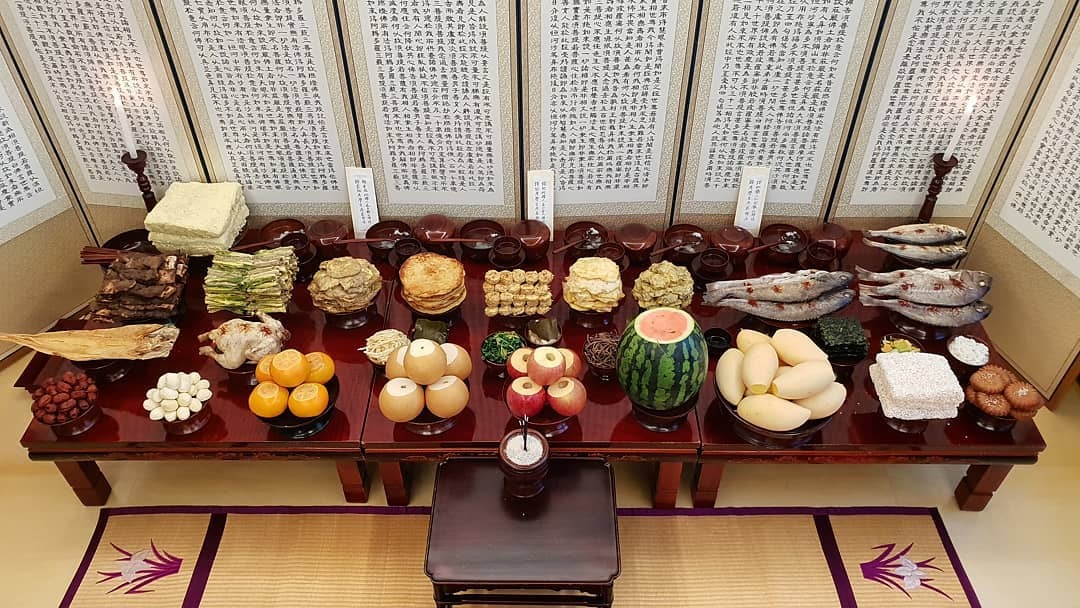 |
A Seollal feast in Korea. Photo: KKDay
Eighteen years have passed, and from standing shyly behind her mother-in-law, she now manages everything herself. Although Seollal is shorter than Vietnamese Lunar New Year, the intense pace of work exhausts anyone in the kitchen. In return, the relaxed moments on the 2nd day, enjoying a sauna or sightseeing with her husband and children, become the sweetest reward.
Like Bay, Nguyen Thi Phuc, 42, from Hai Phong, also took many years to adapt to the rhythm of Seollal. As the second daughter-in-law in a family of three brothers in Hwaseong since 2003, Phuc finds joy in sharing the workload.
The festive atmosphere begins on the 30th of the twelfth lunar month, when the daughters-in-law go to the market together to prepare ingredients. Phuc's family feast also has over 20 dishes, but the highlight is the tteokguk rice cake soup – a dish symbolizing purity and marking the addition of another year to one's age.
"It's hard work but warm because each sister-in-law lends a hand, chatting lively as we cook," Phuc said. Roles within the household are clearly divided: the eldest daughter-in-law handles external affairs and shopping; the second and youngest daughters-in-law manage the kitchen. This clear Korean-style division of labor helps daughters-in-law avoid conflicts and coordinate smoothly.
As of 2025, according to data from Statistics Korea (KOSTAT) and the Ministry of Gender Equality and Family of Korea, Vietnamese women account for over 30% of all foreign women married in the country, topping other nationalities.
In multicultural families, participation in and practice of traditional rituals like Seollal are considered part of the adaptation process. A 2024 report by the Korea Institute for Health and Social Affairs (KIHASA) indicates that the level of understanding and participation in traditional rituals is directly linked to the quality of family relationships, especially between mothers-in-law and daughters-in-law. The Ministry of Gender Equality and Family also notes that women who participate in courses at over 230 Multicultural Family Support Centers nationwide report approximately 25% higher marital satisfaction compared to those who do not.
Vietnamese women are considered to adapt best to Korean cultural traditions due to many similarities with Vietnamese culture. According to Phuc, similar to Lunar New Year in Vietnam, Koreans value the atmosphere of reunion during the New Year. After the ancestral rites, family members gather around the meal, conversing about the past year. Children bow, wish their grandparents good health, and receive lucky money.
"Through each Seollal season, as I deeply understand the meaning of reunion and reverence for ancestors, I feel like I truly belong here," Phuc said.
Ngoc Ngan