Overcrowding the pan
Placing too much fish or too many ingredients in a pan traps steam, preventing the food from browning evenly.
"When frying, it is important to maintain space between fillets," said Tina Martinez, a food producer for Good Housekeeping magazine. If the pan is small, cooks should divide ingredients into multiple batches instead of frying everything at once.
Not preheating the pan
Seafood tends to stick to the pan if the temperature is insufficient or if it is flipped too early. When searing, preheat the pan over medium to high heat before adding oil and ingredients. The fish should sizzle upon contact with the pan. Cooks should not flip until the exterior turns golden brown and the food naturally releases from the pan.
For non-stick pans, avoid leaving an empty pan on high heat for too long. For boiled or steamed dishes, maintain a steady water temperature rather than a vigorous boil.
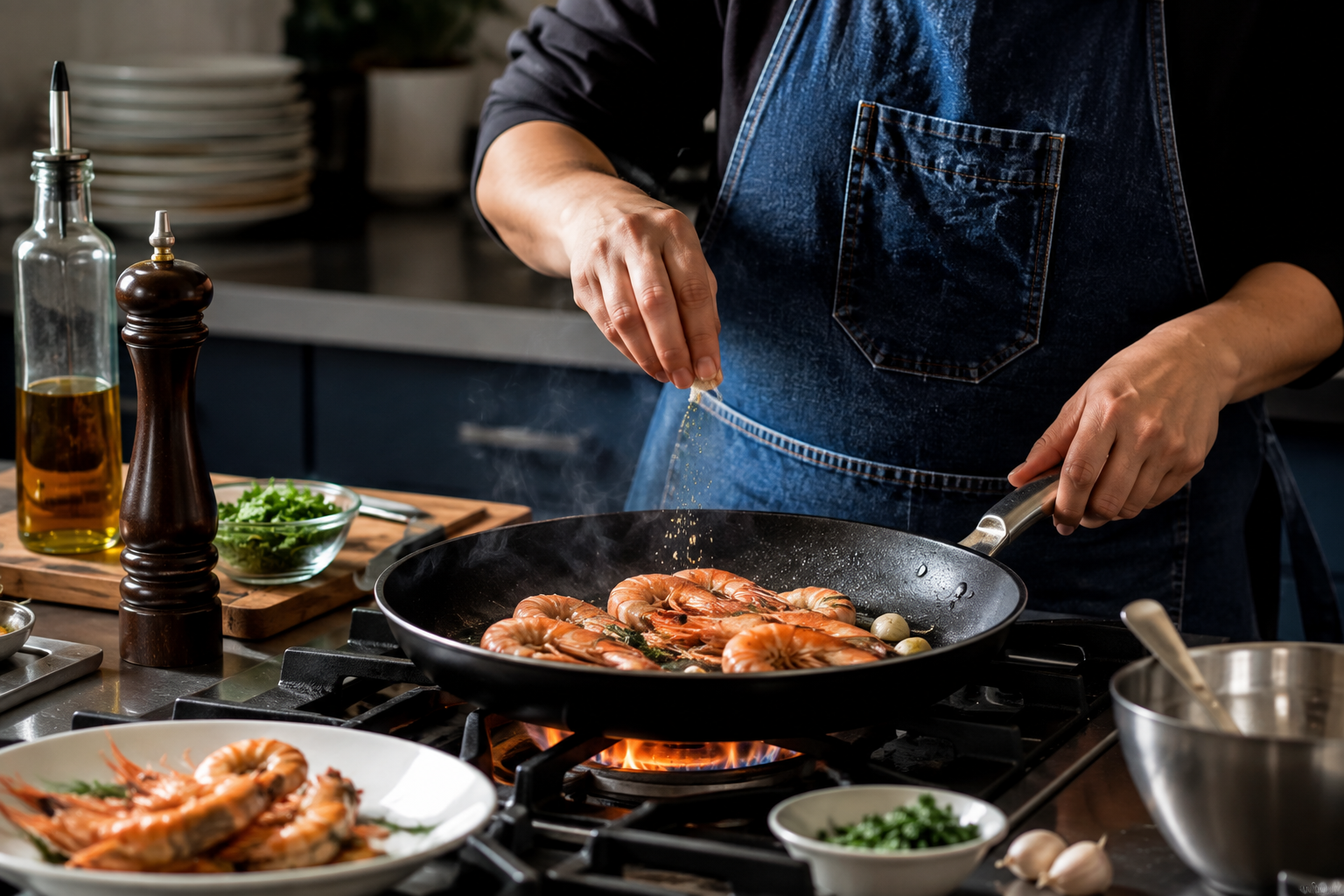 |
Illustration: AI
Not patting ingredients dry
When searing, frying, or grilling, patting seafood dry helps remove excess moisture. A drier surface allows the food to form a crispier crust, especially the fish skin.
"Cooking fish with the skin on can be challenging. For crispy skin, thoroughly pat the exterior dry, use a sufficiently hot pan, and avoid flipping too early," Martinez stated.
However, the patting dry step is unnecessary for boiled, steamed, or braised dishes. Whole fish, tuna, or thick fillets are prone to drying out if overcooked, so careful time management is crucial.
Overcooking
According to Martinez, seafood typically cooks in just a few minutes, making it highly susceptible to overcooking, which results in dry, chewy, and tough textures. Cooks should remove food from the heat just before it is fully cooked, as residual heat will continue to cook it for a few more minutes.
According to Susan Choung, food editor at Good Housekeeping, each type of seafood has distinct indicators of doneness:
Shrimp: Is done when the flesh turns opaque white and gently curls into a C-shape. If shrimp curl tightly into an O-shape, the meat is likely chewy from overcooking.
Clams and mussels: Are done when their shells open during cooking. Discard any that remain tightly closed after cooking.
Scallops: When seared, the exterior turns golden brown, but the interior remains opaque and tender when lightly pressed.
Fish: Is done when the flesh turns opaque white and flakes easily with a fork.
Nhat Minh (According to Good Housekeeping)