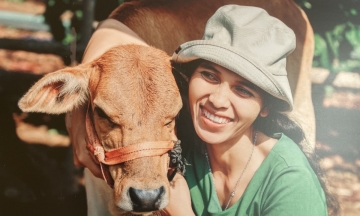
Zhang, from Shaanxi province, China, has the nickname "Gou Dan" (meaning "dog egg"). Her parents maintained this nickname because she was severely ill and nearly died when only a few months old. They believed an inauspicious name would help her avoid misfortune.
This custom originated from the fear of high infant mortality rates in times when medicine was undeveloped. In China and South Korea, some families give their children nicknames meaning "dog's leftovers," "dog feces," or "piglet." Many families chose animal names, hoping their children would be resilient. Others used names of rocks, iron hammers, iron pillars, or locks, hoping their children would grow strong and overcome illness.
Professor Anja M. Collazo from Kyoto University, Japan, refers to these as "protective names." According to her, in many cultures, beauty or preciousness easily attracts the envy of supernatural forces. Therefore, a common name becomes a disguise, making the child less appealing and thus safer.
The Tuva community in China also uses inauspicious names to conceal a child's identity during their most vulnerable stage. Children have formal names and internal family names, including appellations like "bald head" or "naughty boy." Families who have lost children often give a boy's name to a girl or vice versa to deceive evil spirits. Children use these nicknames at home until about 3 years old.
In India, researcher Mary Fuller noted cases where people carried names meaning "cow dung," "witch," or "trash." This naming practice is applied when a family has lost children, when a child is born weak, or on an unlucky day.
The custom of giving crude nicknames to ward off bad luck is declining in Asian countries but still persists in some rural areas. Professor Collazo stated that these studies aim to explain the cultural beliefs behind a folk custom, not to prove that giving an inauspicious name can prevent illness or change destiny.
 |
Illustration: SCMP |
Ngoc Ngan (According to SCMP, SCOV, Asian Ethnology, India Today)